Published by Paul Ivinskas
Thursday, October 22, 2026
Our mission

Help Utahns understand their communities and hold government accountable. Through nonpartisan, AI-assisted research, we examine public records, follow decisions and votes, and connect readers with local news, events and places.

Everything Utah, every day.

Wildlife & plants guides

Red-rock country: different solutions to heat and drought

Arches describes three broad ways plants survive dryness: using brief favorable conditions, resisting drought, or avoiding its effects.

Arches describes three broad ways plants survive dryness: using brief favorable conditions, resisting drought, or avoiding its effects. Sparse growth can be a functioning community, including life in rock cracks and soil crust. The animals follow their own schedules. At Arches, many small mammals are active at night, while some other animals favor dawn or dusk. Reptile activity shifts with temperature and season. A quiet midday walk does not establish that a place has little wildlife.

Start with the plants: Utah juniper, two-needle pinyon, blackbrush, cliffrose and Harriman's yucca. The ringtail, common chuckwalla and Mojave desert tortoise are separate regional stories, each tied to its own documented range. The Mojave Desert and the Colorado Plateau are not interchangeable, and a southwestern Utah species should not be assumed to live at Arches. Rare desert plants and tortoises are described only broadly, with no maps.

See every profile in this habitat

Profiles to read with this guide

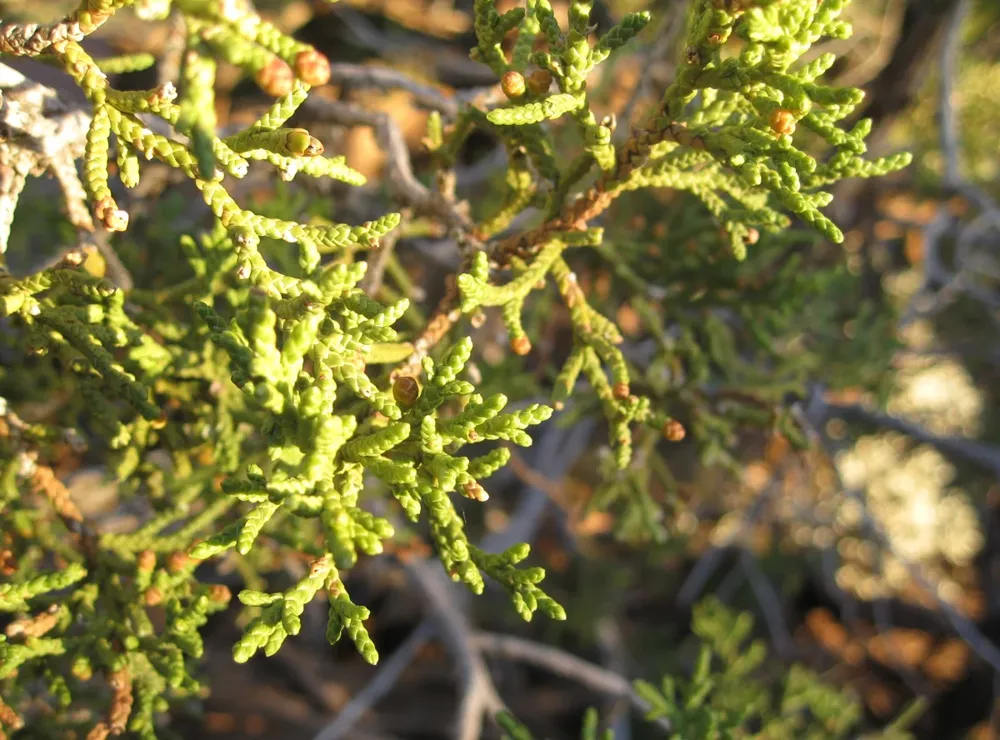
Scale-like Utah juniper foliage and round cones
File photo: Scale-like Utah juniper foliage and round cones — Bears Ears, September 2010. Photo: brewbooks from near Seattle, USA · CC BY-SA 2.0 · Wikimedia Commons
Trees

Utah juniper

A drought-tolerant evergreen with scale-covered twigs, fibrous bark, and berry-like cones that feed wildlife.
Juniperus osteosperma

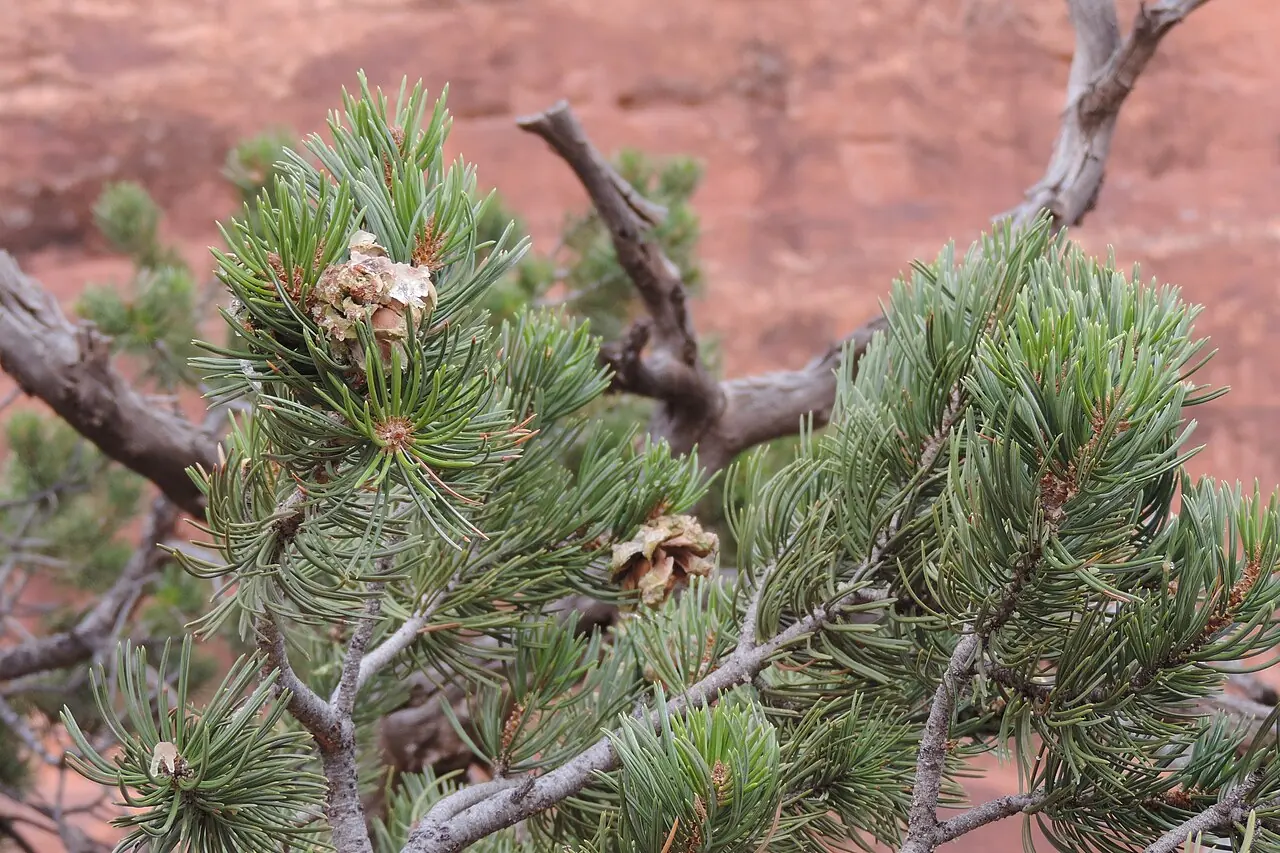
Pinyon pine needles and cones in Arches National Park
File photo: Pinyon pine needles and cones in Arches National Park (2016-09-07 23:38:35). Photo: Krzysztof Ziarnek, Kenraiz · CC BY-SA 4.0 · Wikimedia Commons
Trees

Two-needle pinyon

The small pine of pinyon-juniper woodland, with needles in pairs.

Pinus edulis

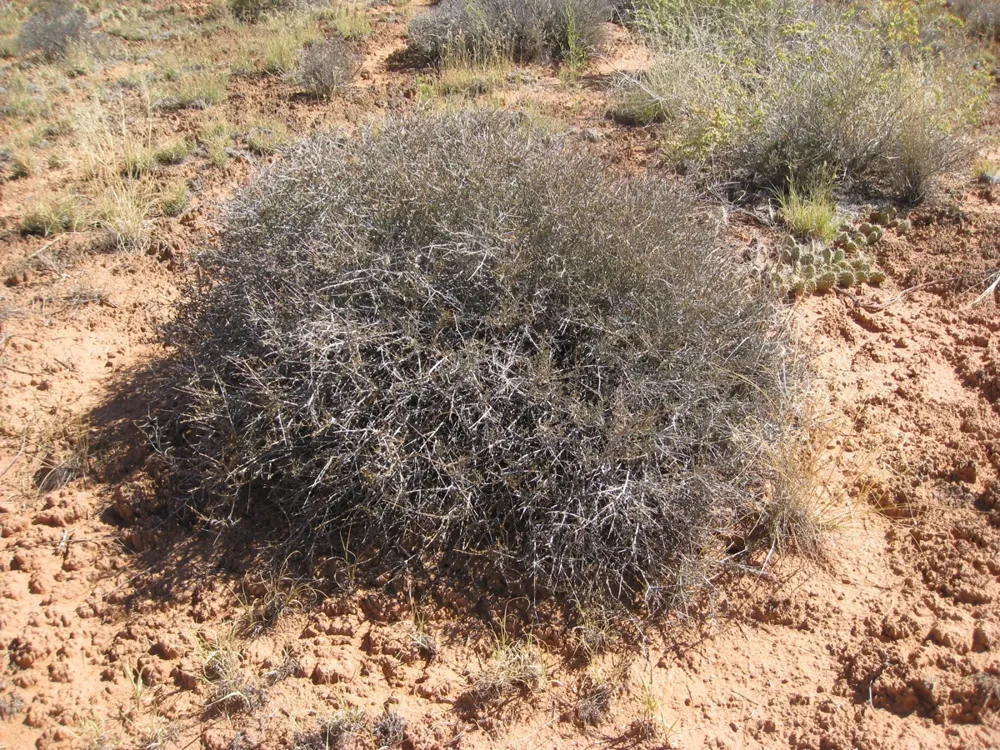
A densely branched blackbrush shrub on desert soil
File photo: A densely branched blackbrush shrub on desert soil — Chesler Park, Canyonlands National Park, September 2010. Photo: brewbooks from near Seattle, USA · CC BY-SA 2.0 · Wikimedia Commons
Shrubs

Blackbrush

A tangled desert shrub of shallow soils whose branches darken when wet.

Coleogyne ramosissima

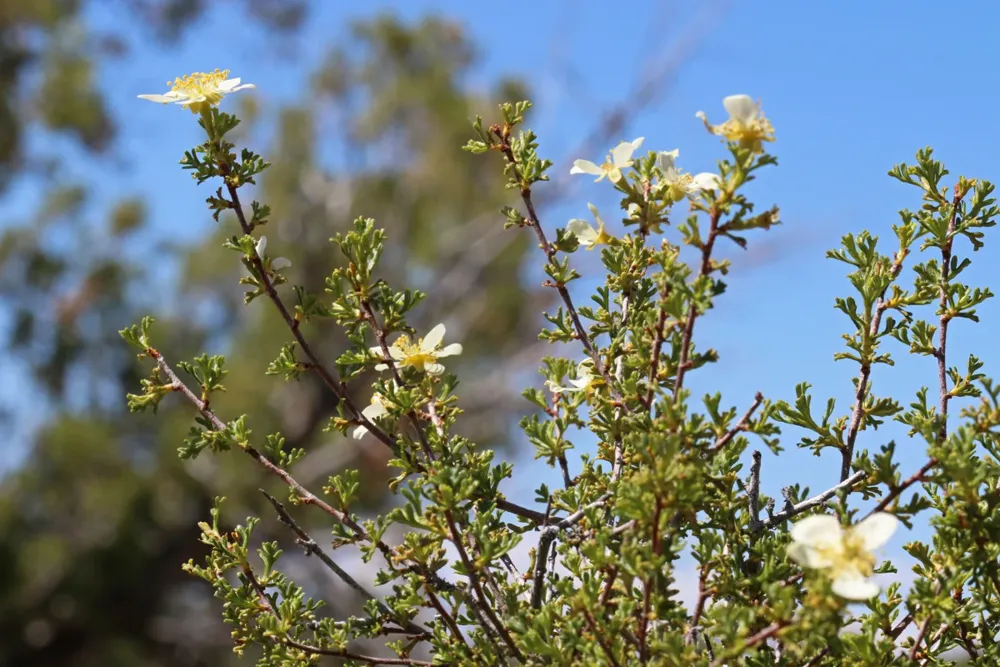
White cliffrose flowers and small green leaves against blue sky
File photo: White cliffrose flowers and small green leaves against blue sky — Johnson Lakes Canyon, Kane County, May 2016. Photo: Andrey Zharkikh from Salt Lake City, USA · CC BY 2.0 · Wikimedia Commons
Shrubs

Cliffrose

An evergreen shrub with fragrant cream flowers and feathery-tailed seeds.

Purshia mexicana var. stansburyana

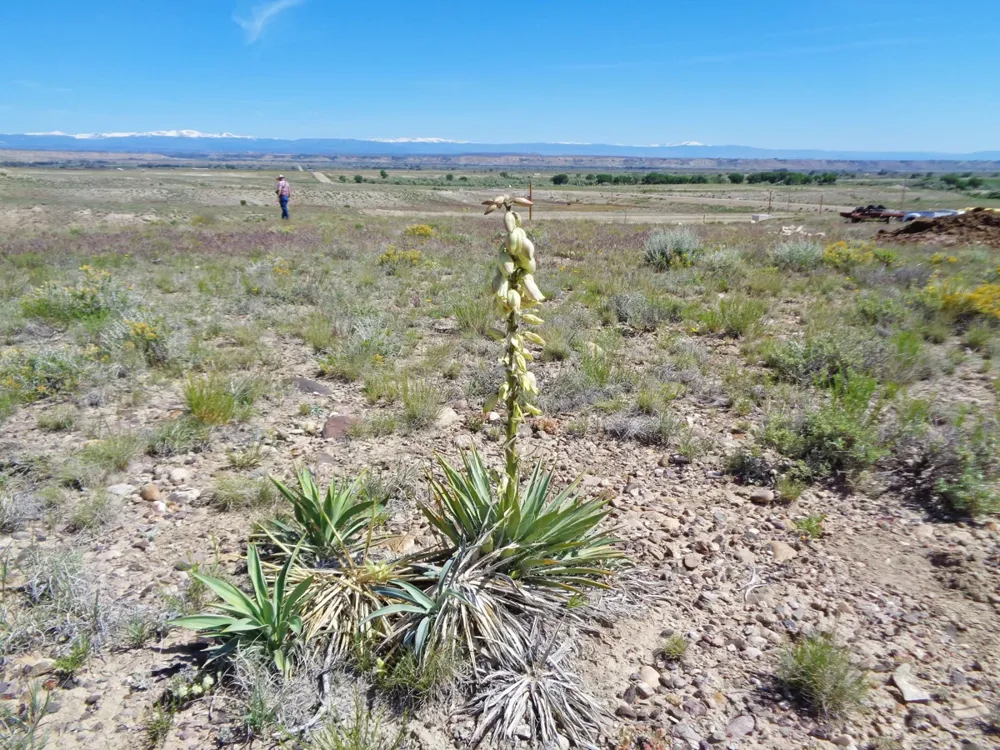
A Harriman’s yucca with a flowering stalk above pointed leaves
File photo: A Harriman’s yucca with a flowering stalk above pointed leaves — near Bridgeland, June 2017. Photo: Andrey Zharkikh from Salt Lake City, USA · CC BY 2.0 · Wikimedia Commons
Wildflowers

Harriman's yucca

A low yucca with stiff, sharp leaves and bell-shaped flowers pollinated by the yucca moth.

Yucca harrimaniae

Mammals

Ringtail

An elusive raccoon relative that moves through canyon rock with a long black-and-white ringed tail.

Bassariscus astutus

Reptiles

Common chuckwalla

A heavy-bodied, mostly plant-eating lizard that uses rocky crevices as both refuge and defense.

Sauromalus ater

Reptiles

Mojave desert tortoise

A long-lived desert reptile whose slow life history and reliance on shelter make disturbance especially costly.

Gopherus agassizii

More guides

Saved on this device. Statewide news and alerts remain available.