Published by Paul Ivinskas
Thursday, October 22, 2026
Our mission

Help Utahns understand their communities and hold government accountable. Through nonpartisan, AI-assisted research, we examine public records, follow decisions and votes, and connect readers with local news, events and places.

Everything Utah, every day.

Wildlife & plants · Reptiles

Mojave desert tortoise

A long-lived desert reptile whose slow life history and reliance on shelter make disturbance especially costly.

A Mojave desert tortoise carries a high, rounded shell above stout legs built for life on land. The front limbs are adapted for digging, the hind limbs look column-like, and the tail is short. It is a plant eater, taking grasses, herbs, flowers and cactus material. Its presence in southwestern Utah reflects the state's connection to the Mojave Desert, not a range extending across every Utah red-rock landscape.

Burrows are essential shelter from conditions at the surface, and tortoises spend much of their time out of sight. Above-ground activity is usually more likely during favorable spring or autumn conditions than during temperature extremes; rainfall and local weather matter. Its long life is another reason to consider the lasting effects of a disturbance. Removing an adult can therefore cost a wild population far more than one season of reproduction.

The Mojave population remains federally threatened, as confirmed by current DWR material checked in October 2026. Habitat loss and fragmentation, road mortality, disease, wildfire associated with invasive vegetation, and predation on eggs and young all figure in its conservation challenges. DWR warns that taking a wild tortoise home is illegal and that captive animals must not be released into the wild. An encounter should end with the animal still in its own habitat, free to reach its shelter.

How to recognize it

High-domed shell and sturdy terrestrial form; compare from a distance.

Conservation

The Mojave population is listed as threatened under the federal Endangered Species Act.

Watching and staying safe

Keep your distance, keep dogs away and do not lift, feed, relocate or take a tortoise home. Leave burrows and their entrances undisturbed.
Related profiles

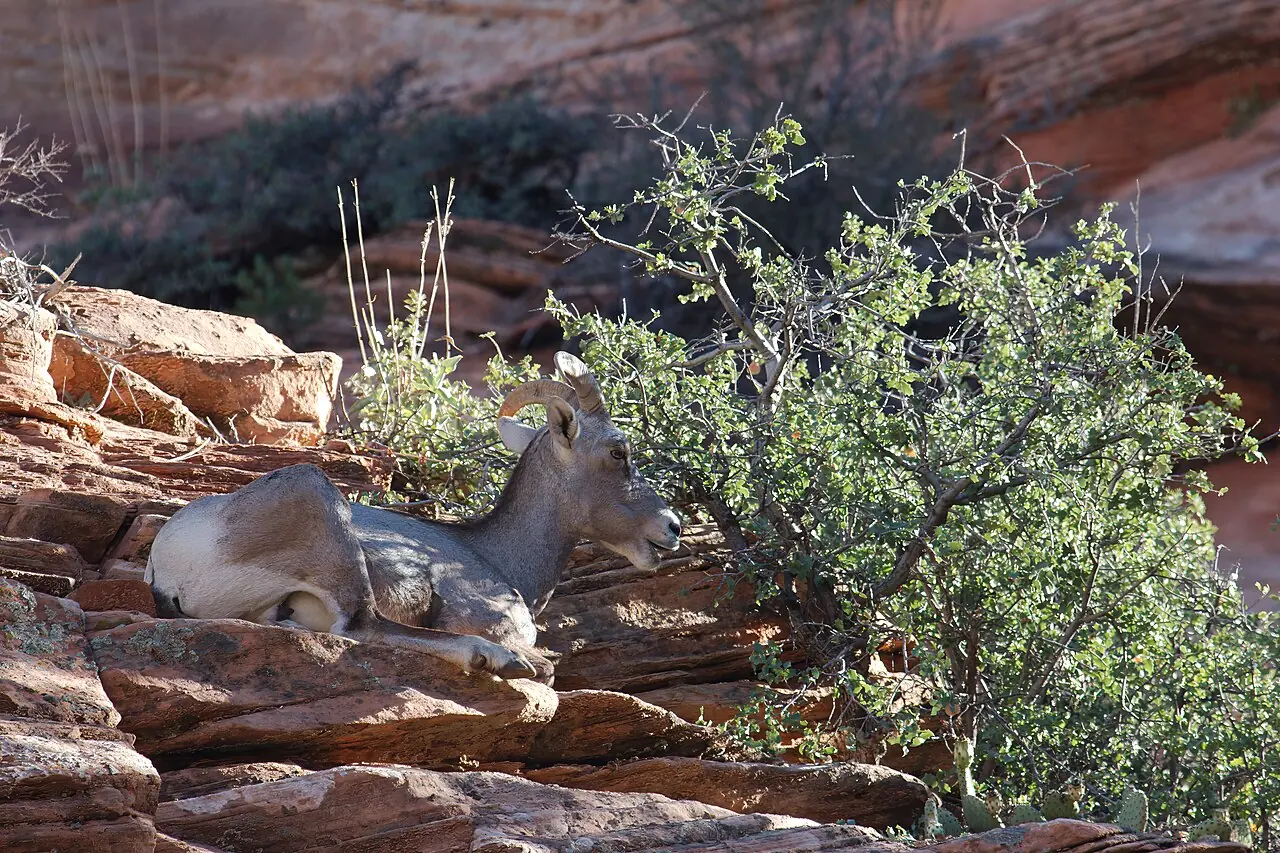
Desert bighorn sheep resting beside sandstone in Zion National Park
File photo: Desert bighorn sheep resting beside sandstone in Zion National Park (2014-09-22 10:34:38). Photo: ImagePerson · CC0 · Wikimedia Commons
Mammals

Desert bighorn sheep

Sure-footed sheep of the slickrock, restored to Zion after disappearing there.

Ovis canadensis nelsoni

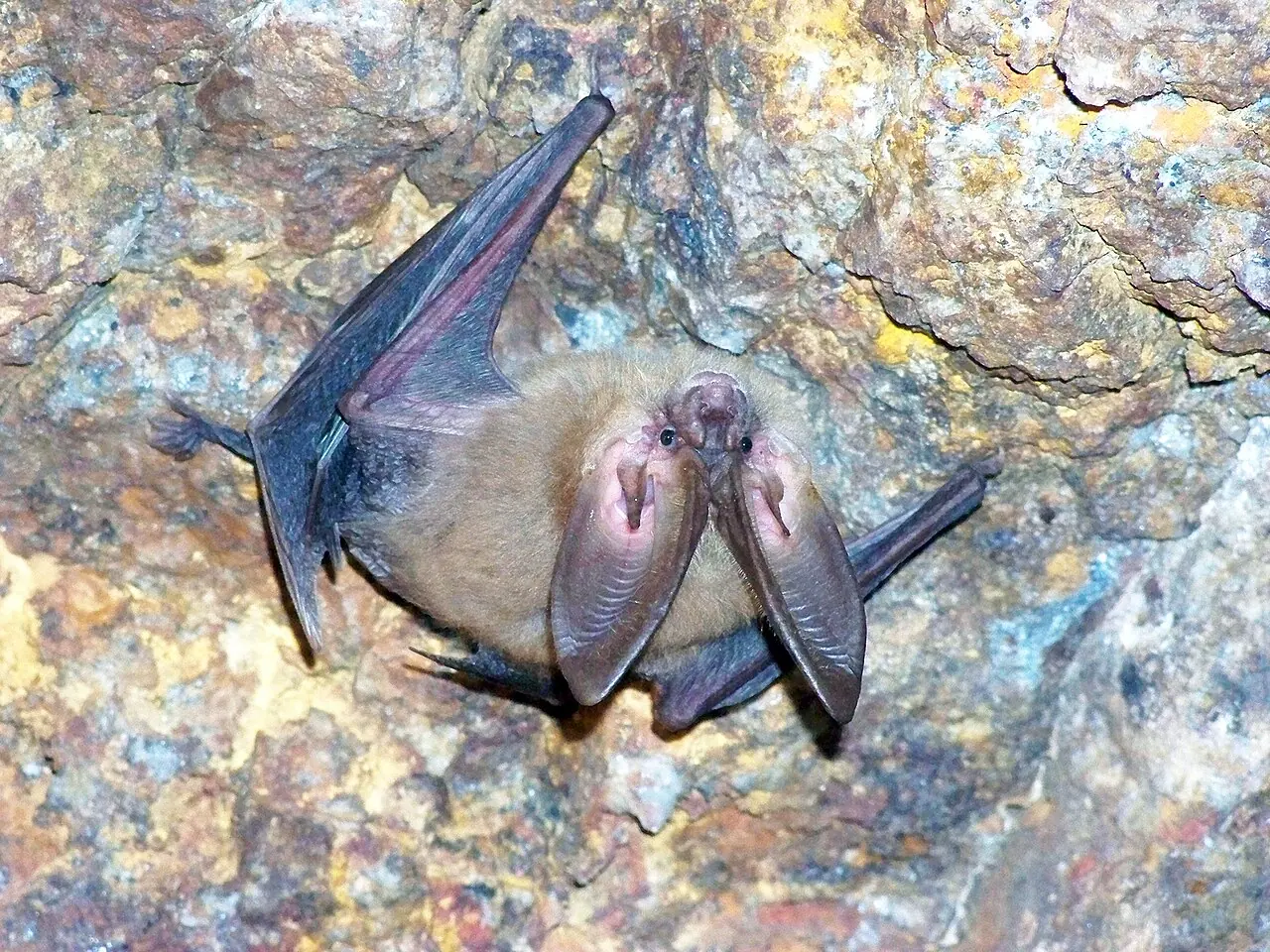
A Townsend’s big-eared bat hanging from rock
File photo: Townsend’s big-eared bat in Utah, BLM archive. One of the bat species found in the state. Photo: John Larson / BLM Utah · Public domain · Wikimedia Commons
Mammals

Bats

Insect-eating flying mammals whose lives depend on suitable roosts, water and a safe seasonal cycle.

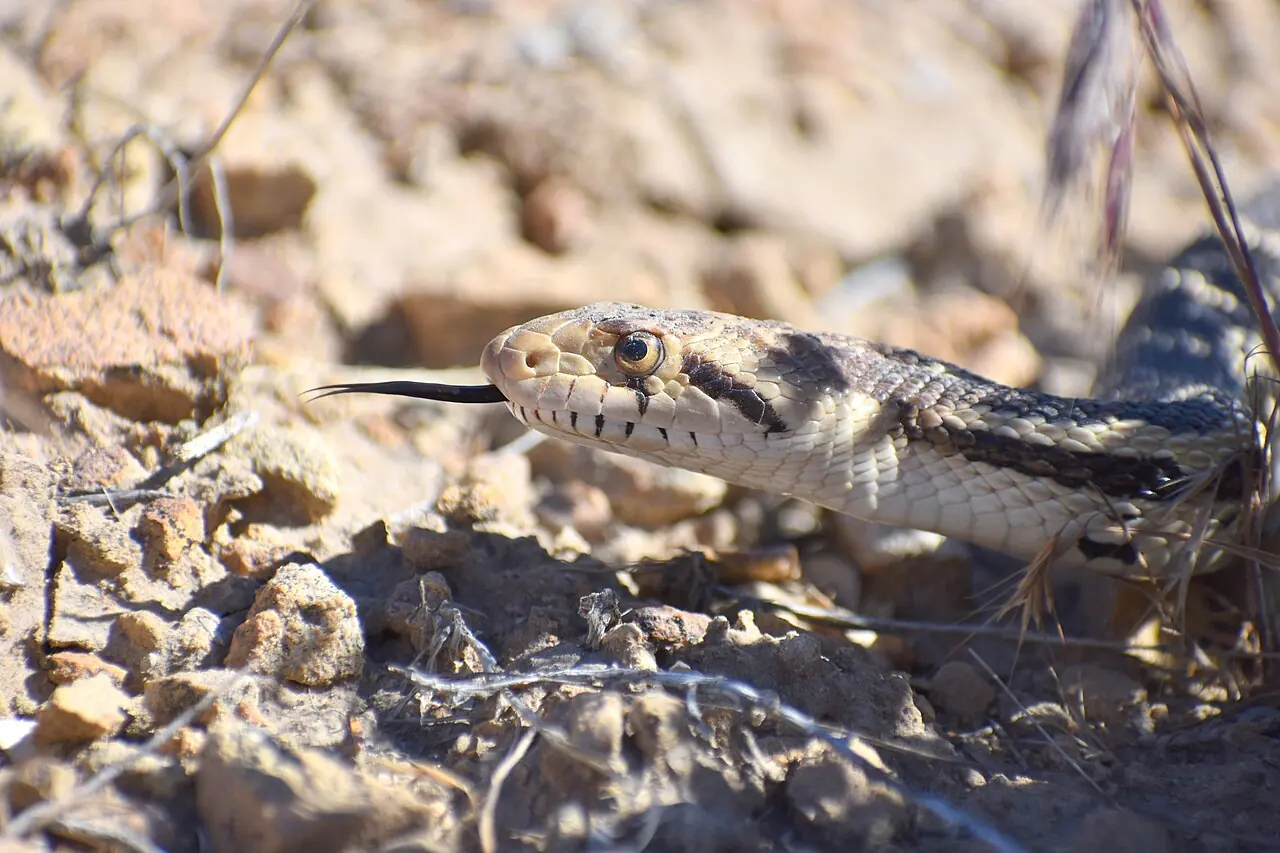
Close-up of a gopher snake on rocky ground
File photo: Gopher snake, Arches National Park archive, May 2017. One of Utah’s nonvenomous snake species. Photo: Marty Tow / National Park Service · Public domain · Wikimedia Commons
Reptiles

Snakes

A diverse group of native predators best appreciated without handling or close-range identification attempts.

Saved on this device. Statewide news and alerts remain available.