The Central Utah Project and Utah's Colorado River water imports
How the Central Utah Project carries Colorado River Basin water to the Wasatch Front, how drought and its 1964 water right affect deliveries, and the Ute Indian Tribe's claims over reservoirs promised in a 1965 agreement.
Living article · updated · 2 updates, newest first
The Ute Indian Tribe says reservoirs promised under a 1965 agreement were never completed, and courts have dismissed its claims as filed too late.
2 stories since October 21, 2026
Where things stand
As of November 4, 2026
What is known
Transbasin diversions moved about 165,000 acre-feet to the Great Basin in 2024, and this year's drought sharply cut inflow to Strawberry Reservoir (KSL.com, Oct. 21).
The Ute Indian Tribe says reservoirs promised under a 1965 agreement were never completed; courts have dismissed its claims as filed too late (KUER, Oct. 22).
Still open
Whether the unbuilt eastern Utah storage is ever completed.
The story so far
Sources checked October 27, 2026. Dates below describe events or source documents; checking a source does not make its data current.
The Central Utah Project, authorized by Congress in 1956, carries Colorado River Basin water to the Wasatch Front. Since 1992 the Central Utah Water Conservancy District has been responsible for finishing it, and the Interior Department's timeline lists no overall completion date. [1] [2]
Background and milestones
Six units were planned. The Vernal and Jensen Units are complete. The Ute Indian Unit was de-authorized by the Central Utah Project Completion Act of Oct. 30, 1992, and planning for the Upalco and Uinta units ended after the Ute Indian Tribe objected in 1998. [1] [2]
A 2004 record of decision and a 2005 supplement to the 1988 plan set the current design for finishing the Bonneville Unit, including delivery of 101,900 acre-feet a year from Strawberry Reservoir. [1] [2]
Milestones
1956 — Congress authorizes the project(adopted) The Colorado River Storage Project Act authorized the Central Utah Project among 11 participating projects. [1]
March 2, 1964 — Water conservancy district established(adopted) The Central Utah Water Conservancy District was established March 2, 1964. [1]
October 30, 1992 — Completion Act passed(adopted) Public Law 102-575 shifted construction responsibility to the district and de-authorized the Ute Indian Unit. [1]
December 22, 2004 — Record of decision on the Utah Lake system(adopted) The final environmental impact statement for the Utah Lake system was approved, and the Diamond Fork System was completed that year. [1]
2005 — Supplement endorses 101,900 acre-feet a year(adopted) The supplement to the 1988 Definite Plan Report approved delivery from Strawberry Reservoir. [1]
Planned and scheduled dates reflect the source as checked. They do not confirm that an event happened.
What to watch
Watch the project's annual federal budget justification and the Ute Indian Tribe's claims over promised reservoirs; both are covered in the stories below. The timeline checked has no entry after 2008. [1]
Unanswered questions and limits
When will the Utah Lake system be finished, and at what total cost?
How do drought and the project's water right affect deliveries?
How will the Ute Indian Tribe's claims be resolved?
The Interior timeline's last entry is 2008, and the overview gives no cost or completion date.
Current construction status and budget figures are not verified in this module.
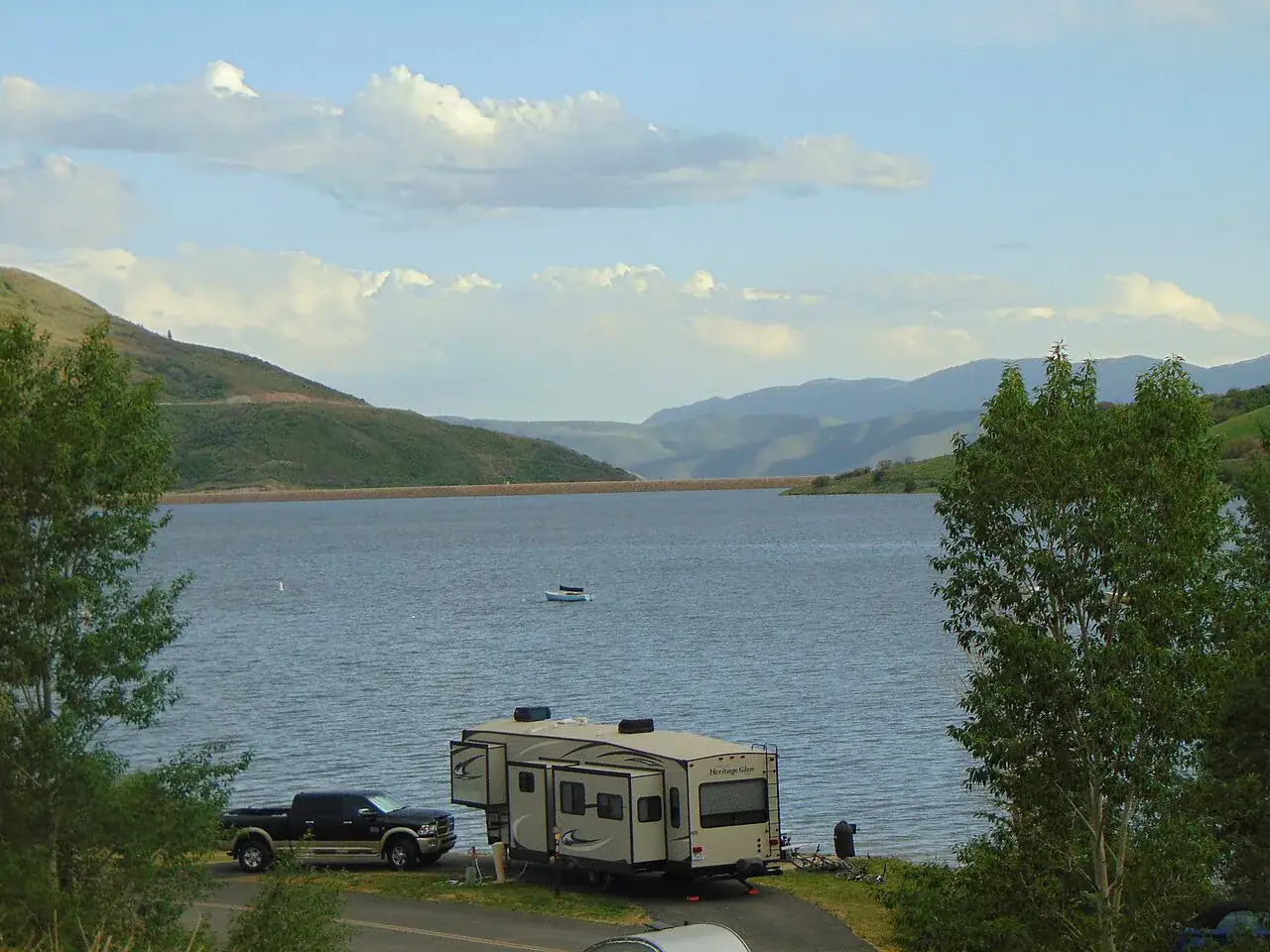
Jordanelle Reservoir and Dam, Hailstone Recreation Area, Jordanelle State Park, June 11, 2017. File photo under CC BY-SA 4.0. Photo: An Errant Knight · CC BY-SA 4.0 · Wikimedia Commons