Mammals
White-tailed prairie dog
A colonial burrowing rodent of eastern Utah, distinct from the Utah prairie dog of the southwest.
Everything Utah, every day.
Help Utahns understand their communities and hold government accountable. Our mission →
A year-round grassland rabbit that borrows prairie dog burrows to raise young.
Dinosaur National Monument calls the desert cottontail a common sight, often spotted in or around prairie dog towns. There the rabbits use abandoned prairie dog burrows to raise their young. They are social animals, and unlike prairie dogs they do not hibernate.
They eat mainly grass and get most of their water from their food. In summer they forage in the morning and late afternoon and spend the hottest hours resting in shade, often in shallow depressions they scrape out with their feet. In winter, their tracks, which look like exclamation marks, cross the snow beneath dormant plants.
This account comes from one monument and describes how cottontails live there; it is not a Utah abundance claim. The white-tailed prairie dog, whose burrows the rabbits use, has its own profile. Watch from the road or trail, since resting animals and young in burrows are easily disturbed.
Small rabbit with a pale cottony tail; look for it near prairie dog towns.
Look in the cool morning and late afternoon; stay on trails near burrows.
A colonial burrowing rodent of eastern Utah, distinct from the Utah prairie dog of the southwest.
Not a rabbit but a hare, built for speed with ears and legs that are very long.
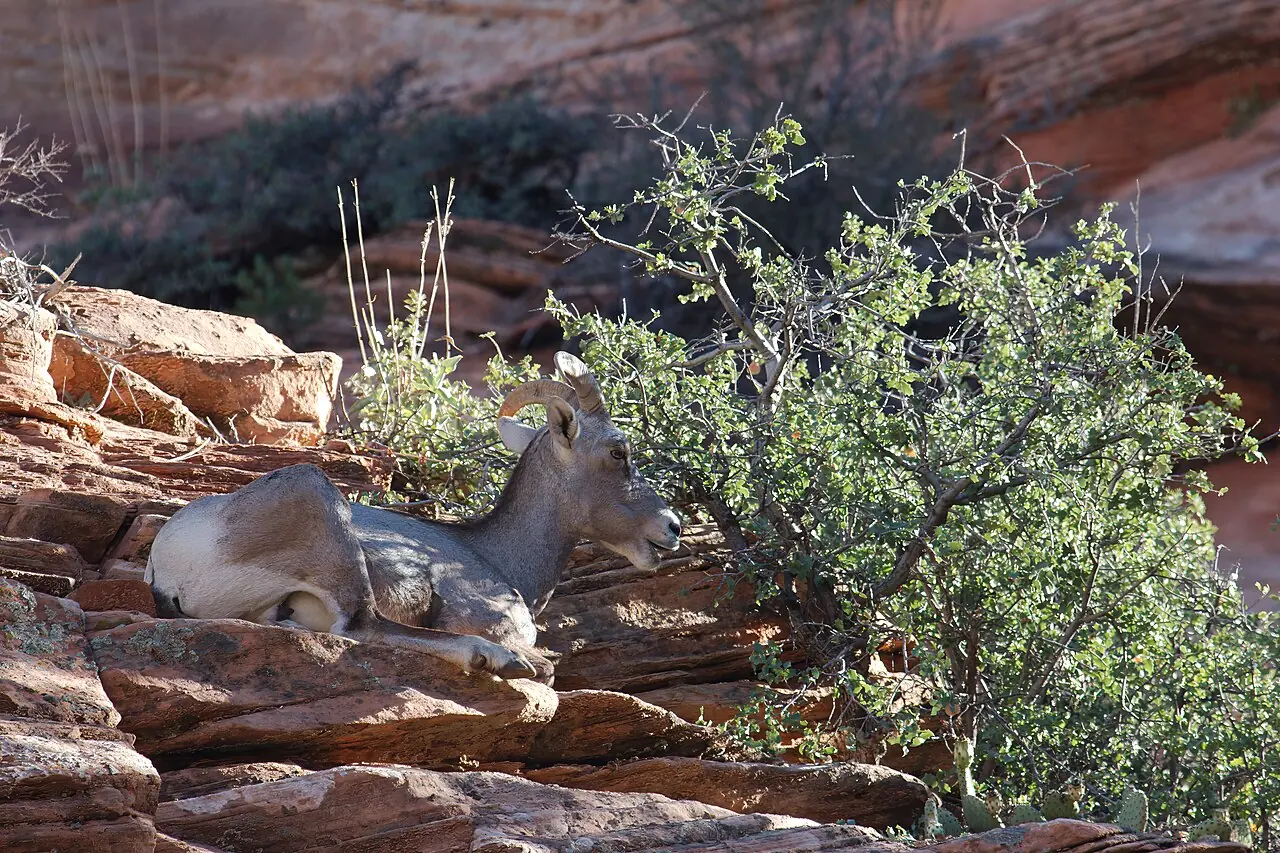
Sure-footed sheep of the slickrock, restored to Zion after disappearing there.