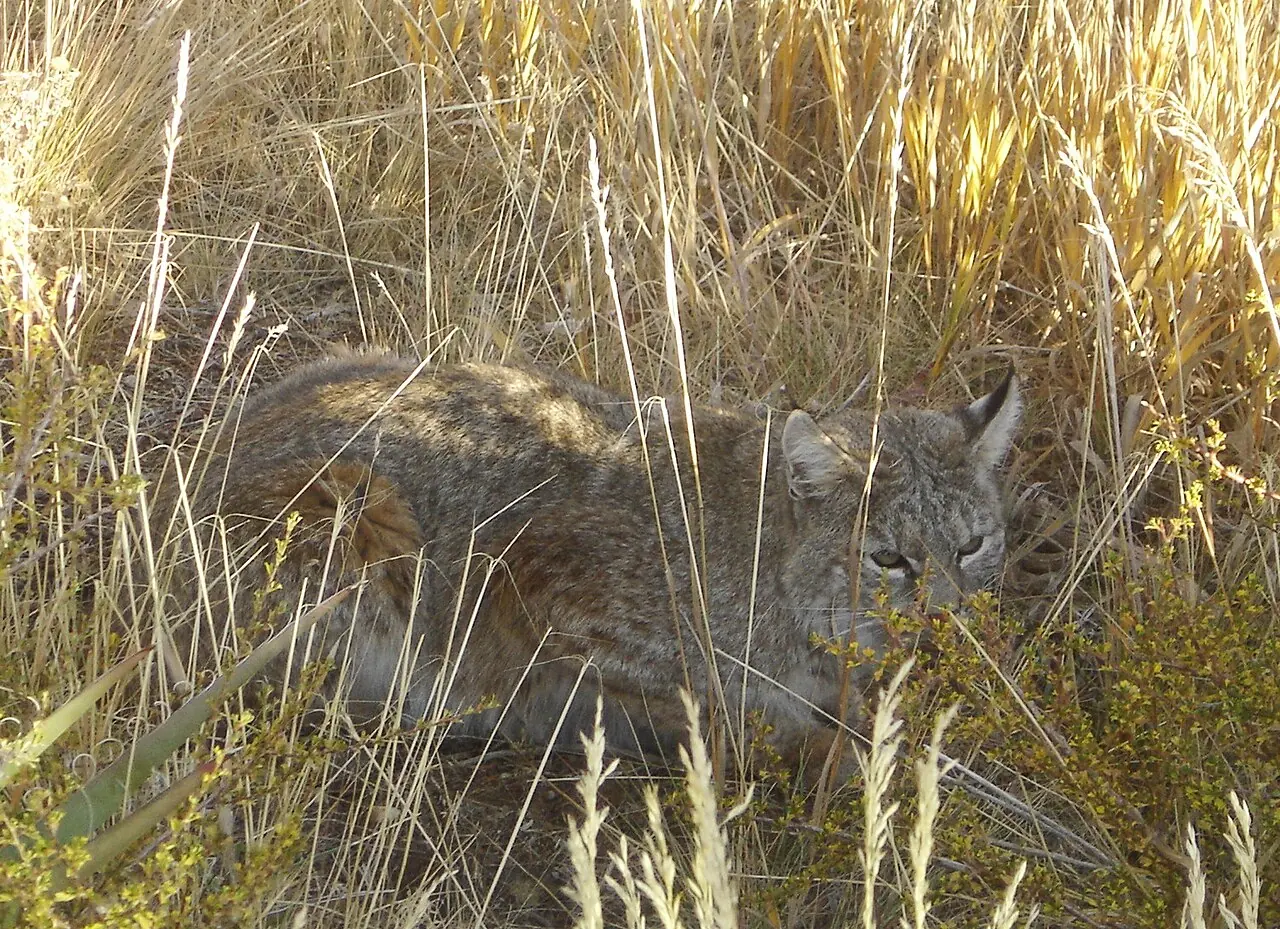
Mammals
Desert cottontail
A year-round grassland rabbit that borrows prairie dog burrows to raise young.
Everything Utah, every day.
Help Utahns understand their communities and hold government accountable. Our mission →
Not a rabbit but a hare, built for speed with ears and legs that are very long.
Despite the name, the black-tailed jackrabbit is a hare. NPS describes it as found throughout the western United States in desert, open plains and foothills. Hares live in open country and escape predators by running in a zigzag, while rabbits are slower and take shelter in burrows.
The tail has a black stripe along the top that continues onto the rump, and the very large ears are whitish with black tips. Eyes at the sides of the head let the animal see in front, to the side and behind, and its hearing and sense of smell are excellent. Hares are born furred and with eyes open, and can run and hop soon after birth. Coyotes, cats, foxes, hawks, eagles, owls and snakes all prey on them.
The desert cottontail is the smaller rabbit of the same sort of country. Compare the long limbs and long ears of a hare with the compact shape of a cottontail. A resting animal under a shrub is better left where it is than flushed for a photo.
Very long ears with black tips, long hind legs and a black stripe on top of the tail.
Stay on established paths and let resting animals stay in cover.
A year-round grassland rabbit that borrows prairie dog burrows to raise young.
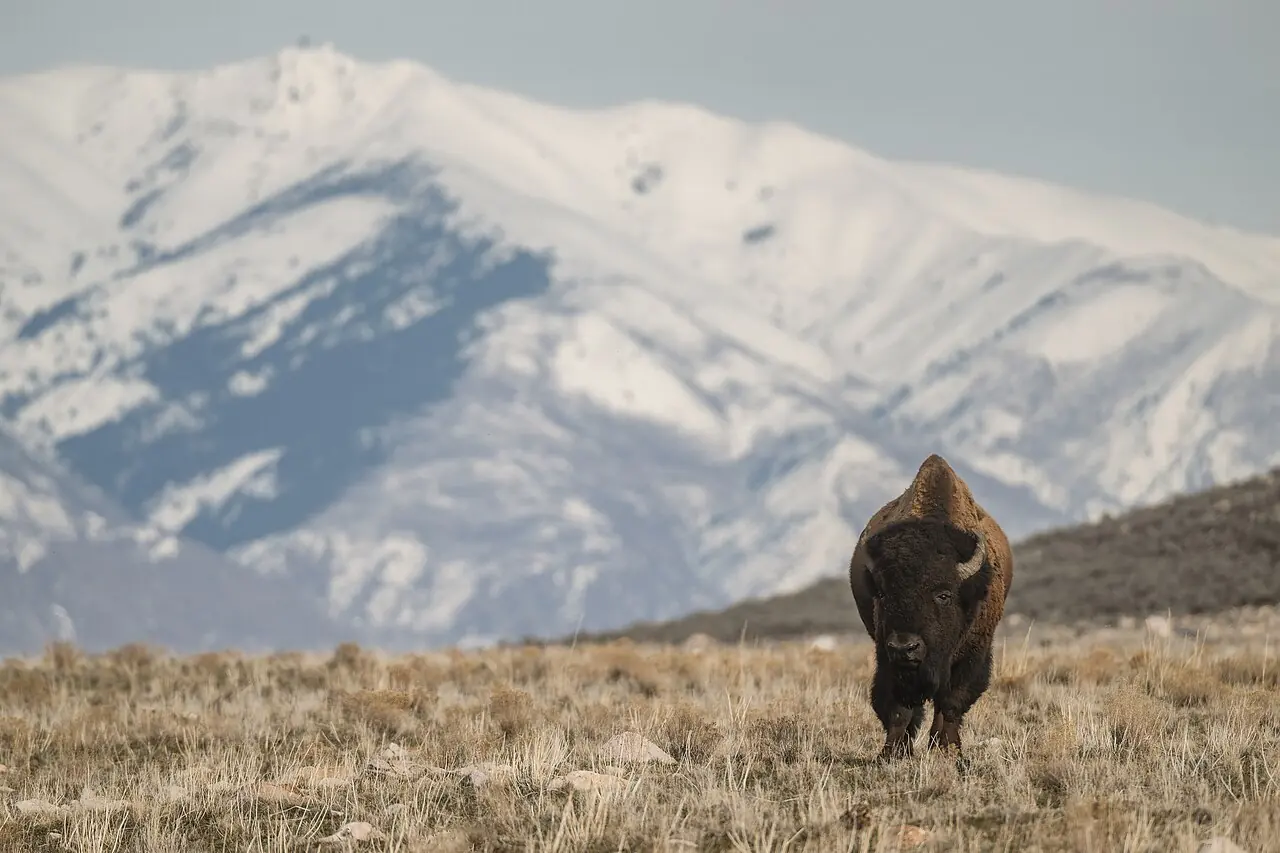
North America's largest land animal, with wild herds on Antelope Island, in the Henry Mountains and in the Book Cliffs.
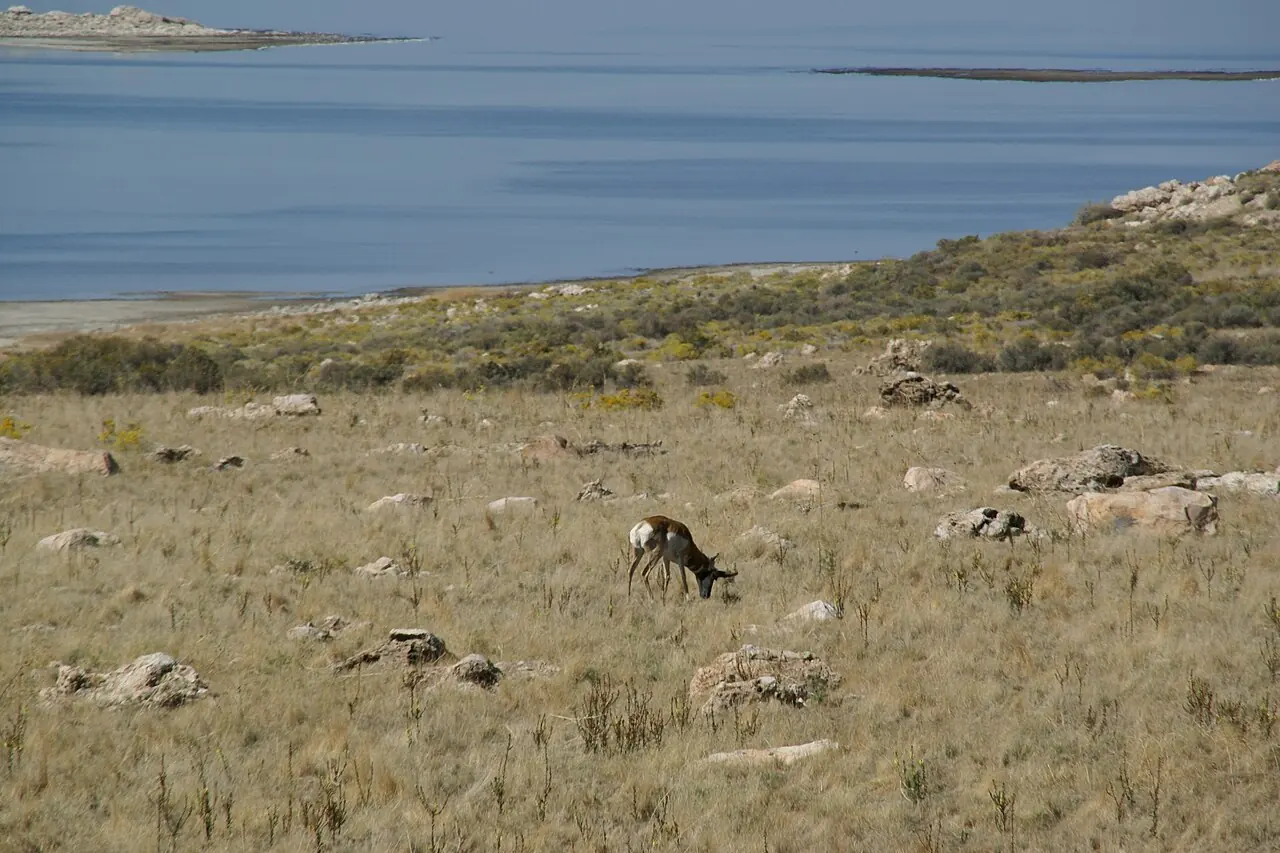
An open-country specialist with a white rump, unusual shedding horn sheaths and a need for connected habitat.