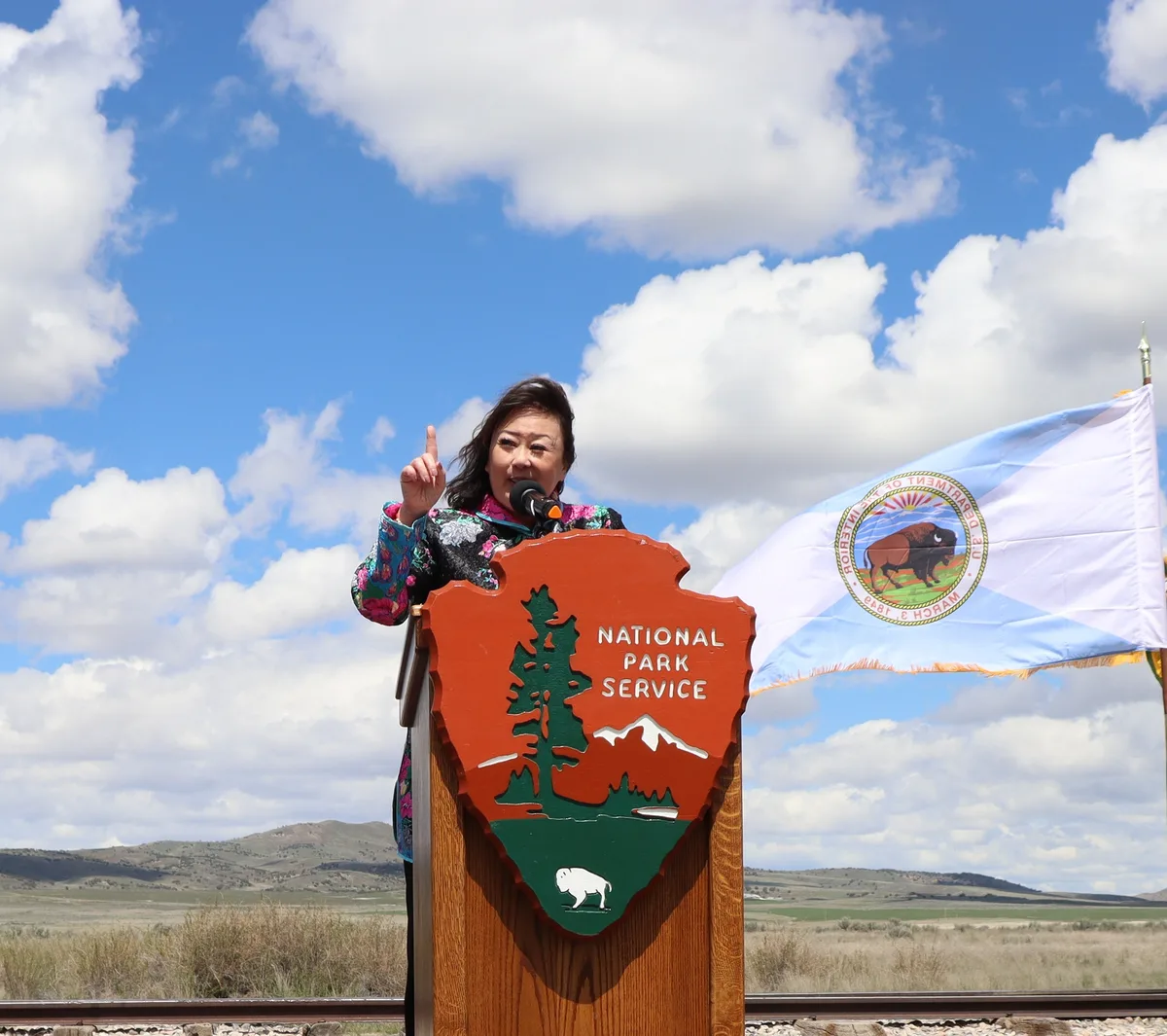
Utah state Sen. Karen Kwan speaks at Golden Spike National Historical Park, May 11, 2024. Photo: NPS Photo · Public domain · Wikimedia Commons
Utah state Sen. Karen Kwan speaks at Golden Spike National Historical Park, May 11, 2024. Photo: NPS Photo · Public domain · Wikimedia Commons
Politically neutral. Every candidate on this ballot gets the same sections. The party shown is the one the ballot lists. A section is missing only where we haven't yet found an official source for it. How we stay neutral
Unofficial results: Karen Kwan was leading with 12,143 votes, or 68.3%. As of Nov 4, 1:42 AM MT. Election night results. Counts are not official until the canvass.
Karen Kwan was a candidate for Utah Senate, District 12 in the Nov. 3, 2026 general election. The ballot listed Karen Kwan, Democratic. Counts are unofficial until the canvass; see the election night results and the official results. The district covers all or part of Salt Lake County.
The final-passage votes in the 2026 sessions that were decided by the fewest votes, with Karen Kwan's vote. These are picked by the size of the margin in the official tally alone, not by topic or party.
March 6, 2026 · Vote 2133Voted: Absent or not voting
4th Sub. SB 31: Office of Professional Licensure Review Amendments
Concurrence, Final Passage · Result: Ayes 0 Nays 0 Abs 29 · Official record
Karen Kwan holds bachelor's and master's degrees in psychology and clinical psychology from Pepperdine University and a doctorate in educational leadership and policy from the University of Utah. Her Senate caucus biography describes a career teaching psychology at Salt Lake Community College, where she is professor emeritus and was named Distinguished Faculty Lecturer in 2014.[1]
Community work and representation
Kwan's biography traces community work to the Asian Association of Utah and the University of Utah's Center for Ethnic Student Affairs. It also records involvement in OCA-Utah, the Governor's Asian-American Council and the Chinese Railroad Workers Descendants Association. The caucus describes her as the first Chinese American to serve in the Utah Legislature, placing that service within a longer history of cultural and educational advocacy.[1]
From the House to the Senate
Kwan served in the Utah House before her 2023 appointment to Senate District 12. The current district includes West Valley City, Taylorsville and Kearns communities. She is identified as minority whip. Her caucus biography emphasizes local business, education, senior care and language access. The 2017 start shown for her overall legislative career should be distinguished from her later arrival in the Senate.[1][2]
In the 2026 General Session, Karen Kwan was chief sponsor of S.B. 29, Child Care Advisory Committee Amendments. It would have extended the sunset date of the Child Care Advisory Committee. The Senate passed it and a House committee reported it favorably, but it did not receive a final House vote, and it was filed on March 6, 2026.[3]
In the 2026 General Session, Karen Kwan was chief sponsor of S.B. 53, Public Land Management Advisory Board Amendments. It would have added the state historic preservation officer and the School and Institutional Trust Lands Administration director, or their designees, to the Public Land Management Advisory Board. It failed in the Senate, and it was filed on March 6, 2026.[4]
Transport, workforce and public spending
The current roster lists Kwan on Senate Economic Development and Workforce Services and Transportation, Public Utilities, Energy, and Technology, alongside Rules and Ethics. Higher Education and Transportation and Infrastructure appropriations assignments add budget responsibilities, and the Federalism Commission adds intergovernmental work. These are the places to follow her current hearings and deliberations; a caucus policy statement and an individual recorded vote remain different forms of evidence.[2]
Profile sources
Profile refreshed October 20, 2026. Candidate statements describe the candidate's own experience or positions; official records and reporting are labeled separately.
The five other Democratic senators cited an independent workplace investigation released Nov. 2 that found a pattern of conduct likely motivated by race, national origin or ethnicity.