Birds
Long-billed curlew
A large shorebird with a sickle-shaped bill that nests in dry grassland and winters on mudflats.
Everything Utah, every day.
Help Utahns understand their communities and hold government accountable. Our mission →
A yellow-breasted grassland songbird whose flute-like song is easier to notice than the bird.
A bright yellow breast with a black V is the western meadowlark's signature, set against a brown, streaked back. Despite the field-and-fence-post look, it belongs to the blackbird family. It likes open country such as grasslands, meadows, deserts and farm fields, and it avoids woods and dense shrubs. NPS lists it among the birds that frequent the grasslands at Arches.
On the ground it forages by probing the soil and prying open its bill to reach food. Insects dominate its diet during the breeding season, while grain and weed seeds matter more in fall, winter and spring. A singing male on a post or shrub is usually easier to find than a feeding bird that is hidden in the grass.
The eastern meadowlark is nearly identical to the western in plumage, and song is the most reliable way to separate them where both occur; the western song is a rich, descending warble that ends in a gurgle. Use more than the V on the breast, and rely on place and voice when in doubt. Birds nest on the ground, so keep to trails and roads in grassland.
Yellow breast with a black V, streaked brown back, pointed bill; a flute-like, gurgling song.
A bird of open country, tied to grassland and farm-field habitat.
Watch fence lines and open grassland from roads and trails; avoid walking through nesting grass.
A large shorebird with a sickle-shaped bill that nests in dry grassland and winters on mudflats.
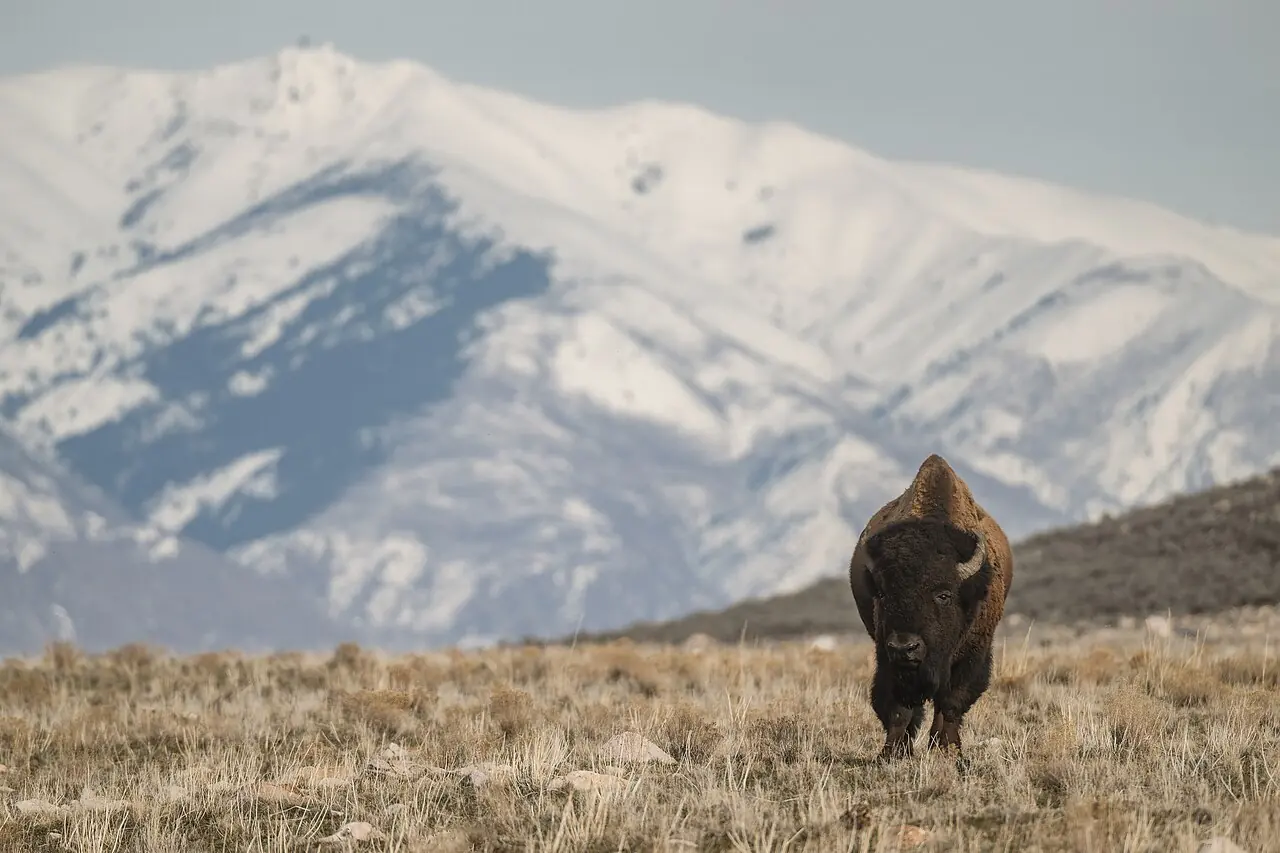
North America's largest land animal, with wild herds on Antelope Island, in the Henry Mountains and in the Book Cliffs.
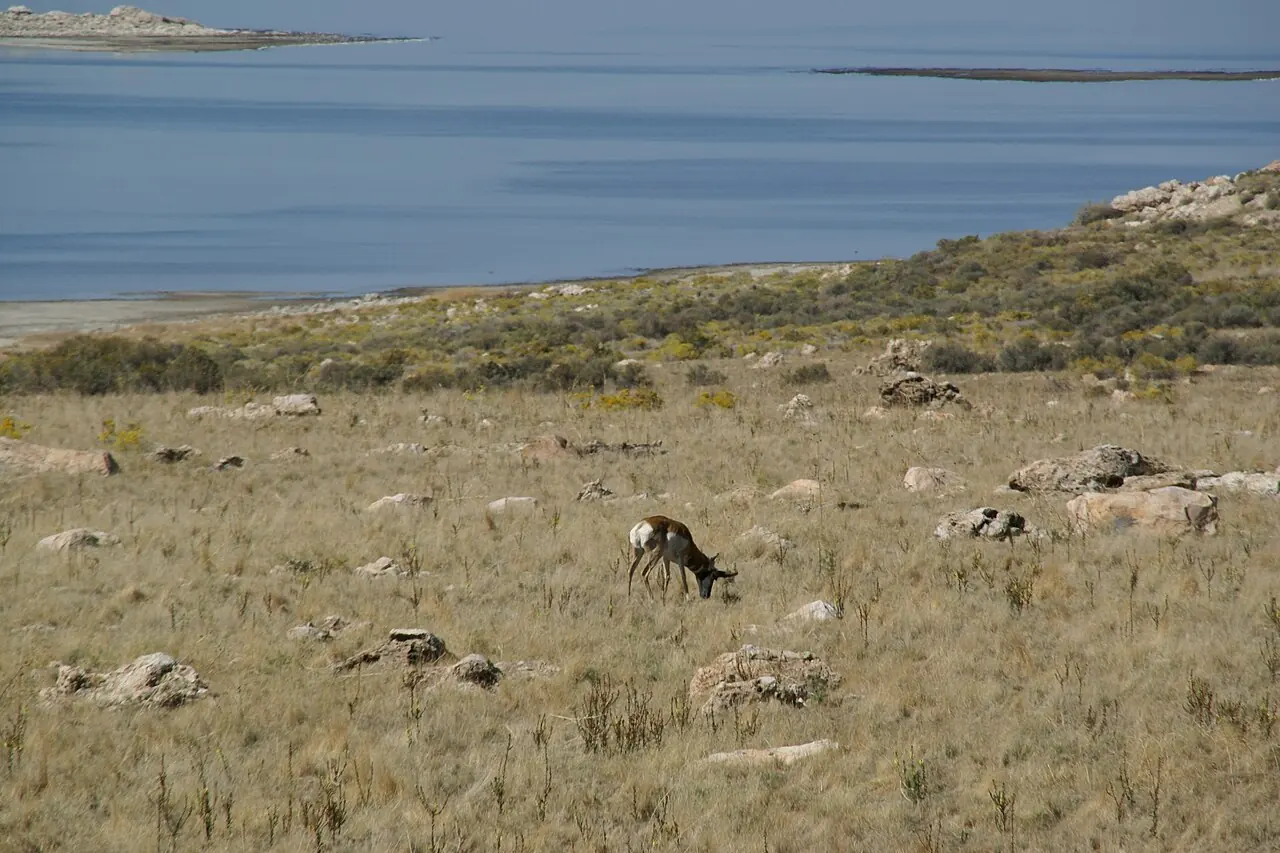
An open-country specialist with a white rump, unusual shedding horn sheaths and a need for connected habitat.