Invertebrates
Monarch butterfly
An orange-and-black migrant whose caterpillars need milkweed and whose adults need flowers through the season.
Help Utahns understand their communities and hold government accountable. Through nonpartisan, AI-assisted research, we examine public records, follow decisions and votes, and connect readers with local news, events and places.
Everything Utah, every day.
A broad-leaved native perennial whose clustered flowers support pollinators and whose leaves can host monarch caterpillars.
Showy milkweed makes a substantial plant even before flowering. Upright stems carry broad, softly hairy leaves, while rounded clusters of intricate pinkish to pale flowers draw attention in the growing season. Later, elongated seed pods replace the flowers; when mature, they release seeds equipped with silky tufts. The silky attachments help wind carry seeds away. Milkweeds are a diverse group in Utah, so this combination of broad leaves, flower structure, and pods is an introduction rather than a complete identification key.
Showy milkweed occurs in open habitats including meadows, stream margins, irrigation edges, and disturbed ground. It is native even where it grows beside a road or ditch. Underground growth can produce additional shoots, so a patch is more than the stems visible in a single season. Flowers generally appear in late spring or summer, with timing changing by elevation and moisture. Pods and wind-borne seeds become a different viewing opportunity later in the year.
Monarch caterpillars can use this plant as a host, while the flowers feed a wider variety of visiting insects. A milkweed patch does not guarantee monarchs, and holes in leaves are not evidence that the plant needs treatment. Watch without collecting eggs, caterpillars, flowers, or pods. Leave stems intact rather than breaking them to test for sap, and keep this encounter observational: milkweed should not be sampled or treated as a food plant.
Broad opposite leaves, rounded clusters of complex pinkish flowers, later pods with tufted seeds; other milkweeds require closer examination.
Observe insects without handling them; do not break stems or collect pods. Do not ingest.
An orange-and-black migrant whose caterpillars need milkweed and whose adults need flowers through the season.
A foundational shrub of Utah's open country, with small gray-green leaves and an outsized role in wildlife habitat.
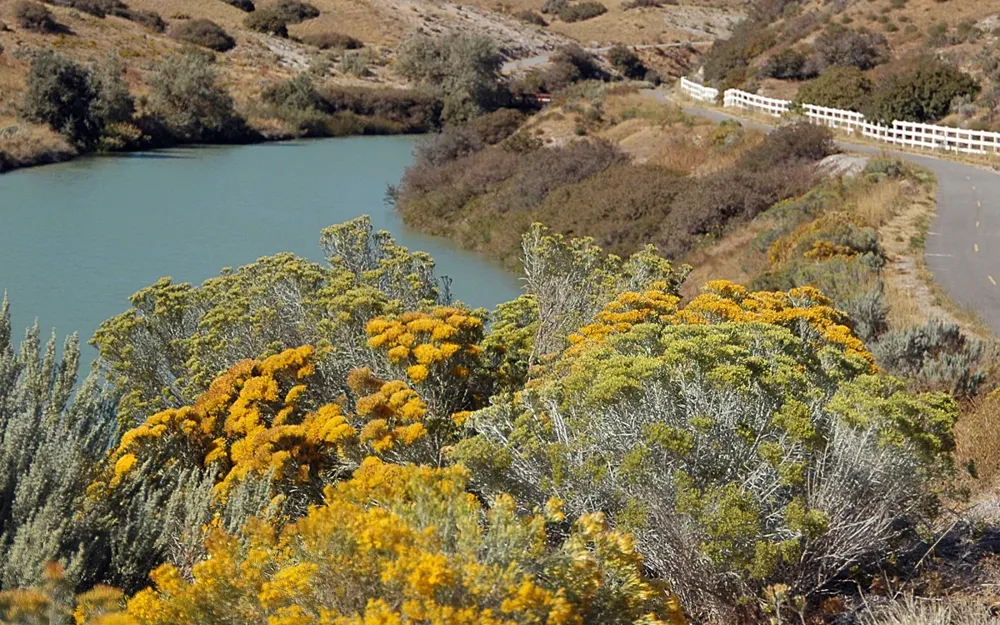
A flexible-stemmed native shrub whose late-season yellow flowers extend feeding opportunities for pollinators.
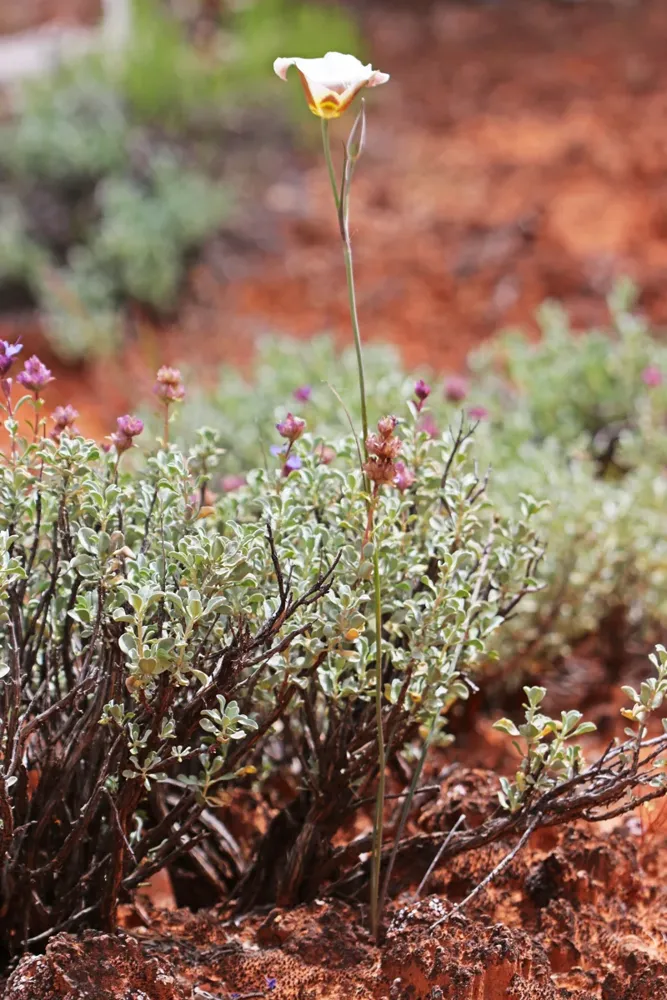
Utah's state flower briefly lifts a three-petaled cup above open, dry-country vegetation before its aboveground growth fades.