Red fox
A common canid whose white-tipped tail is a better clue than its color.
Wild Aware Utah says red foxes are common in Utah and live in open and semi-open habitats, and sometimes in forests, cities and suburbs. They can be any shade from red to black, so the white tip on the tail is the reliable feature. Foxes eat small mammals, insects, amphibians, fish, fruit, berries, nuts, eggs and carrion.
Foxes can be active day or night, mostly at dawn and dusk, so a fox in daylight does not mean it is sick. Breeding is from mid-January to early February, and kits are born from March to May in dens dug in the ground or under rocks or structures. Kits begin hunting with their parents at about 8 to 12 weeks and disperse by fall. USU Extension notes that red foxes are not native to Utah and are becoming more common in cities.
Both sources give the same advice: do not feed, approach or chase foxes. Secure trash, remove pet food and fallen fruit, supervise pets at dawn and dusk and keep cats indoors. Wild Aware says red foxes are protected furbearers that can be taken year-round without a license.
How to recognize it
Canid in shades of red to black, with a white-tipped tail.
Watching and staying safe
Watch from a distance and never feed foxes; secure trash and pet food at home.
Related profiles
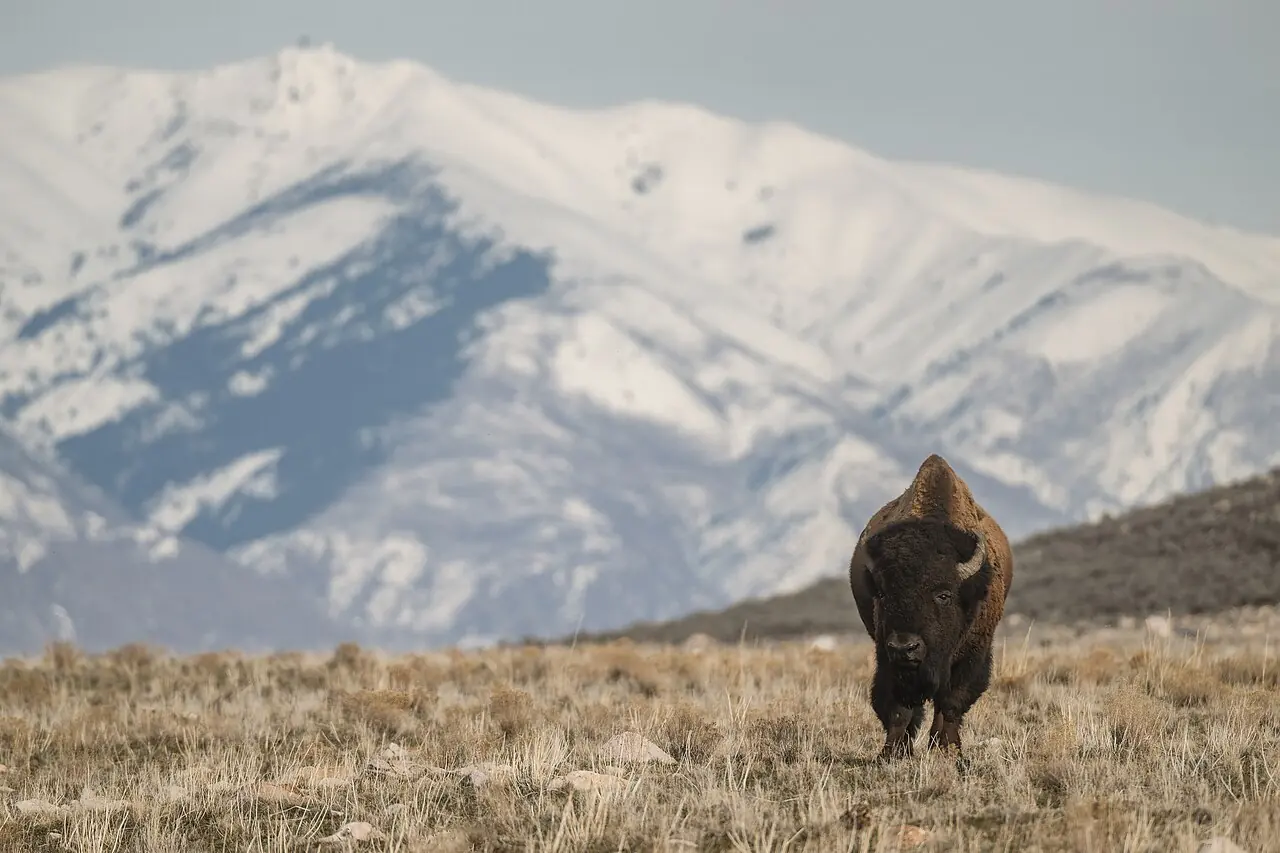
American bison
North America's largest land animal, with wild herds on Antelope Island, in the Henry Mountains and in the Book Cliffs.
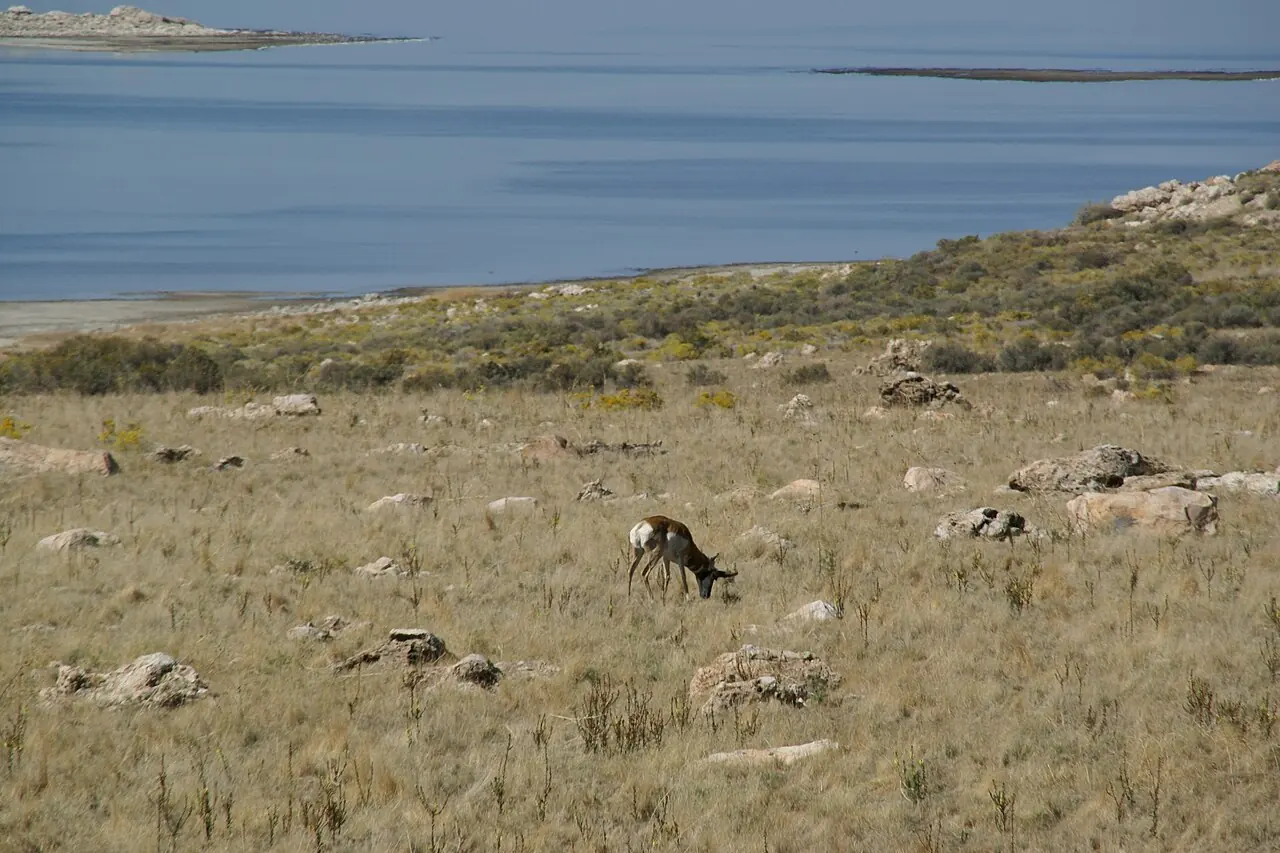
Pronghorn
An open-country specialist with a white rump, unusual shedding horn sheaths and a need for connected habitat.