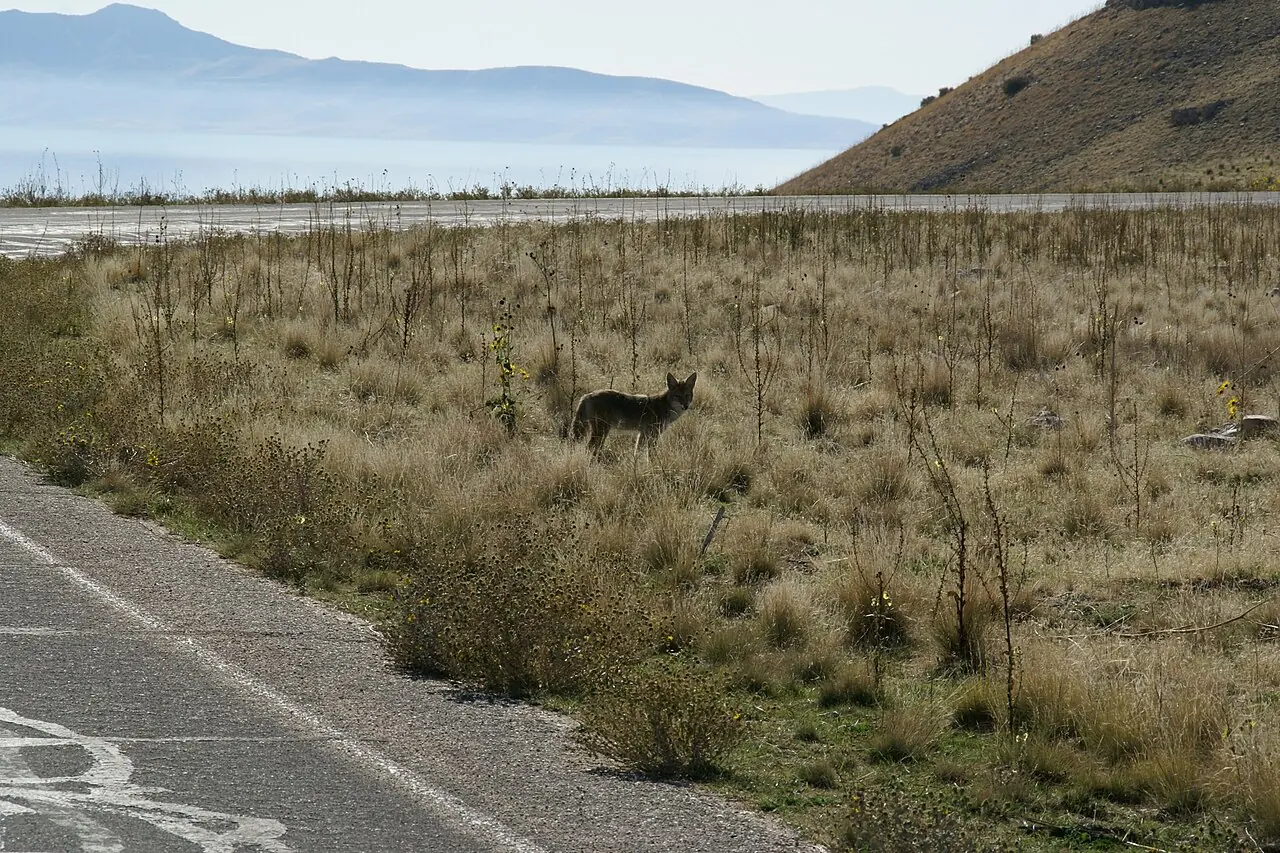
File photo: A coyote beside a road on Antelope Island (2012-10-01 15:05:31). Photo: Hermann Luyken · CC0 · Wikimedia Commons
Mammals
Coyote
Common across Utah, including in cities, and an opportunist that will eat almost anything.
Everything Utah, every day.
Help Utahns understand their communities and hold government accountable. Our mission →
A woodland and shrubland fox that can climb trees.
NPS describes the gray fox as native to woodland and shrubland in central and southern Utah, and common around Capitol Reef's Fruita area. A black stripe down the length of the tail and a black tip are the park's identification clues. Because the source is a single park, this profile does not claim the species for all of Utah.
Like other canines, it is an omnivore, eating small mammals, insects, birds, fruits and eggs. It is mostly active at night, dawn and dusk. Dens can be in small caves, hollows in logs or trees, beneath boulders, or in other animals' abandoned burrows. Although it usually stays on the ground, it can climb trees.
Coat color alone is a weak guide. Compare the tail pattern, the setting and, when possible, more than one feature before naming a fox. The coyote is the larger wild canine of the same country and has its own profile. Keep your distance, keep dogs leashed and do not leave food out where foxes can find it.
Gray fox with a black stripe along the top of the tail and a black tail tip.
Seen mostly at night and around dawn and dusk; keep distance, secure food and leash dogs.
Common across Utah, including in cities, and an opportunist that will eat almost anything.
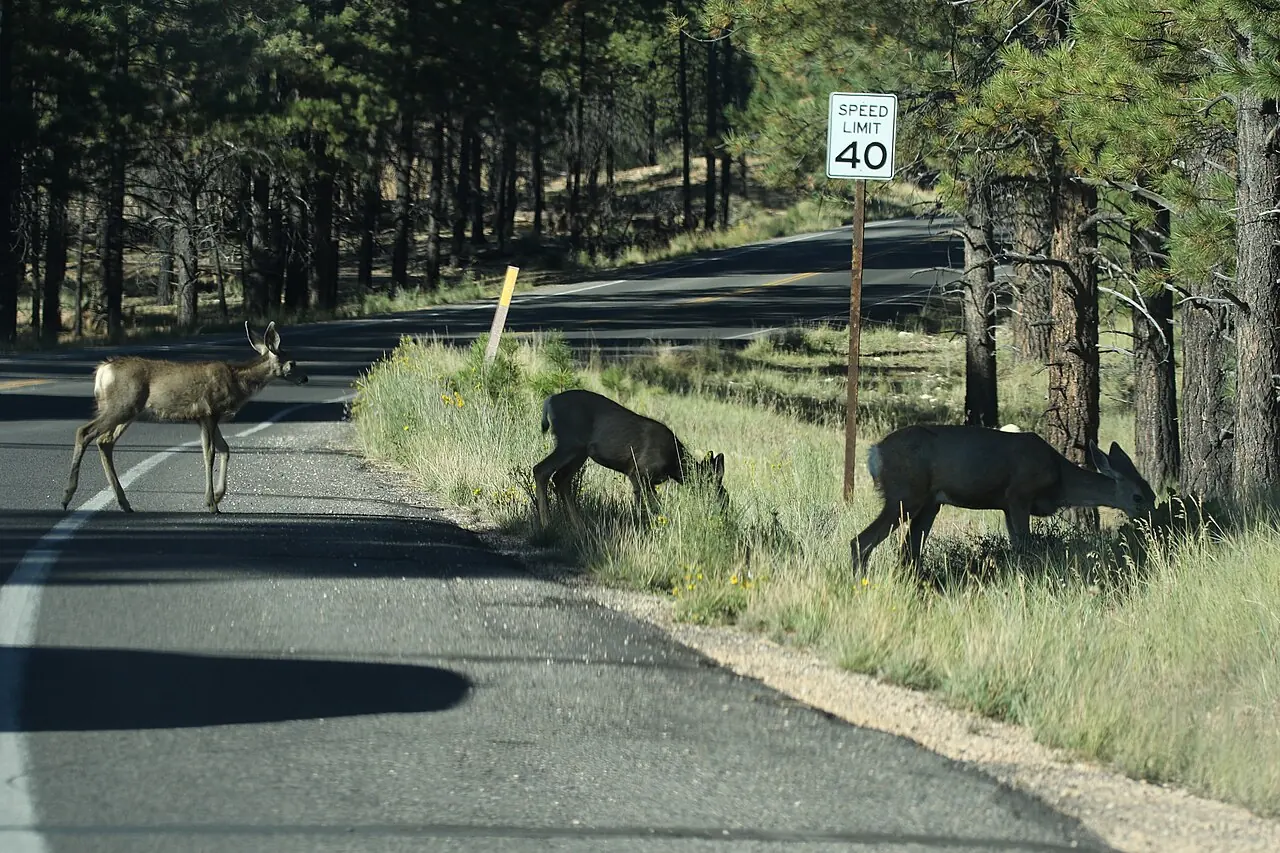
Found across Utah, from high mountains to city neighborhoods, and named for its large, mule-like ears.
