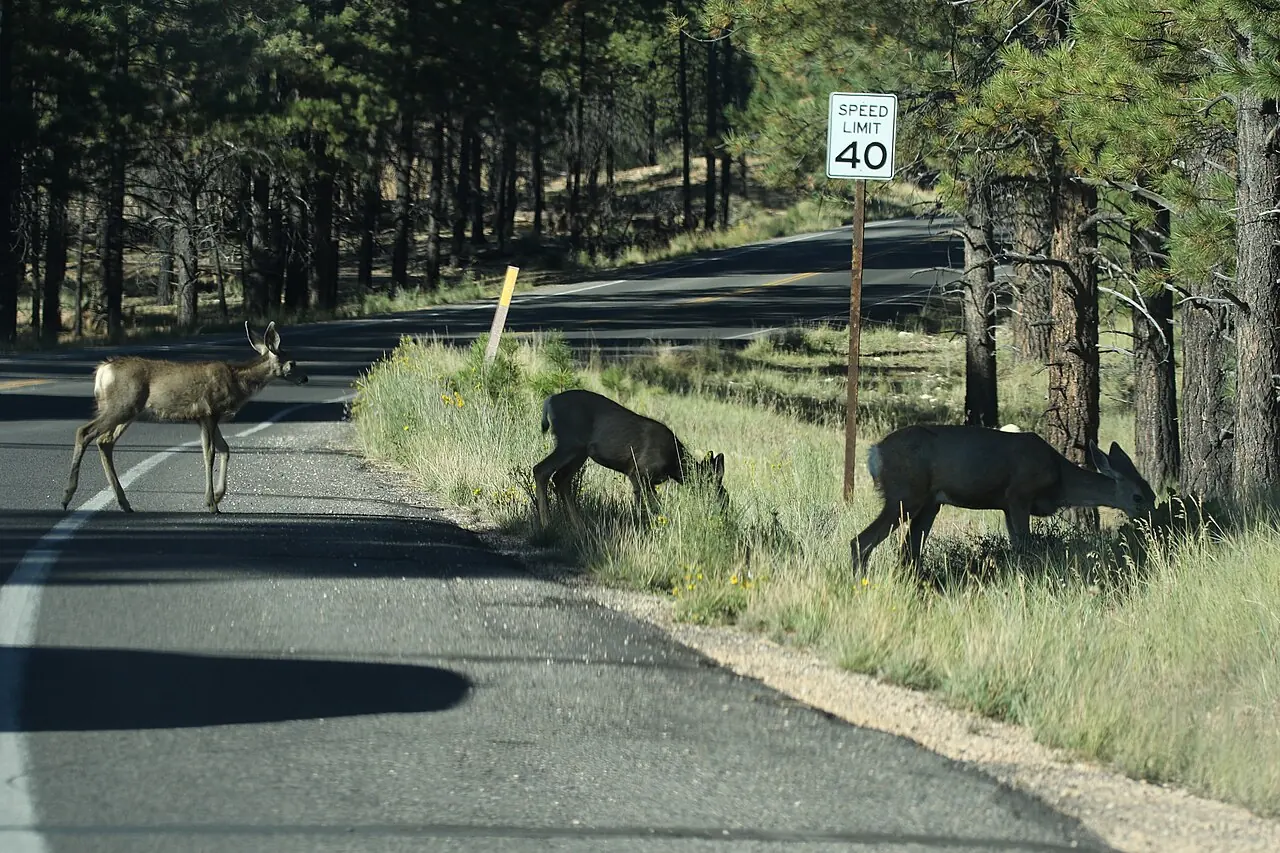
Mule deer
Found across Utah, from high mountains to city neighborhoods, and named for its large, mule-like ears.
Everything Utah, every day.
Help Utahns understand their communities and hold government accountable. Our mission →
The fastest animal, a cliff-nesting falcon that rebounded after the DDT years.
Zion calls the peregrine falcon the fastest animal in the world. It catches other birds in flight, starting from a high perch on a cliff and then stooping, a headfirst dive in which it folds its wings into a bullet shape. The park says that in 1970 only 39 breeding pairs remained in the lower 48 states because of DDT, and that the population has since risen to over 4,000 pairs.
Zion's cliffs held peregrines even through the DDT crash, and the park has monitored nesting for more than 25 years, tracking 8 to 10 pairs each year though there are probably more. Falcons are sensitive to disturbance while nesting; a disturbed pair may abandon the site until the next year. For that reason certain climbing routes close each spring.
The seasonal closures belong to the park and change. Zion's climbing-closure page posted a notice that all seasonal climbing closures would lift on August 1, 2026, with closures resuming in spring 2027; always read the current notice, not an older list below it. A falcon overhead does not make a cliff an occupied nest or an invitation to approach it.
Streamlined falcon with pointed wings; hunting dives are steep and fast.
Recovered from the DDT era, according to the National Park Service; Zion monitors nesting each year.
Watch cliffs from a distance, and check the park's current climbing-closure notice before any cliff visit.

Found across Utah, from high mountains to city neighborhoods, and named for its large, mule-like ears.

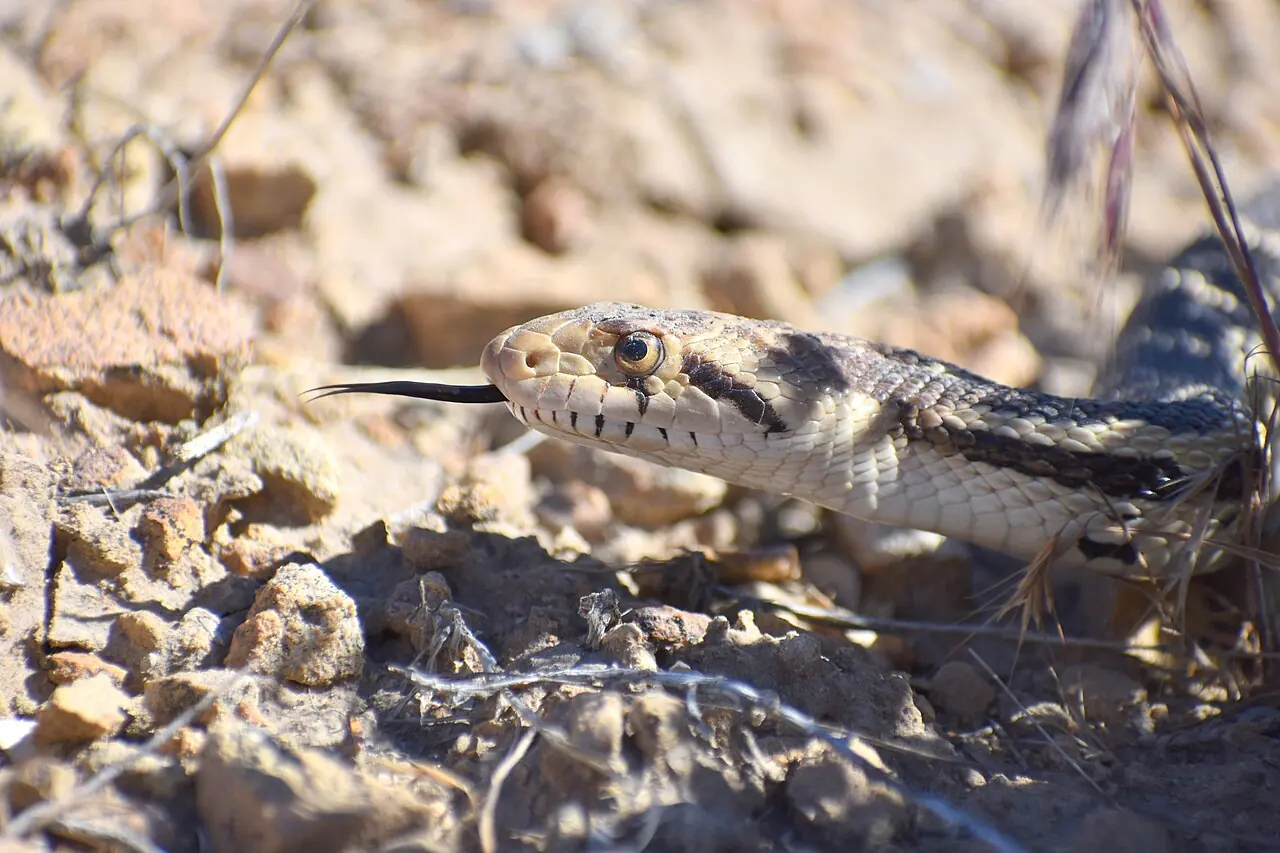
A diverse group of native predators best appreciated without handling or close-range identification attempts.
An elusive raccoon relative that moves through canyon rock with a long black-and-white ringed tail.