Birds
Western tanager
A canopy songbird whose breeding male looks like a yellow bird with a flame-colored head.
Everything Utah, every day.
Help Utahns understand their communities and hold government accountable. Our mission →
A sky-blue bird of open country that winters on juniper berries when insects are scarce.
NPS describes the mountain bluebird as about 7 inches long. Males are sky blue; females are gray with blue tinges and a white belly. The birds live in open country with trees, prairies, sagebrush and above the alpine tree line.
They prefer to eat insects and berries. In winter, when other food is scarce, they turn to mistletoe, juniper and hackberry fruit. Mountain bluebirds can raise up to two broods a year.
The bird's open-country life makes a fence line or a sagebrush flat a better place to look than a forest. The western bluebird is a different species that the same NPS source describes separately, so compare range and setting as well as color.
Males sky blue; females gray with blue tinges and a white belly.
Watch fence lines and open flats from the road or trail; keep away from nest cavities.
A canopy songbird whose breeding male looks like a yellow bird with a flame-colored head.
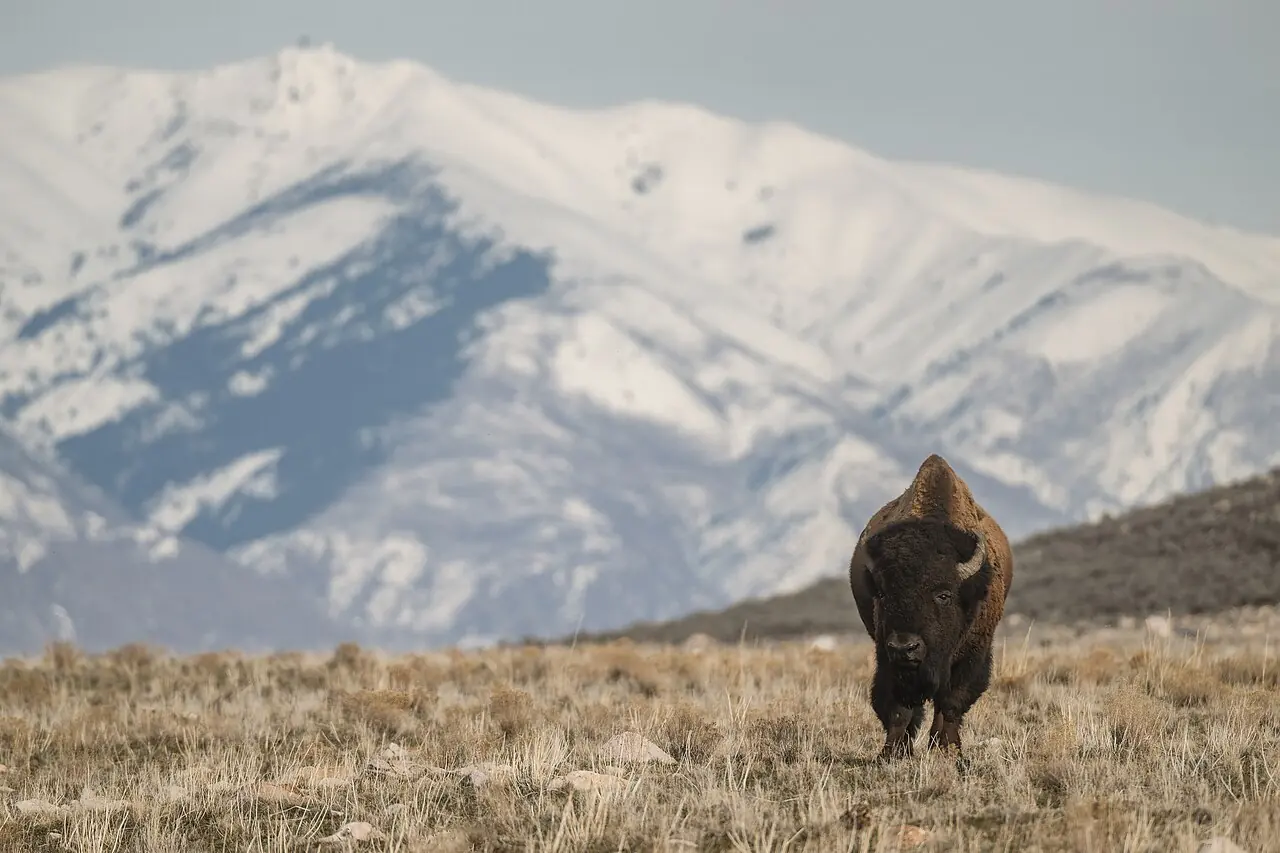
North America's largest land animal, with wild herds on Antelope Island, in the Henry Mountains and in the Book Cliffs.
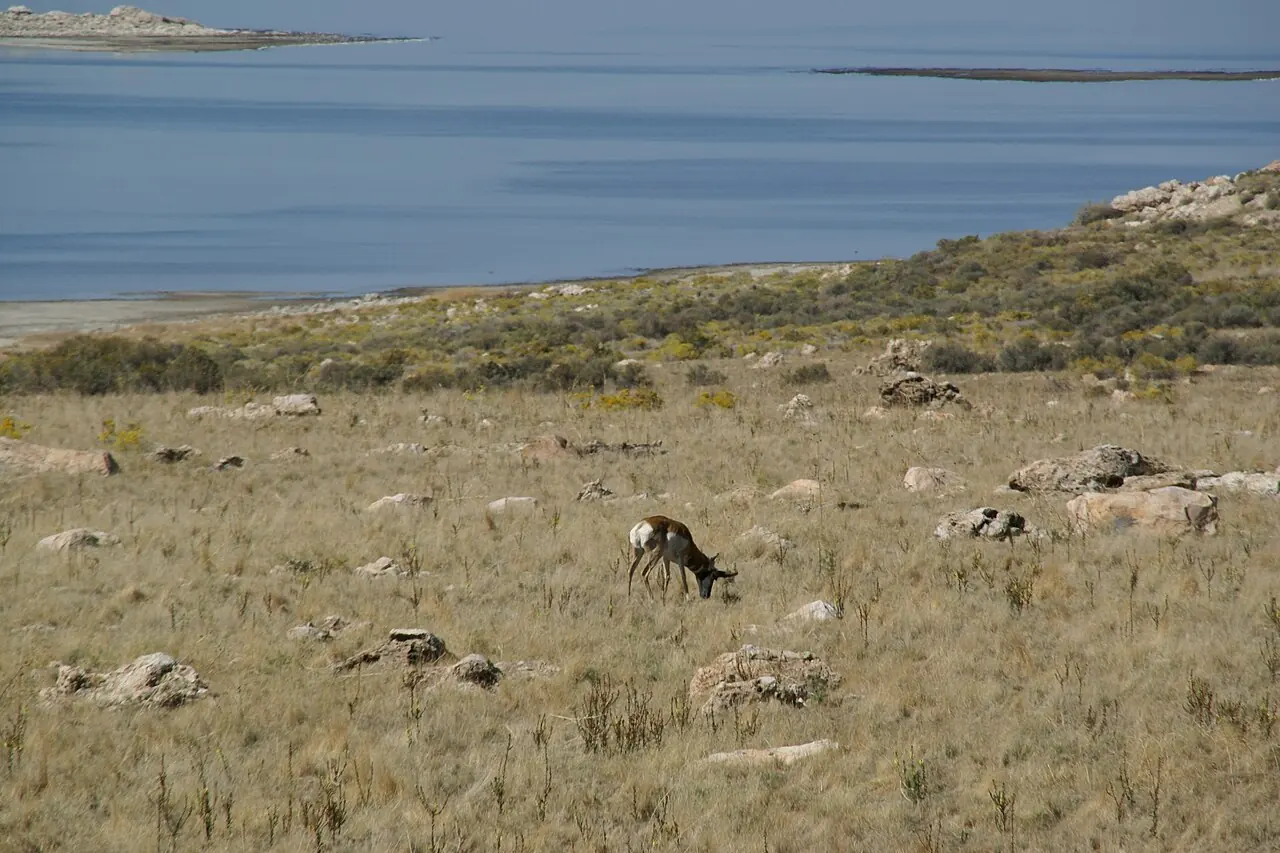
An open-country specialist with a white rump, unusual shedding horn sheaths and a need for connected habitat.