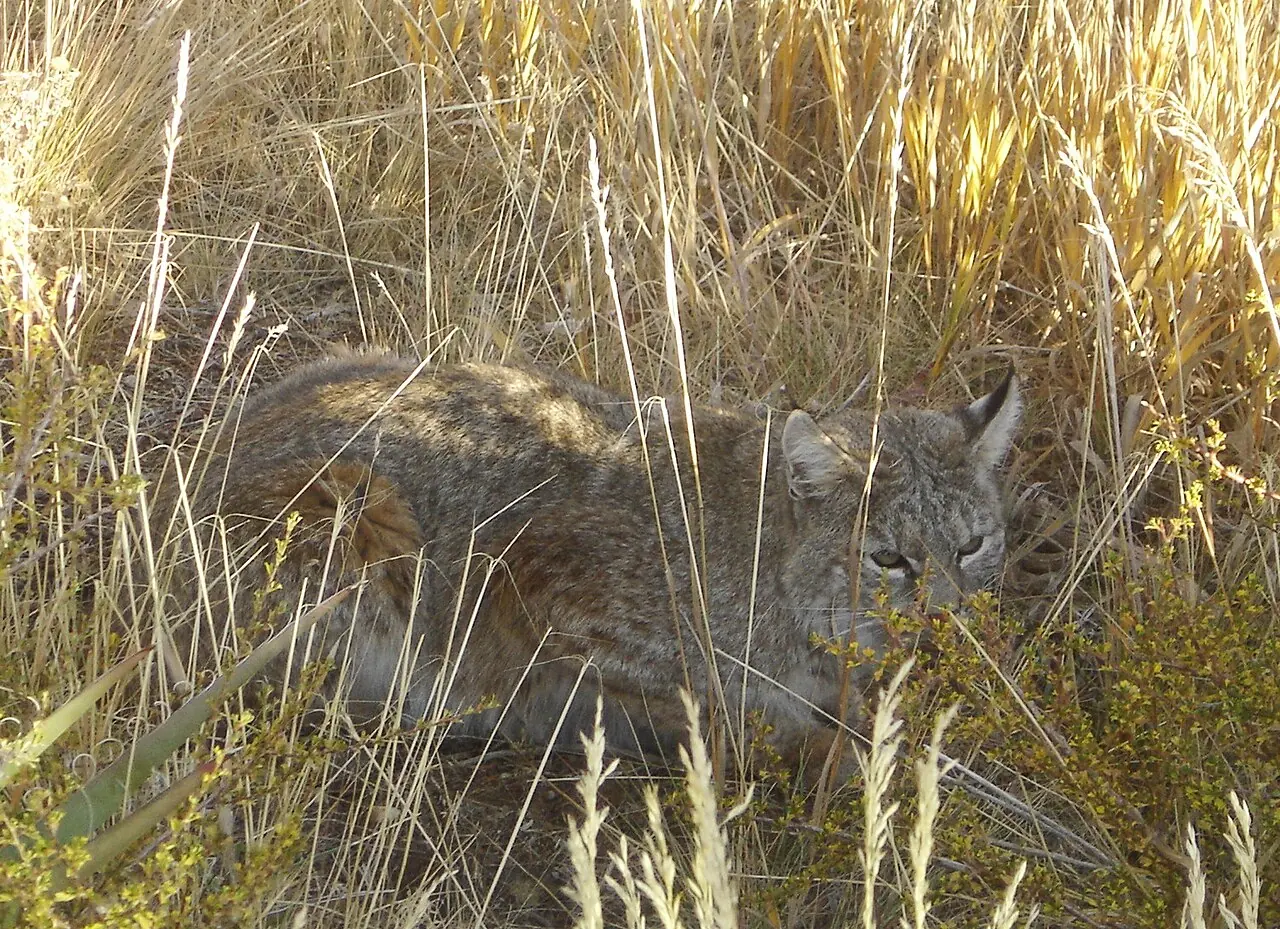
Mammals
Black-tailed jackrabbit
Not a rabbit but a hare, built for speed with ears and legs that are very long.
Everything Utah, every day.
Help Utahns understand their communities and hold government accountable. Our mission →
A large hare of open grassland, with an all-white tail and a coat that can turn white in winter.
The white-tailed jackrabbit is a large hare. The Natural History Museum of Utah says it is yellowish to grayish brown above and pale below, turns white in winter, and can be told from the black-tailed jackrabbit by its larger size and all-white tail. Males weigh roughly 2.5 to 4.3 kilograms (about 5.5 to 9.5 pounds).
It prefers grassland, eating grasses and green plants first and turning to shrubs in winter. It is among the most solitary hares, and animals meet briefly in the breeding season. Breeding usually starts around February, with one to four litters a year and four or five young in a typical litter.
The museum describes only scattered historical records from the Salt Lake Valley and the Wasatch Range, so do not assume it is the jackrabbit you will see near town. Utah DWR notes that both the white-tailed and black-tailed jackrabbits are not protected and can be hunted at any time.
Large hare with an all-white tail; white coat in winter.
Utah DWR does not classify jackrabbits as protected wildlife.
Scan open grassland from roads and trails; stay on public land and do not pursue hares.
Not a rabbit but a hare, built for speed with ears and legs that are very long.
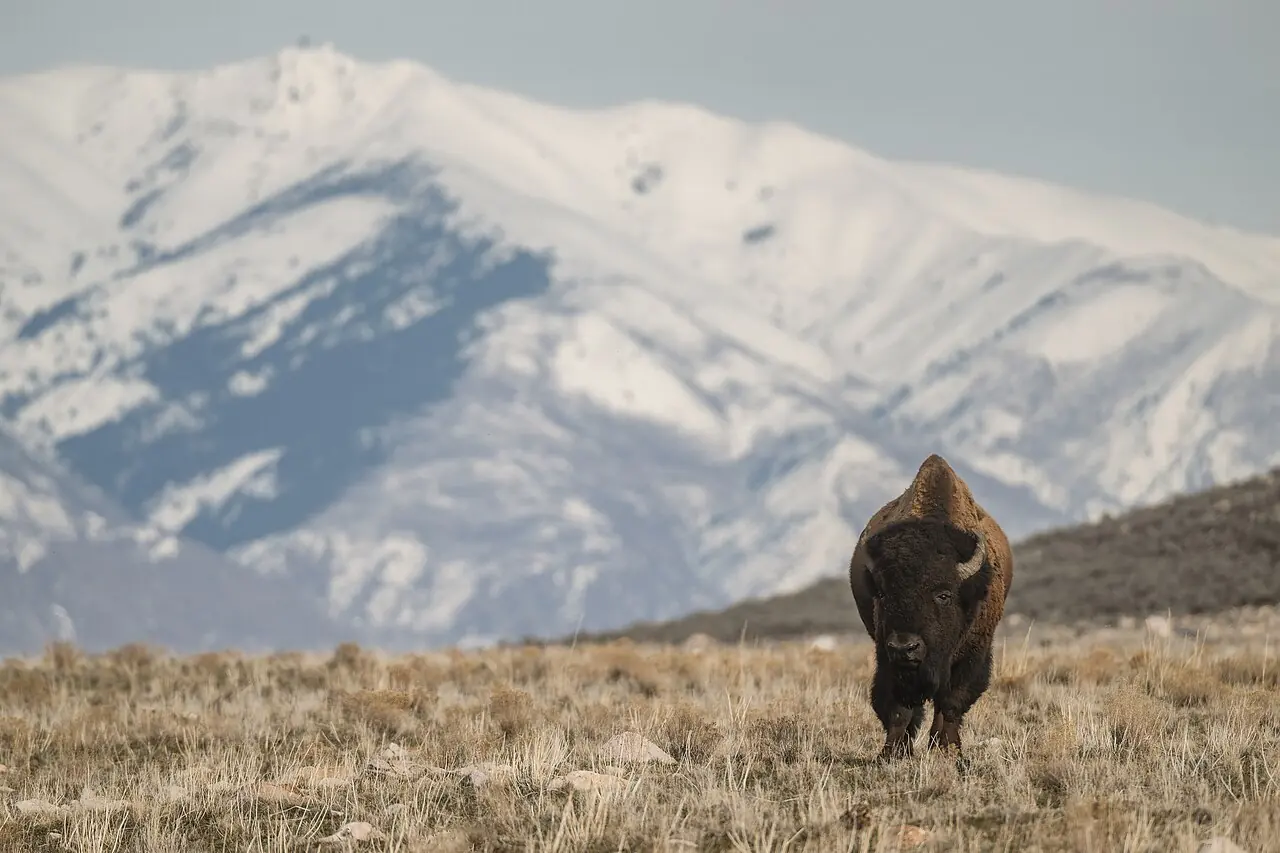
North America's largest land animal, with wild herds on Antelope Island, in the Henry Mountains and in the Book Cliffs.
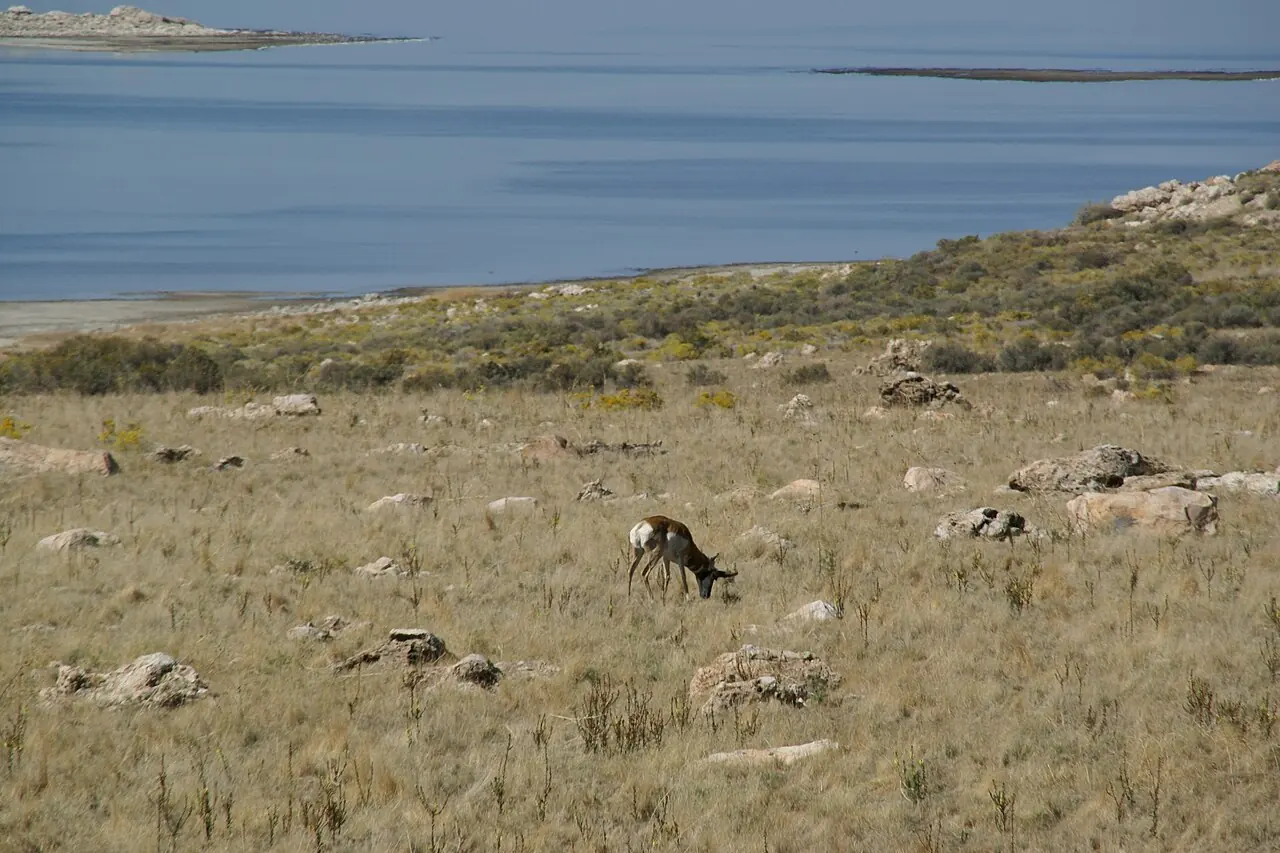
An open-country specialist with a white rump, unusual shedding horn sheaths and a need for connected habitat.