Spotted bat
A black-and-white bat with very large pink ears, relatively common in southern Utah.
The Natural History Museum of Utah says the spotted bat is easy to tell from other bats by its black-and-white pattern and large pink ears. It is also called the pinto bat. It feeds on flying insects, most often moths, and lives in habitats from desert shrub to conifer forest, roosting in crevices around cliffs and rocky outcrops.
It was long thought very rare because it flies late at night and does not roost in colonies. The museum notes that a specimen found in the Salt Lake Valley in 1935 was only the seventh known. Today it is considered relatively common in southern Utah and probably uncommon along the Wasatch Front.
Utah DWR says the state has 18 confirmed bat species and that most are found where they can get food, shelter and water. Bats rely on standing water. If you find one indoors, do not handle it with bare hands, because bats can carry rabies.
How to recognize it
Black fur with white spots and very large pink ears.
Watching and staying safe
Listen and watch near cliffs at night, and never handle a bat.
Related profiles
Big brown bat
One of the most common Wasatch Front bats, and the one most likely to roost in a building.
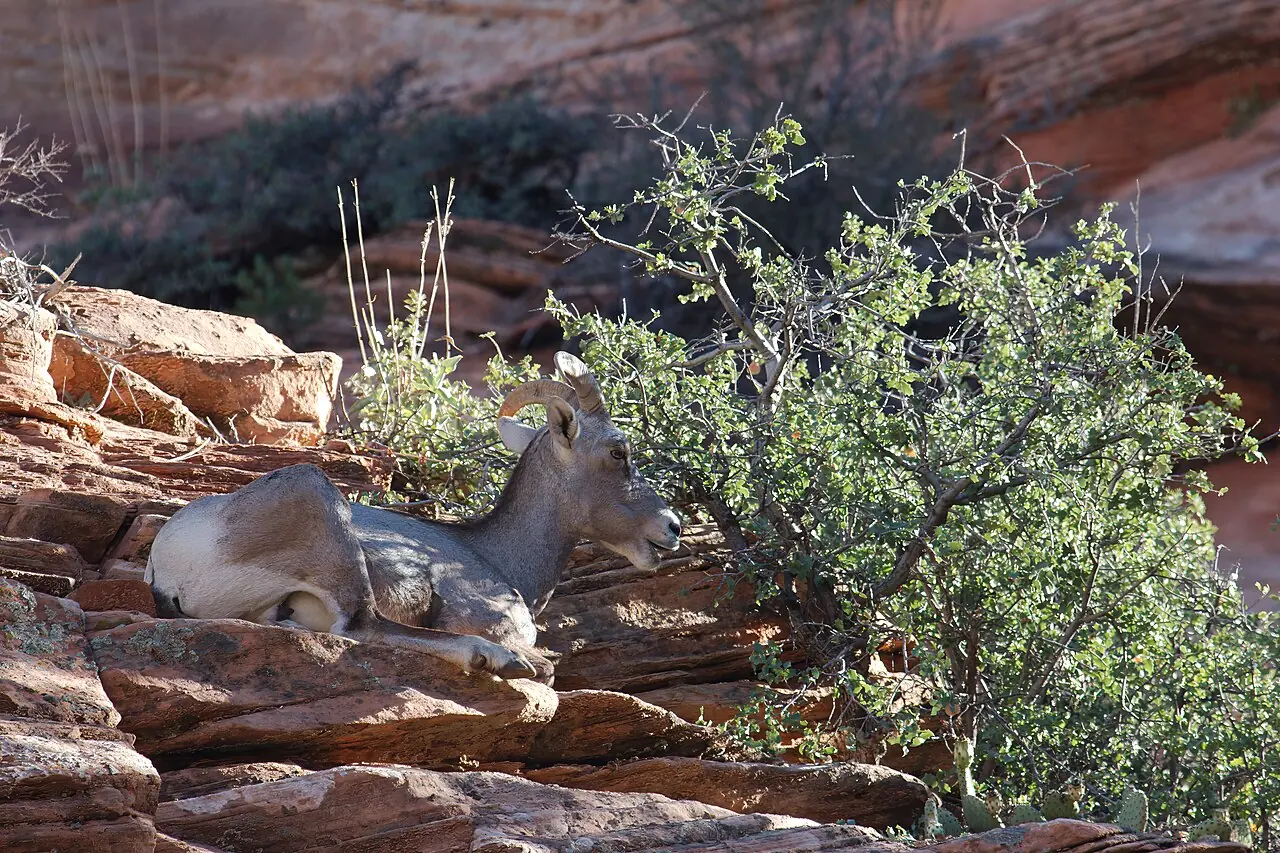
Desert bighorn sheep
Sure-footed sheep of the slickrock, restored to Zion after disappearing there.