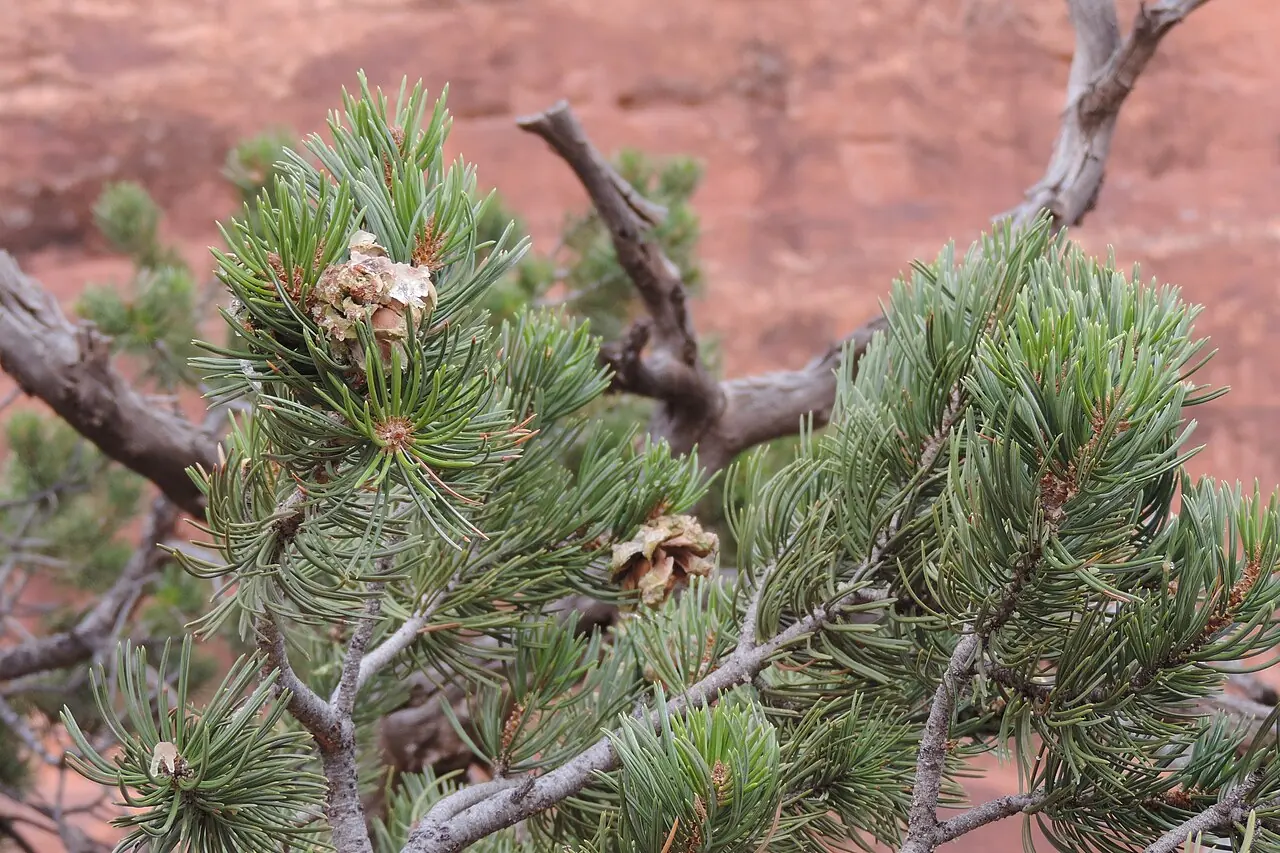
File photo: Pinyon pine needles and cones in Arches National Park (2016-09-07 23:38:35). Photo: Krzysztof Ziarnek, Kenraiz · CC BY-SA 4.0 · Wikimedia Commons
Everything Utah, every day.
Help Utahns understand their communities and hold government accountable. Our mission →
A blue, crestless jay that travels in noisy flocks and lives by finding pinyon seeds it hid itself.
The pinyon jay is blue all over, with no crest, which sets it apart from the crested jays. Flocks are loud and move widely, so an area of pinyon-juniper woodland is no promise of seeing one. NPS lists pinyon jays among the birds usually seen in the pinyon-juniper woodlands at Arches.
Its life is bound to pinyon pine. Through winter pinyon jays rely heavily on seeds they buried earlier, and experiments show that the species has a strong spatial memory for finding them again. Because the highly social jays also learn from watching one another, a flock behaves as a unit as it moves between seed sources.
The jay both eats and buries seeds, and none of the sources here says how many caches grow into trees, so treat it as a seed carrier of unknown reach rather than a tree planter. It is still worth remembering when you walk past a pinyon. Keep to the trail when flocks are feeding and do not use playback to draw birds in.
Medium-sized blue jay with no crest, a sharp bill and a loud, social flock.
Depends on pinyon seed crops; flocks move between woodlands from year to year.
Look in pinyon-juniper woodland from established trails and listen for flock calls; do not use recordings to call birds in.
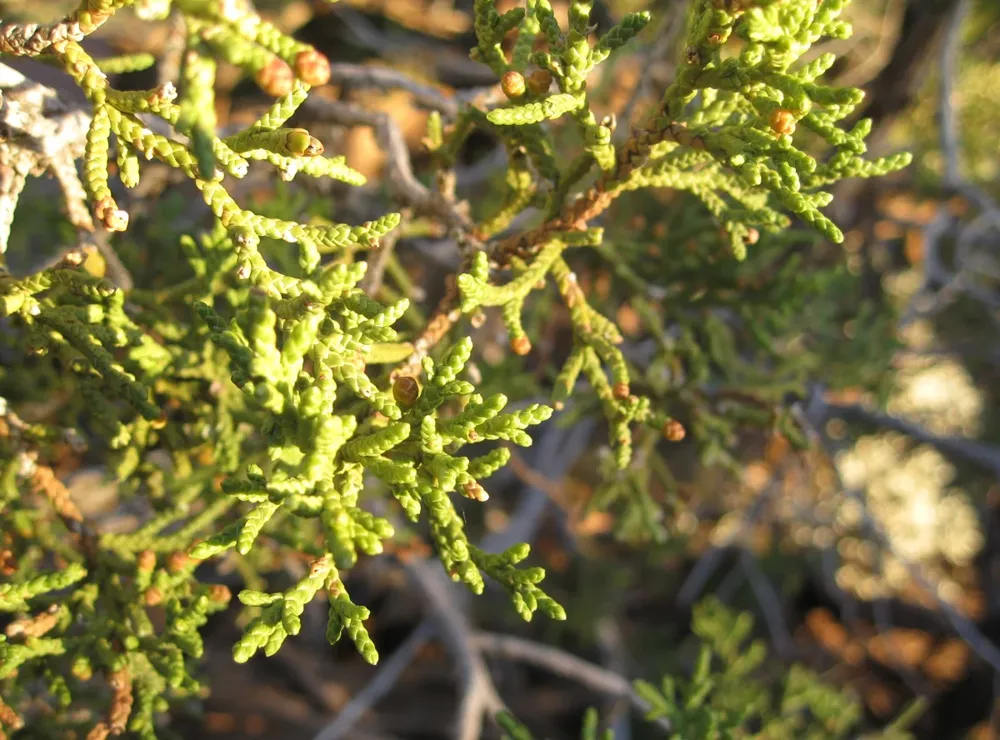
A drought-tolerant evergreen with scale-covered twigs, fibrous bark, and berry-like cones that feed wildlife.
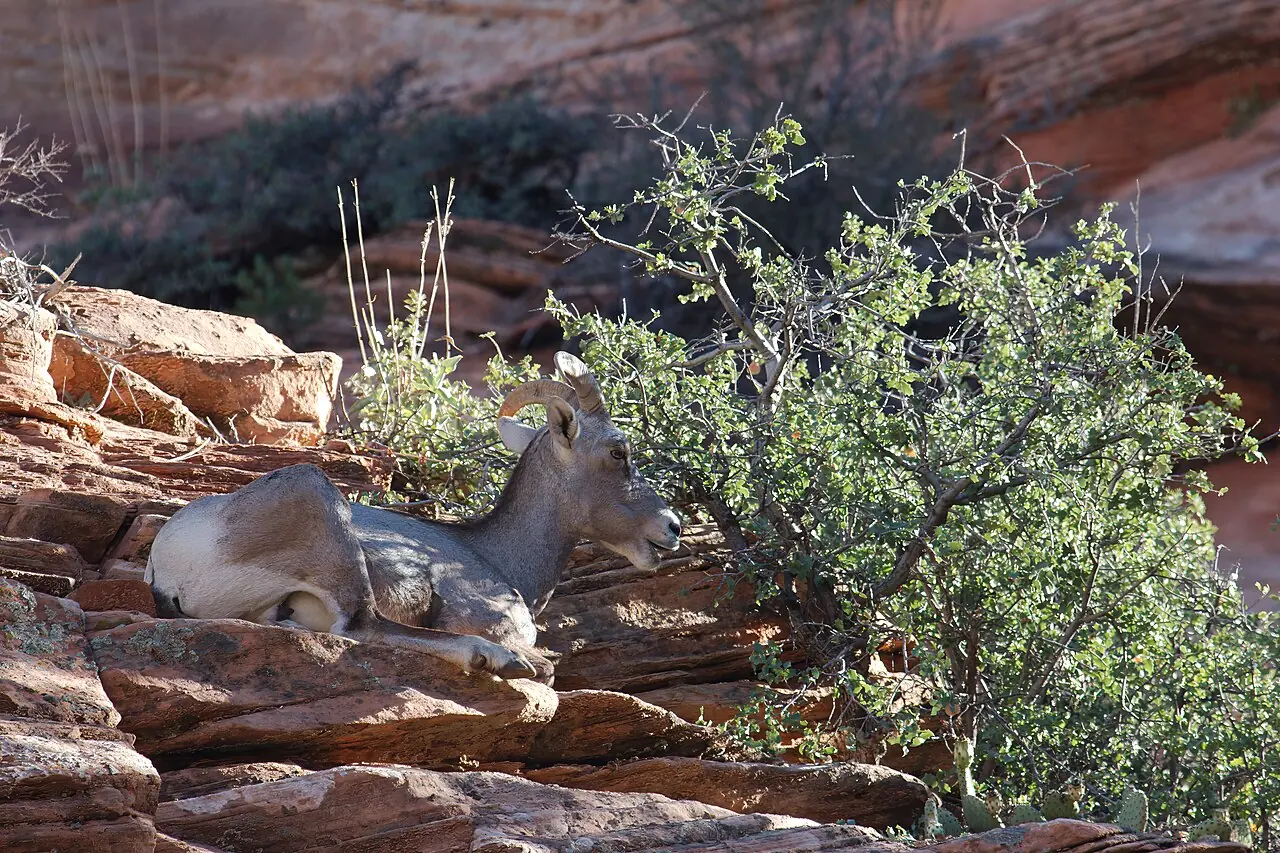
Sure-footed sheep of the slickrock, restored to Zion after disappearing there.