Mammals
Black-tailed jackrabbit
Not a rabbit but a hare, built for speed with ears and legs that are very long.
Everything Utah, every day.
Help Utahns understand their communities and hold government accountable. Our mission →
A large, tufted owl with the most varied diet of North American raptors.
NPS describes the great horned owl as a large, thick-bodied owl, 18.1 to 24.8 inches long, with two prominent feathered tufts on the head. It is mottled gray-brown with a reddish-brown face and a white throat patch. It usually favors secondary-growth woodland but occupies a wide range of deciduous, coniferous and mixed forests, and its home range usually includes some open ground such as fields, wetlands or pastures. In deserts it may use cliffs or junipers for nesting.
It is active mainly at night, especially at dusk and before dawn. NPS says it has the most diverse diet of all North American raptors, from tiny rodents to geese and raptors, mostly mammals and birds, including rats, chipmunks, squirrels, prairie dogs, hawks and ravens. When threatened it claps its bill, hisses, screams and makes guttural noises.
Listen at dusk from an established trail, and do not approach a roosting or nesting owl. The tufts are feathers and not ears, so a tufted silhouette on a juniper at night is more likely a great horned owl than something smaller.
Large owl with two feather tufts, a reddish-brown face and a white throat patch.
Listen at dusk from a trail and keep away from roosts and nests.
Not a rabbit but a hare, built for speed with ears and legs that are very long.
A broad-winged hawk of open country whose tail color is not a reliable clue for young birds.
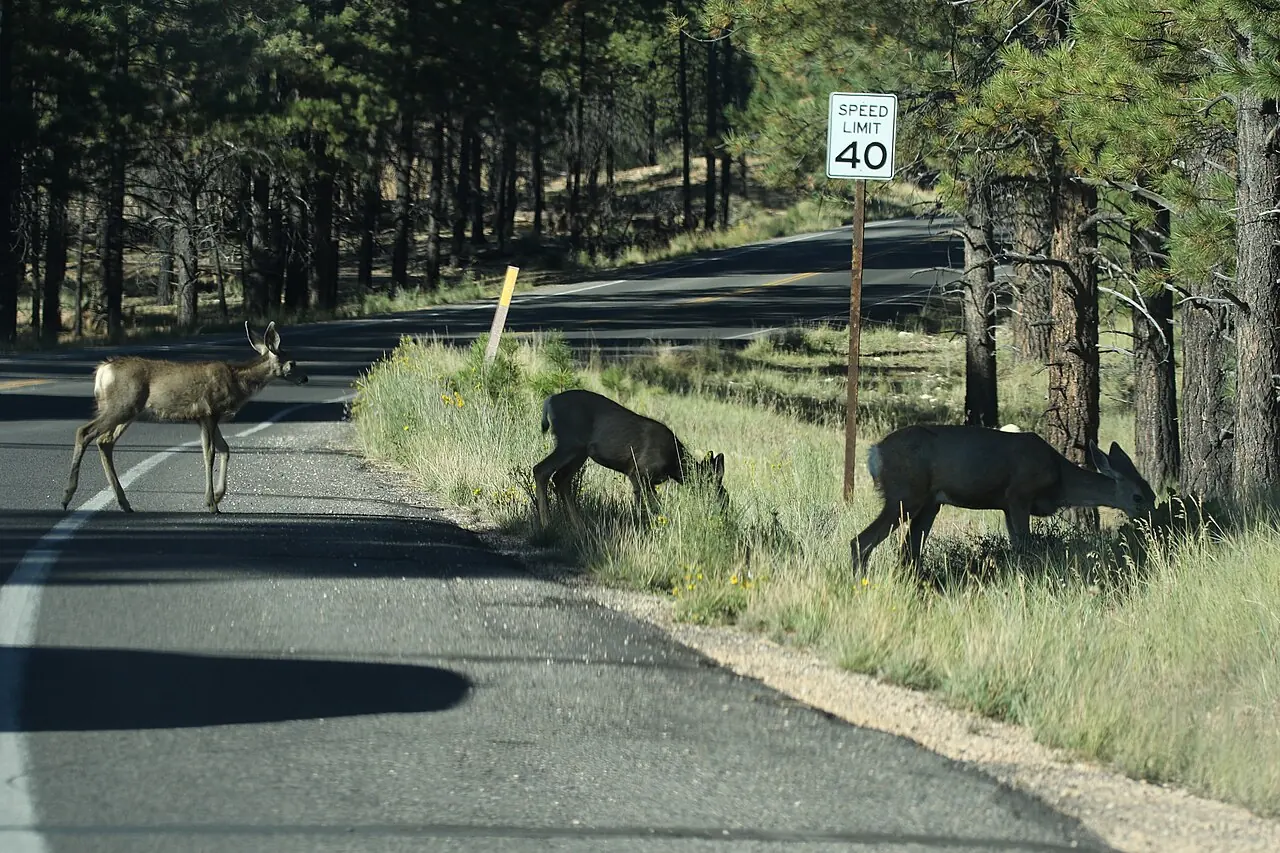
Found across Utah, from high mountains to city neighborhoods, and named for its large, mule-like ears.