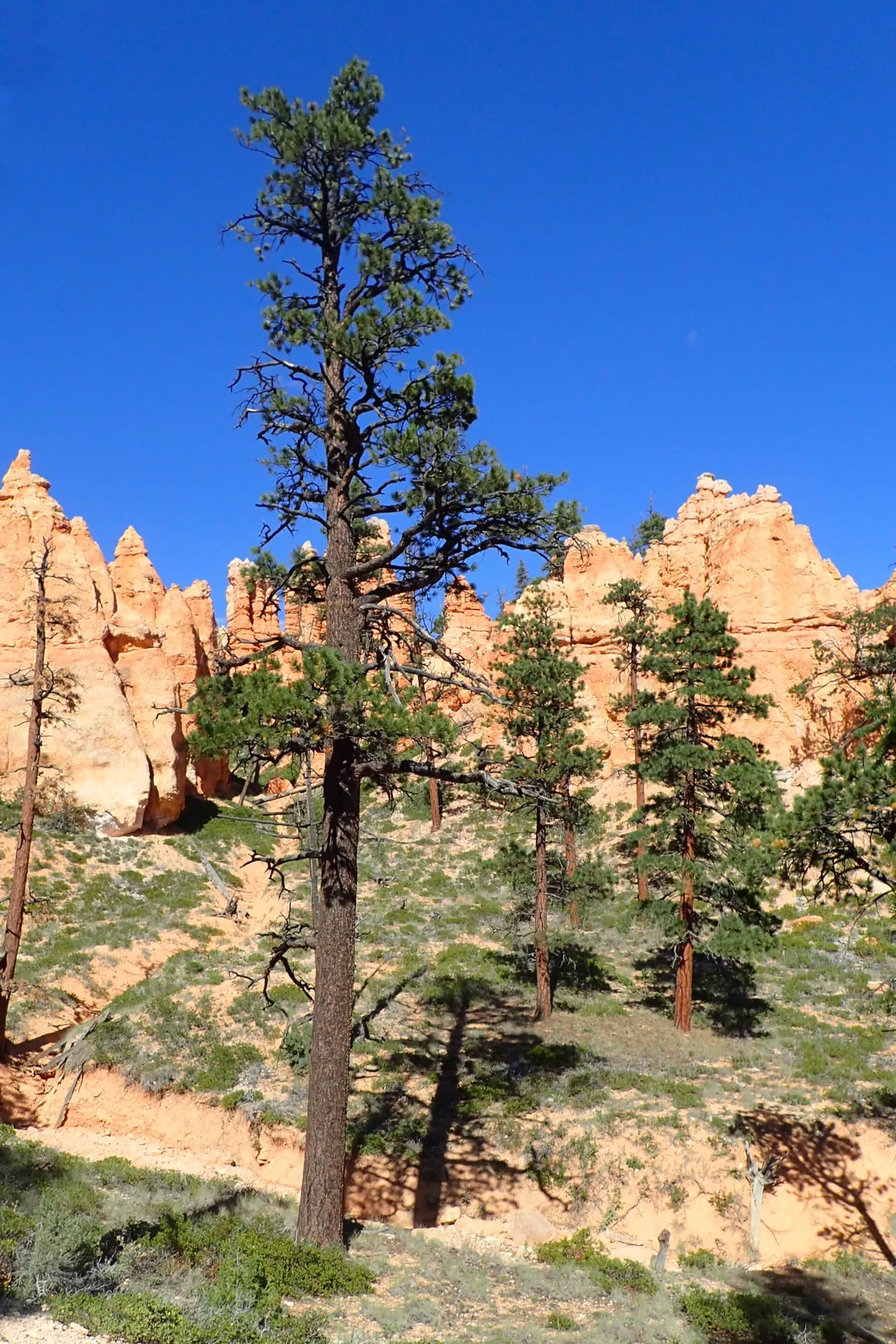
Limber pine
A slow-growing native pine of harsh mountain sites, with five needles in each bundle.
Everything Utah, every day.
Help Utahns understand their communities and hold government accountable. Our mission →
A pale gray mountain bird that stores pine seeds for winter.
NPS describes Clark's nutcracker as a 12- to 13-inch pale gray bird with a large pointed bill and large white patches on the wings and tail that show best in flight. It prefers high mountain pine forests and may appear in lower pine forests when cone crops are high.
It is an omnivore, but most of its diet is pine seed, supplemented by nuts, berries, snails, eggs and carrion. A pouch under the tongue can hold as many as 90 seeds when it is preparing to cache them for winter. The male takes a turn incubating while the female retrieves seeds from her caches.
That caching links the bird to the pines it feeds on, including limber pine. NPS does not say how many caches grow into trees, so treat the nutcracker as a seed carrier of unknown reach.
Pale gray bird with black wings, large white patches and a long pointed bill.
Watch pine-forest overlooks from the trail; do not feed or approach.

A slow-growing native pine of harsh mountain sites, with five needles in each bundle.
A blue, crestless jay that travels in noisy flocks and lives by finding pinyon seeds it hid itself.

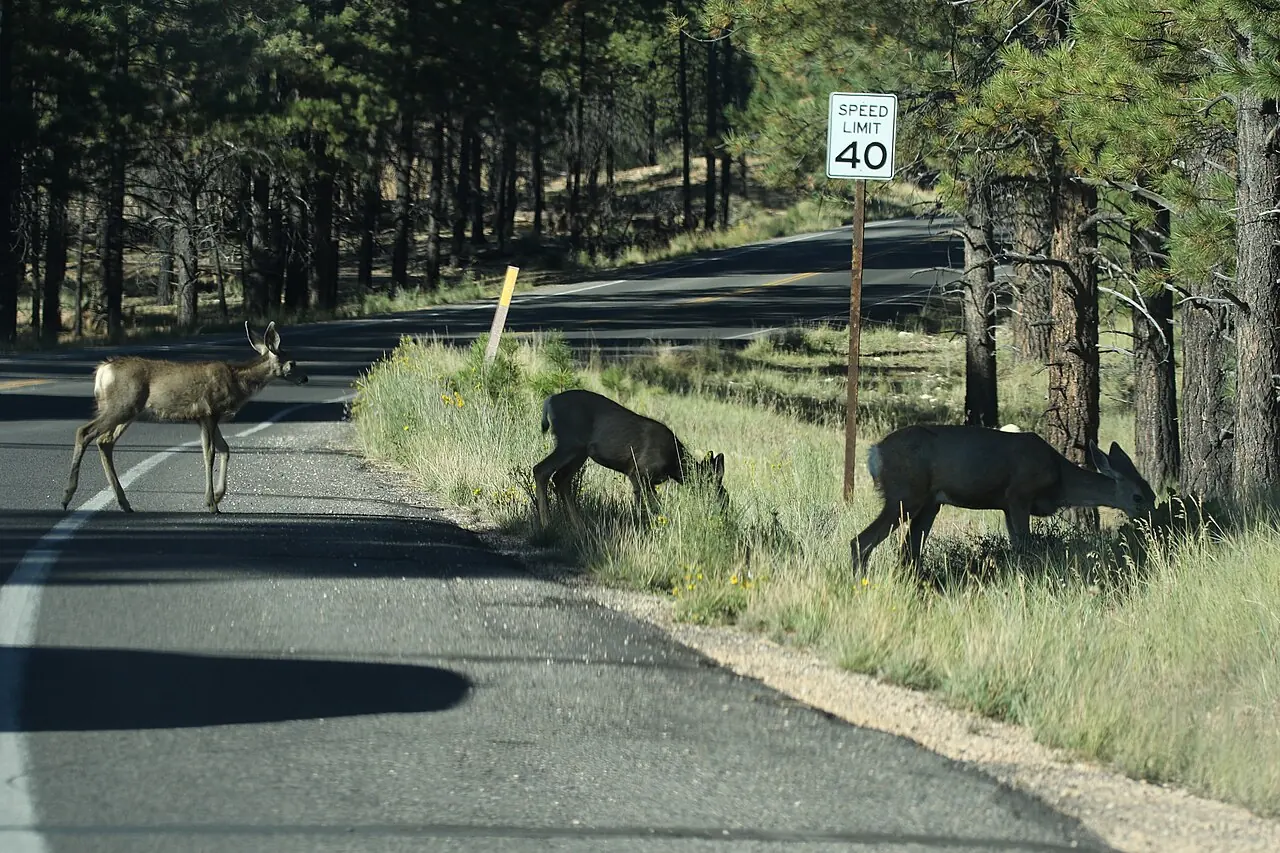
Found across Utah, from high mountains to city neighborhoods, and named for its large, mule-like ears.