Shrubs
Big sagebrush
A foundational shrub of Utah's open country, with small gray-green leaves and an outsized role in wildlife habitat.
Help Utahns understand their communities and hold government accountable. Through nonpartisan, AI-assisted research, we examine public records, follow decisions and votes, and connect readers with local news, events and places.
Everything Utah, every day.
A drought-tolerant shrub with small three-lobed leaves, pale yellow flowers, and a major role in winter browse.
Antelope bitterbrush can blend into sagebrush country until it flowers. Small yellow blossoms have five petals and numerous stamens, appearing among short branches and compact leaves. Many leaves end in three lobes, but that is not unique to bitterbrush. Their pale, woolly undersides and rolled-under margins provide additional clues. The shrub is usually much wider and more branched than a single-stemmed wildflower, and its outline varies from low spreading forms to taller plants. Do not use its common name as an invitation to taste a leaf.
In Utah, bitterbrush grows on foothills, slopes, mesas, and open woodland, especially where soil drains freely. It tolerates drought and often accompanies sagebrush or other mountain shrubs. Its small size can disguise a long-lived plant with an extensive root system. Seed dispersal has an animal component: rodents cache the seeds, and some stores that remain uneaten can produce new shrubs. The same animals also consume seedlings, so the relationship is more complicated than a simple planting service.
Bitterbrush is important browse for deer and other wildlife, particularly when winter limits other food. That value is one reason recovering a damaged stand matters. Fire can severely damage it, and recovery varies with site conditions and plant form; it should not be assumed to rebound like a strongly sprouting oak. Look for spring-to-summer flowers and later dry fruits from existing trails, leaving both branches and seeds for the habitat they support.
Small often three-lobed leaves with pale undersides and rolled margins; five-petaled yellow flowers; compare several features.
Observe without tasting, pruning, or collecting; give wintering wildlife space around shrubs.
A foundational shrub of Utah's open country, with small gray-green leaves and an outsized role in wildlife habitat.
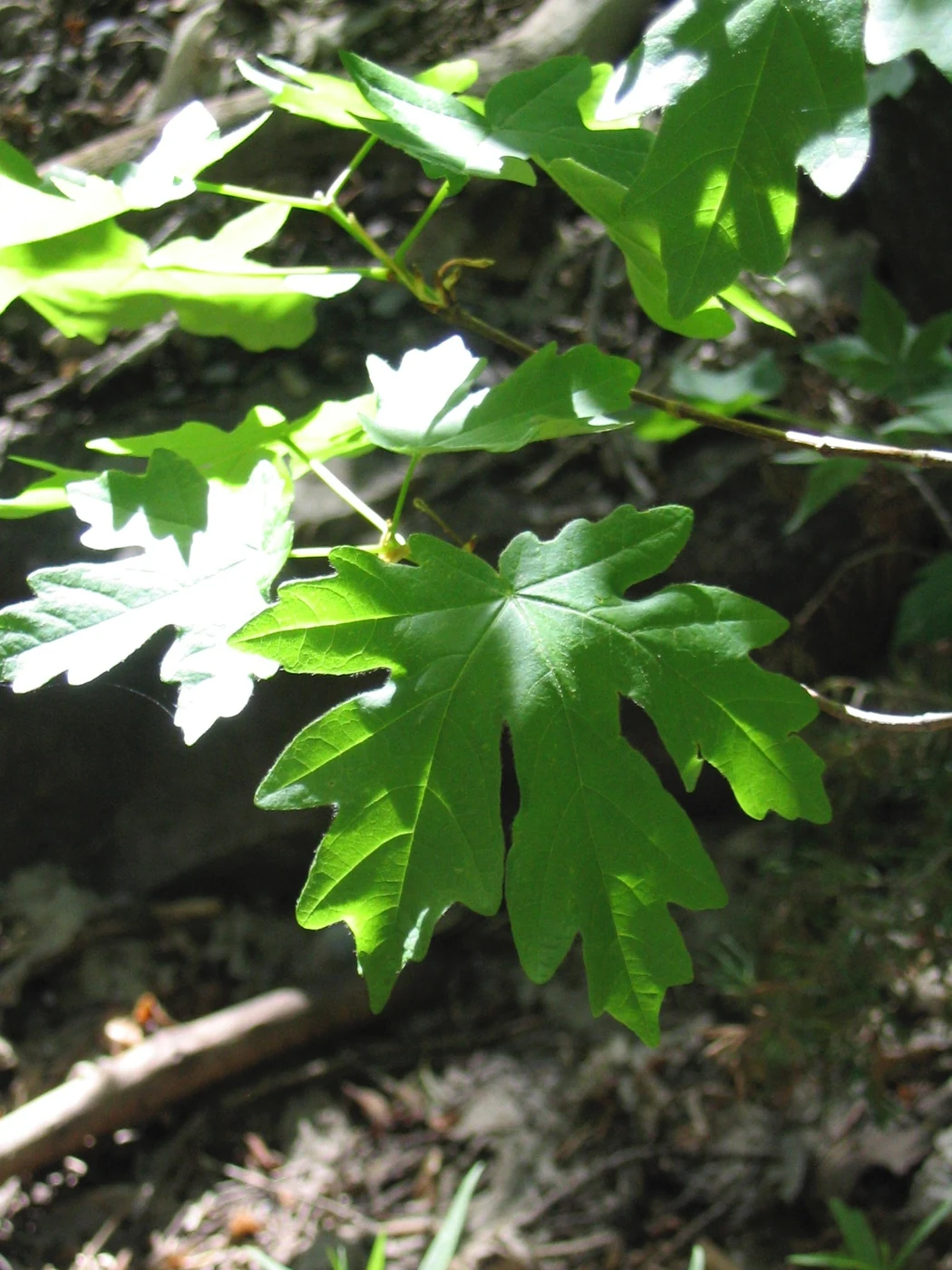
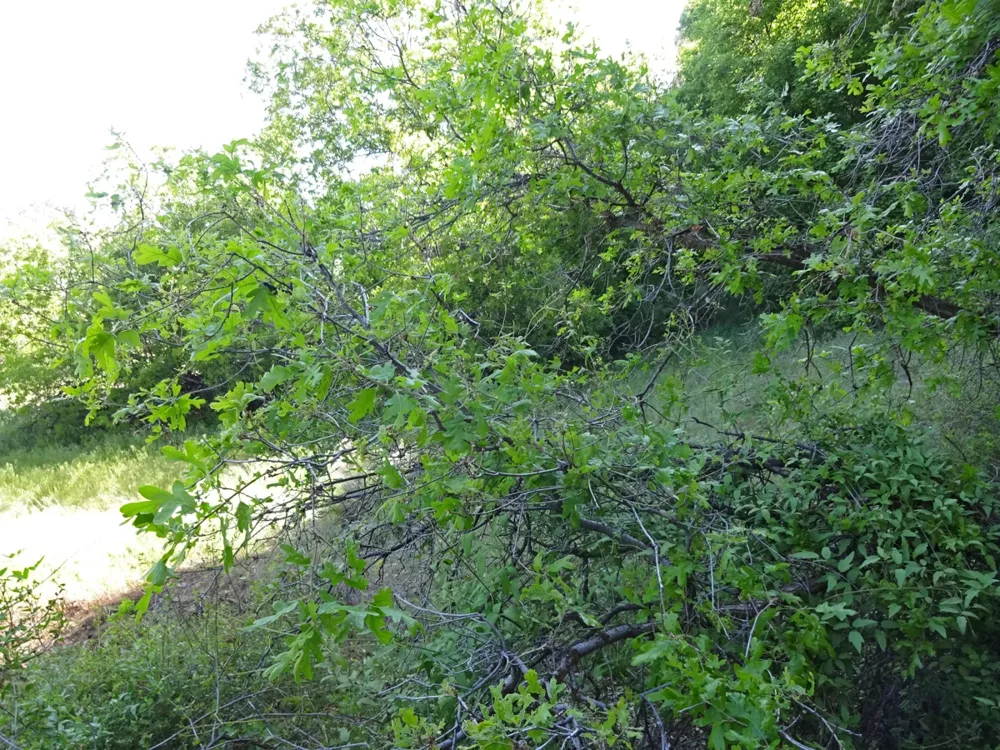
A thicket-forming native oak that links Utah's foothills with mountain woodlands and provides important wildlife food and cover.
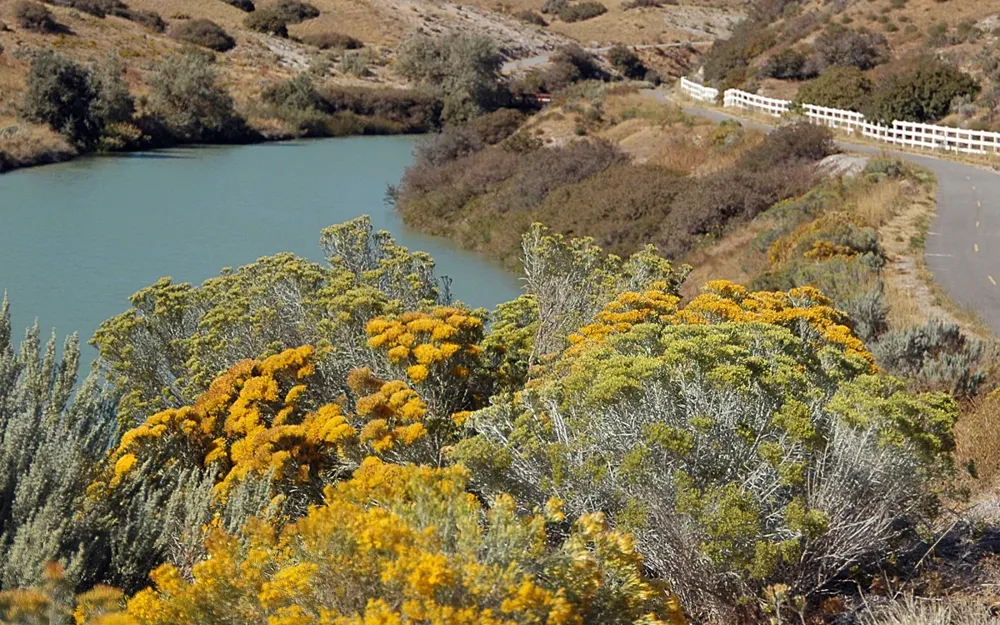
A flexible-stemmed native shrub whose late-season yellow flowers extend feeding opportunities for pollinators.