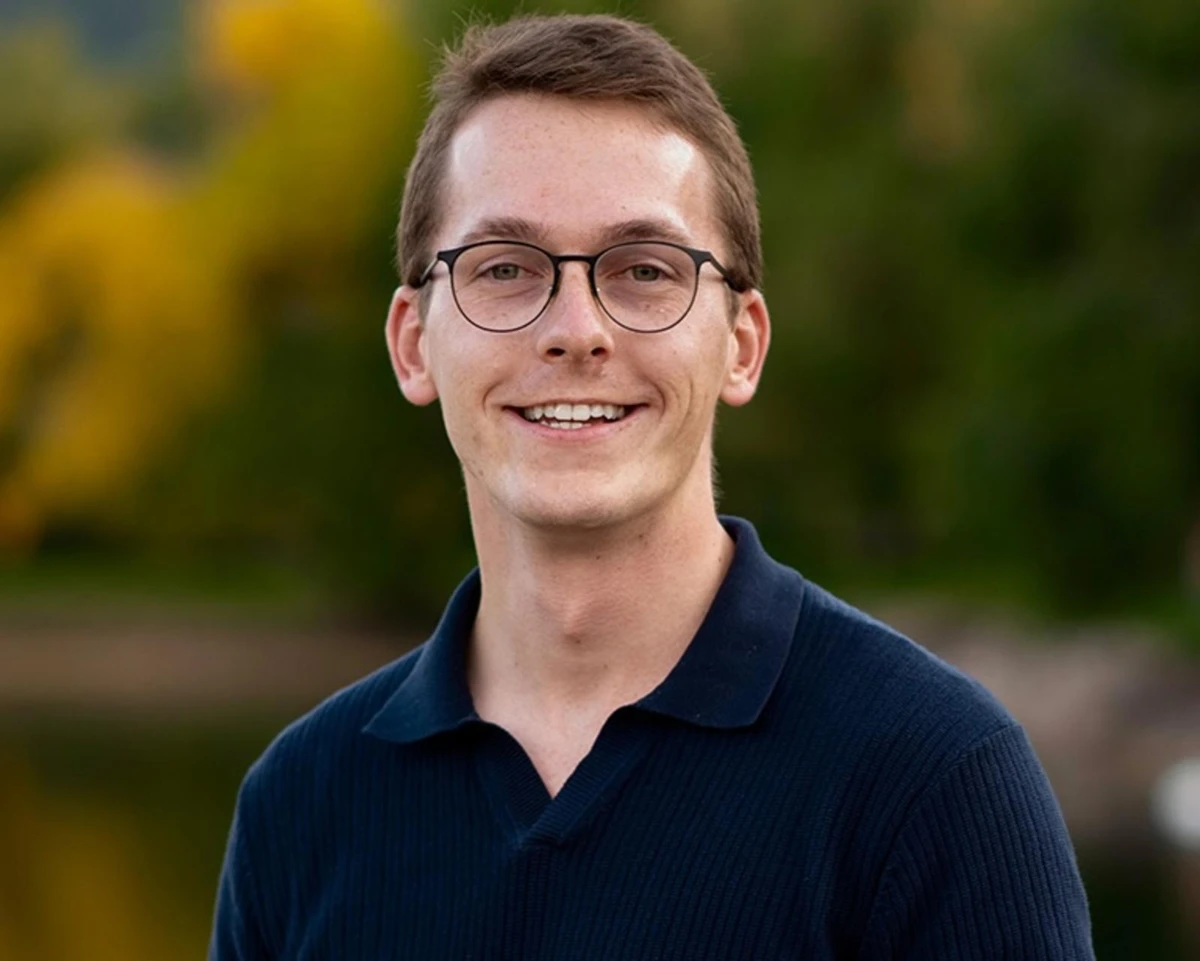
Candidate headshot via BallotReady. Photo: BallotReady (photographer uncredited) · Copyright retained by rights holder · BallotReady candidate profile
Candidate headshot via BallotReady. Photo: BallotReady (photographer uncredited) · Copyright retained by rights holder · BallotReady candidate profile
Politically neutral. Every candidate on this ballot gets the same sections. The party shown is the one the ballot lists. A section is missing only where we haven't yet found an official source for it. How we stay neutral
The state certified Riley Owen as a Republican candidate for Utah's 1st Congressional District on the November 3 general-election ballot. The seat is a U.S. House seat with a two-year term. [1]
Background
KSL reports that Owen is 27 and lives in Salt Lake City. He attended Princeton and earned a master's degree in public policy at Oxford. He spent about a year as a White House policy analyst on trade and manufacturing, is CEO of Doers Network and is an intelligence officer in the Navy Reserve. He served a two-year mission in Denmark for The Church of Jesus Christ of Latter-day Saints. [3]
Ethics and government
Owen says he opposes the Citizens United ruling, supports congressional term limits and a ban on congressional stock trading, and does not take corporate PAC money. [2] [3]
Affordability and housing
Owen says he would push large investors out of the single-family housing market and tie federal funds to local zoning reforms such as smaller minimum lot sizes and accessory dwelling units. He also proposes expanding business tax credits for employers that offer paid maternity leave. [2]
Water and other issues
On the Great Salt Lake, Owen supports removing water-intensive invasive plants such as phragmites, leasing water rights from willing farmers and paying based on water that reaches the lake, and requiring new growth to cover its own water costs. He also supports age verification for social media users 16 and older, and removing phones from classrooms. [2] [3]
In the candidate's own words
The Tribune describes Riley Owen as an intelligence officer in the Naval Reserve and a former White House policy analyst during the first Trump administration; Owen has also worked with a drone startup and runs a wildlife conservation foundation. [4]
In the survey, Owen says, "I'm not a career politician like my opponent," and backs congressional term limits, stock-trading bans, age verification for social media at 16 and older, and zoning reform tied to federal funds. Owen supports both Amendment A and Amendment B. [4]
The survey answers above are the candidate's own, as printed by the Tribune, and were not checked by The Utah Ledger. [4]
Profile sources
Profile refreshed October 30, 2026. Candidate statements describe the candidate's own experience or positions; official records and reporting are labeled separately.
Riley Owen will bring a new generation of leadership to Washington as one of the first conservative Gen Z congressional nominees in the country. Riley served in the White House during the Covid-19 pandemic and mobilized American industry to save lives while advancing trade and manufacturing policy to strengthen American workers and markets.
Riley continued to bolster America’s industrial base working in the shipbuilding and drone industries where he helped build companies and create jobs. He co-founded and manages Sentala, a wildlife conservation foundation using cutting-edge technology to protect our planet. He currently serves our country as an intelligence officer in the Navy Reserve with firsthand experience in national security and foreign policy. Riley studied international relations at Princeton, where he led the men’s rugby program, and earned a Master of Public Policy from Oxford as an Eisenhower Scholar.
Riley is running for Congress to deliver results, not rhetoric. He will fight for affordable housing, congressional term limits and stock trading bans, expanded business tax credits for paid maternity leave, support for the Great Salt Lake, and social media age verification to protect our kids.
He is not a career politician and does not accept corporate PAC money.
A 2018 ballot initiative, a court fight that began in 2022 and a failed repeal drive produced the map Utah votes under on Nov. 3, including a Salt Lake County district that leans Democratic.