Shrubs
Big sagebrush
A foundational shrub of Utah's open country, with small gray-green leaves and an outsized role in wildlife habitat.
Help Utahns understand their communities and hold government accountable. Through nonpartisan, AI-assisted research, we examine public records, follow decisions and votes, and connect readers with local news, events and places.
Everything Utah, every day.
A slender wildflower whose long trumpets rise from finely divided leaves and offer nectar to hummingbirds and other visitors.
Scarlet gilia is often noticed as a vertical line of red against a dry slope. Its flowers have a long, narrow tube ending in five spreading lobes, while the leaves are finely divided into thin segments. Scarlet and orange-red are familiar colors, but pale pink, salmon, and even white occur within the broader species. A flowering stalk usually rises above a basal rosette, making the plant look very different from the low leafy form visible before it blooms.
Its life cycle rewards looking beyond a single summer. Plants may spend one or several years as rosettes, then flower and usually die after producing seed. Calling every individual a strict two-year biennial would oversimplify that pattern. Scarlet gilia favors sunny openings in sagebrush, mountain-shrub, and forest settings, often on well-drained soils. Utah's varied elevations spread the flowering season: late spring and summer are useful expectations, rather than one dependable statewide month.
Hummingbirds pollinate the flowers, and cross-pollination is important for seed production. This relationship makes the surrounding habitat part of the floral display: the plant needs visitors moving among flowers, not simply an isolated attractive stem. Watch from a little distance and let animals approach on their own. Leave flowering stalks and low rosettes intact; cutting a bloom removes part of a plant's limited opportunity to reproduce.
Long tubular five-lobed flowers, finely divided leaves, and a tall flowering stem above a rosette.
Stay back to watch pollinators; leave flowers and rosettes undisturbed.
A foundational shrub of Utah's open country, with small gray-green leaves and an outsized role in wildlife habitat.
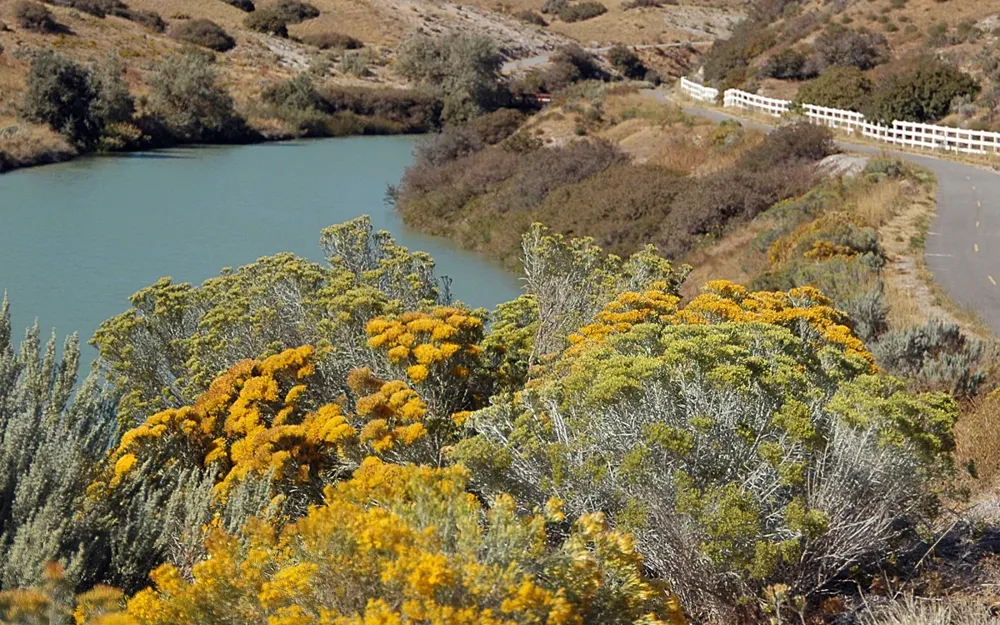
A flexible-stemmed native shrub whose late-season yellow flowers extend feeding opportunities for pollinators.
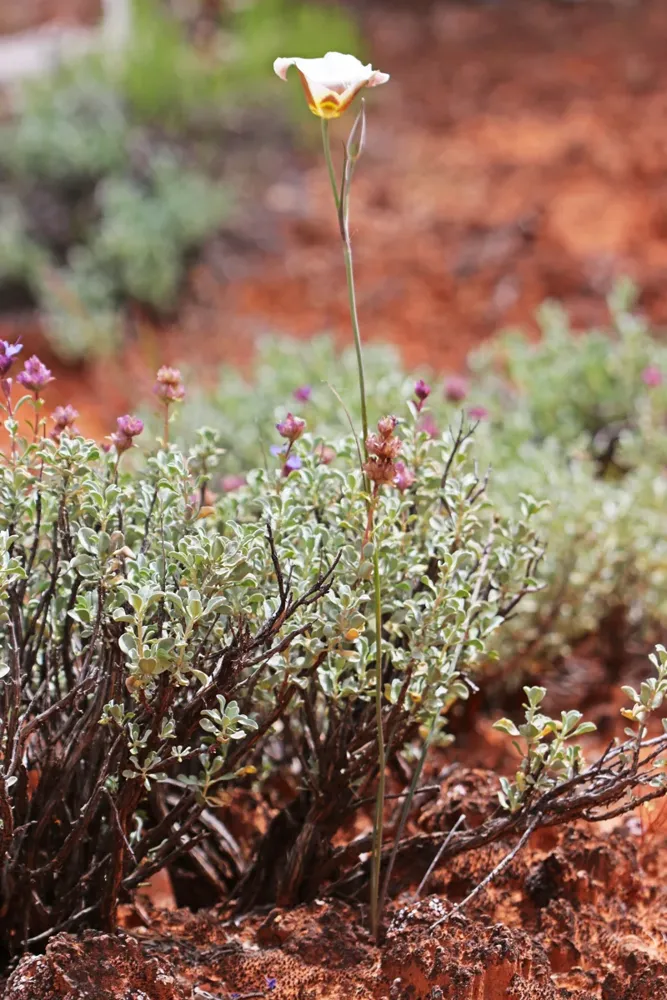
Utah's state flower briefly lifts a three-petaled cup above open, dry-country vegetation before its aboveground growth fades.
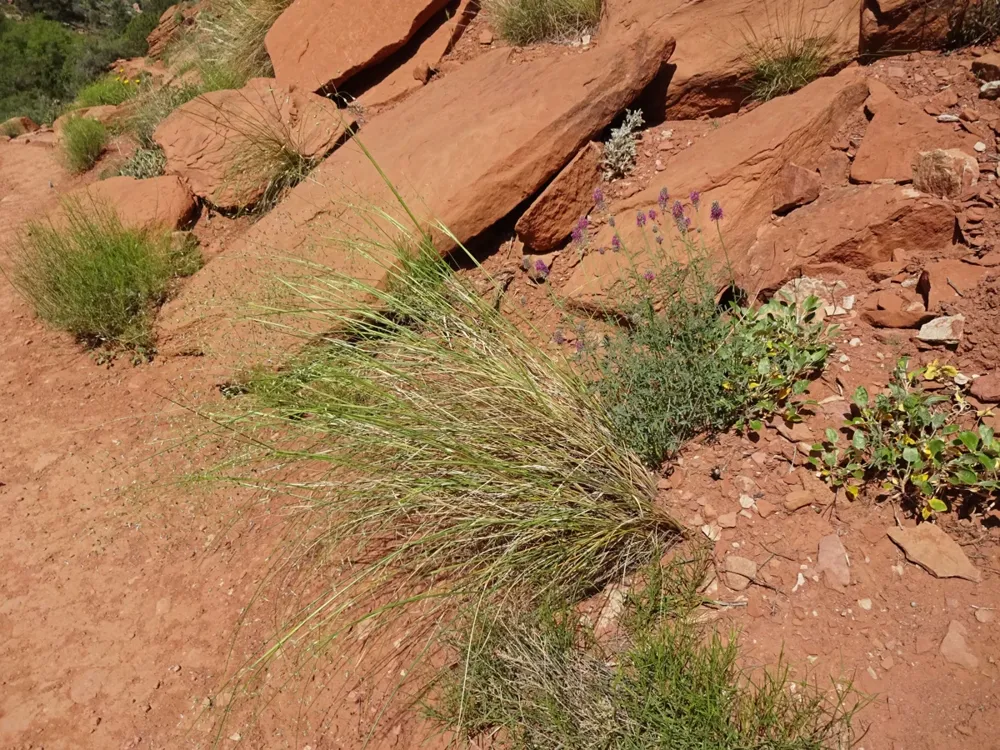
Utah's state grass is a cool-season perennial whose airy seedheads rise from distinct clumps on dry ground.