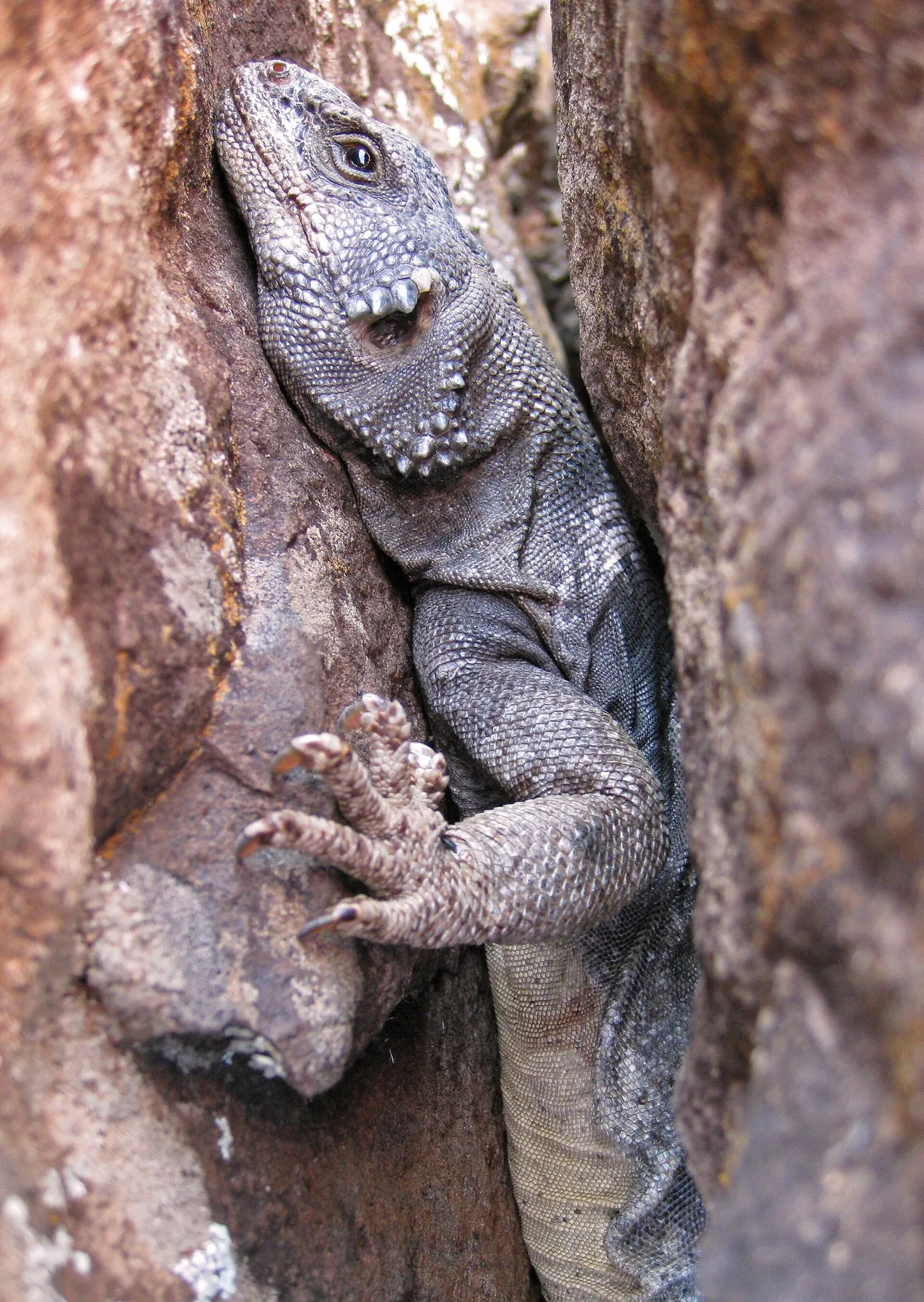
Common chuckwalla
A heavy-bodied, mostly plant-eating lizard that uses rocky crevices as both refuge and defense.
Everything Utah, every day.
Help Utahns understand their communities and hold government accountable. Our mission →
Zion's smallest and most common lizard, often seen on canyon trails.
The plateau lizard is the smallest lizard in Zion National Park and its most common one. It is often seen along trails in Zion Canyon, and a patch of blue on the belly is a distinguishing mark. It eats a range of insects, from moths and beetles to butterflies and wasps.
Like all of Zion's reptiles, it is an ectotherm that soaks up sun to move. The park advises looking for the smaller lizards on trails in the early morning, because a small body warms quickly, while larger lizards begin to bask later. Zion also reports that all its reptiles spend four to five months a year in brumation, buried from a few inches to several feet underground, and surface on warm winter days.
Identify lizards by body shape and habitat together, and do not rely on one feature. A lizard that loses its tail to escape a predator may look quite different, so a detached tail is a reason to give it space, not a puzzle to solve. Photograph from a distance and leave the animal where you find it.
Small lizard with blue patches along the belly; common on trails in Zion Canyon.
Photograph at a distance and never handle or chase a lizard; a detached tail costs the animal.

A heavy-bodied, mostly plant-eating lizard that uses rocky crevices as both refuge and defense.
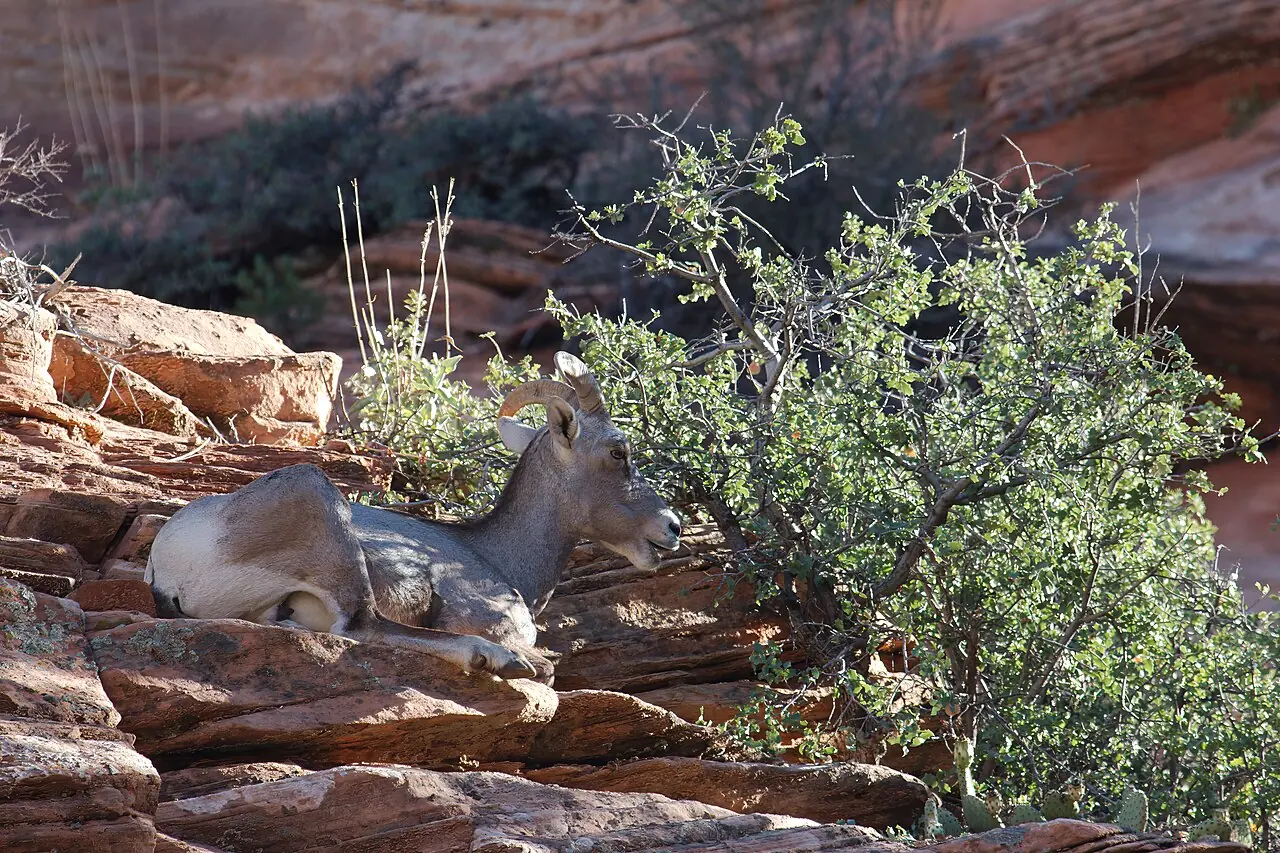
Sure-footed sheep of the slickrock, restored to Zion after disappearing there.


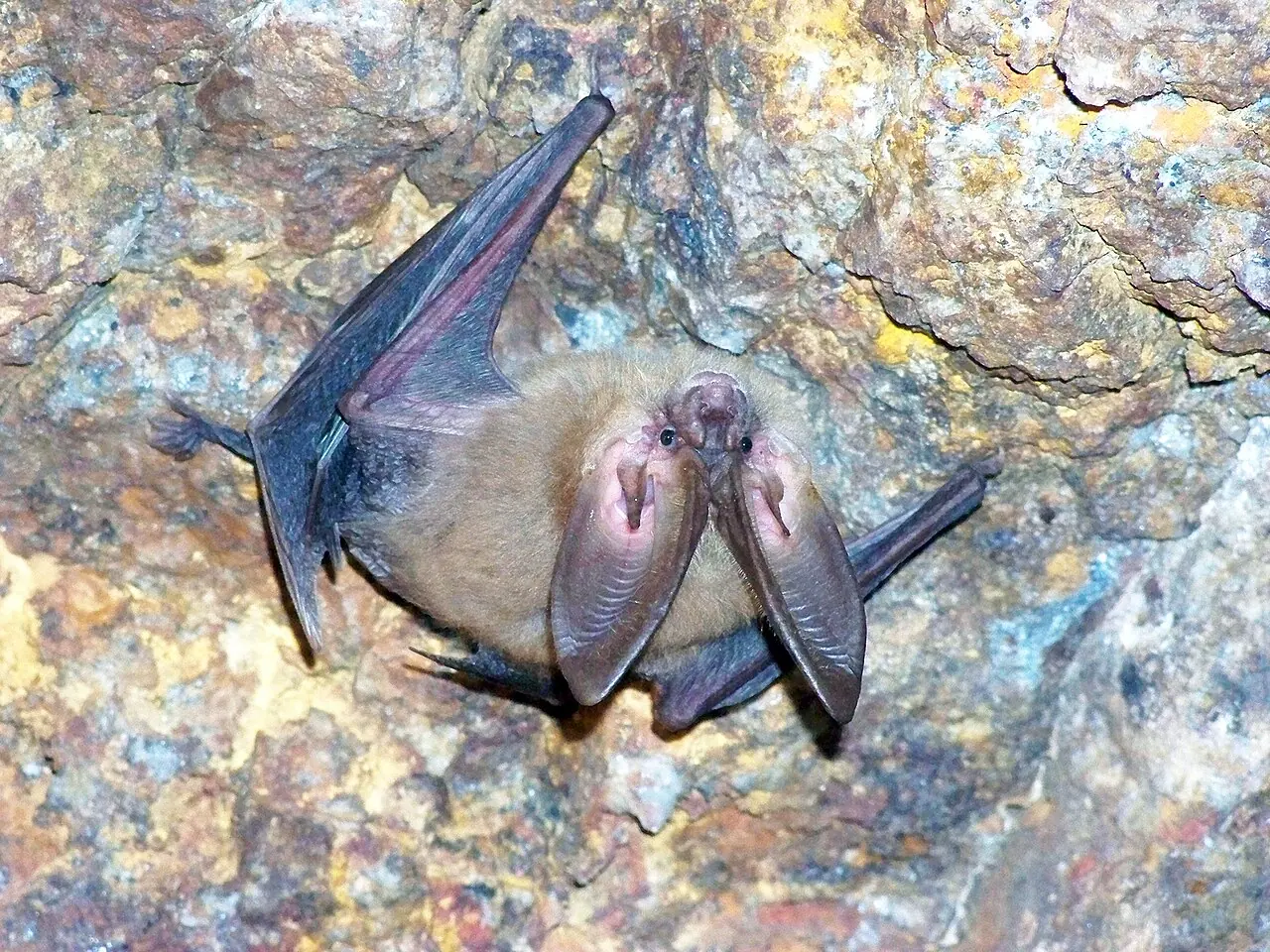
Insect-eating flying mammals whose lives depend on suitable roosts, water and a safe seasonal cycle.