The Natural History Museum of Utah describes river otters as semi-aquatic, with long, slender bodies, thick fur with dense underfur, small round ears, a long tail and webbed toes. They are skilled swimmers and divers, able to stay under for up to eight minutes. They eat mainly fish, crayfish, frogs and crabs, with birds, eggs and an occasional small mammal or plant.
River otters once ranged across most of Canada and the United States, but they were lost from much of that range and have been widely reintroduced, including in northern Utah. They can use any freshwater or coastal habitat with a permanent food and water supply, are mainly active in the daytime, and do not hibernate. NPS also publishes a recording of otters calling and splashing at Canyonlands, which shows they have been heard there but is not a sighting guide.
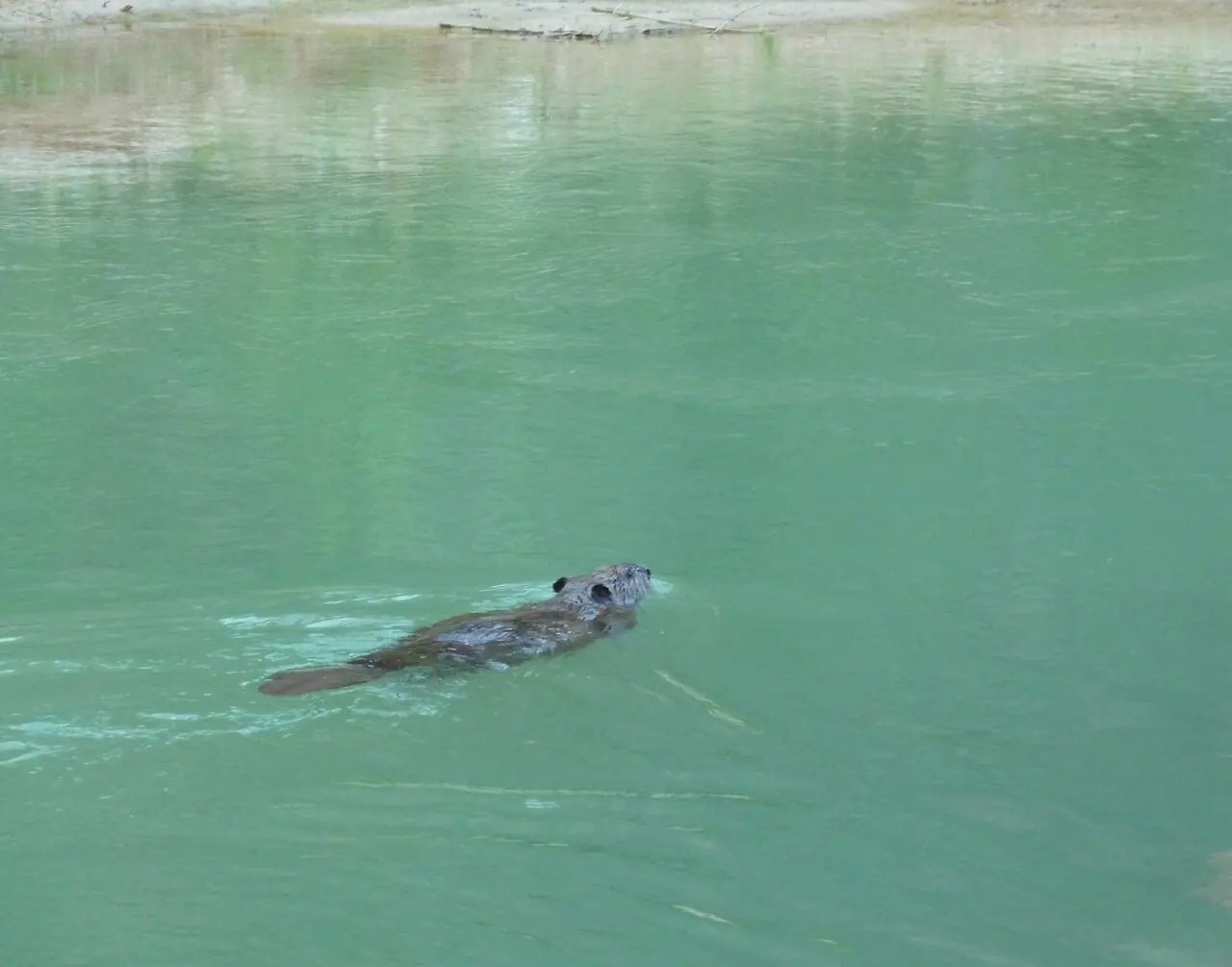
Compare body and tail shape with the beaver, which has a broad paddle tail, and the muskrat, which has a narrow tail. Watch from the bank and do not follow an animal into cover. Never use bait to hold one in view.