Published by Paul Ivinskas
Monday, October 26, 2026

Everything Utah, every day.

Help Utahns understand their communities and hold government accountable. Our mission →

Wildlife & plants · Reptiles

Ground snake

A small snake with so many color forms that no single photograph covers it.

Zion describes the ground snake as a small, harmless colubrid snake, also called the common or variable ground snake. The names are honest: color and pattern vary widely, even within one region. Individuals may be brown, red or orange, with black bands, orange or brown stripes, or a solid color.

Some features are steadier than the color. The belly is usually white or gray and the scales are smooth. Even so, a single photograph of one snake cannot show the full range of the species, so treat a pattern as a hint and not as a species identification.

Most of Zion's snakes are nocturnal, so a daytime sighting is lucky. Look from the trail, keep your distance and leave the snake alone. Photographs from a distance are enough to check later with the park or a field guide.

How to recognize it

Small snake with smooth scales and a small head; color varies from solid to banded or striped.

Watching and staying safe

Observe from a distance and rely on photographs, not handling.

Places the sources name

Examples from the sources, not a complete range or a sighting guide.

Related profiles

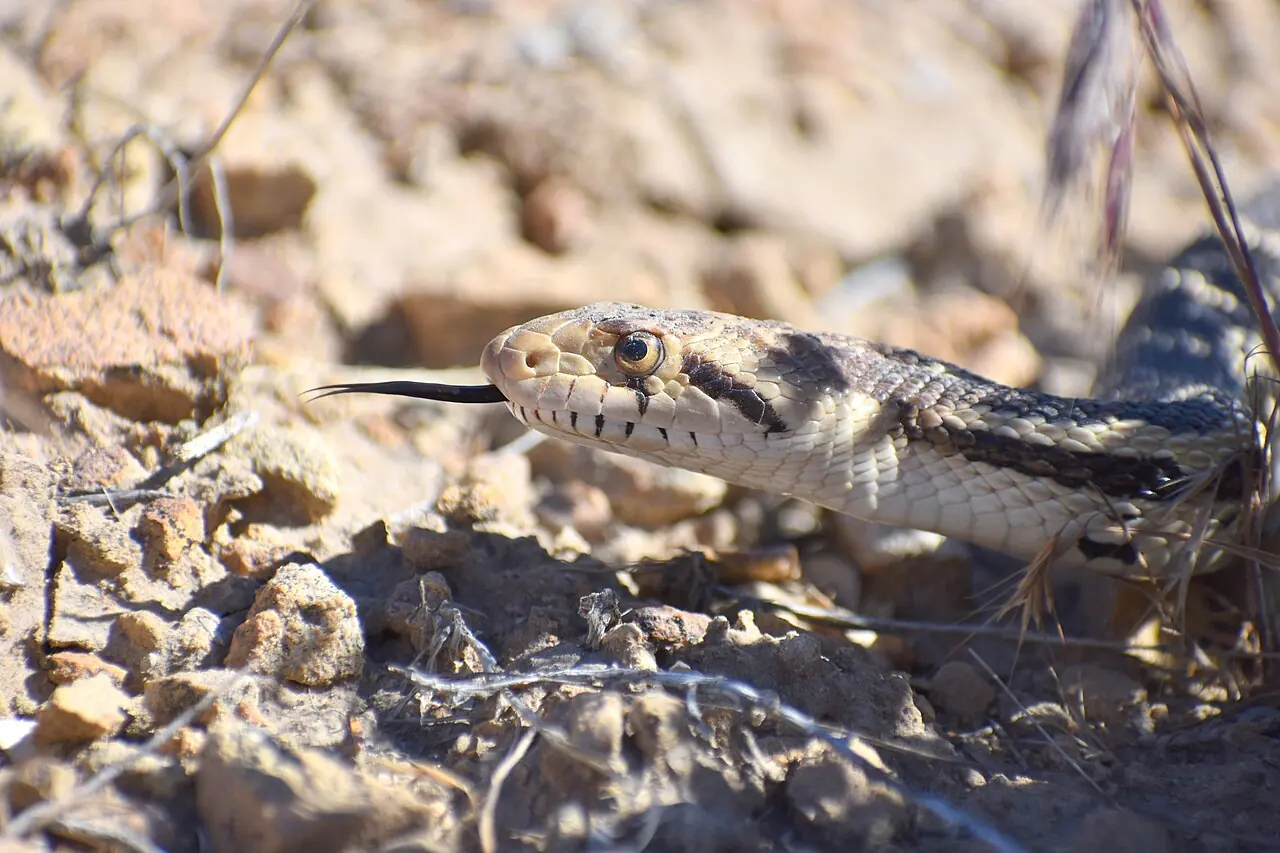
Close-up of a gopher snake on rocky ground
File photo: Gopher snake, Arches National Park archive, May 2017. One of Utah’s nonvenomous snake species. Photo: Marty Tow / National Park Service · Public domain · Wikimedia Commons
Reptiles

Snakes

A diverse group of native predators best appreciated without handling or close-range identification attempts.
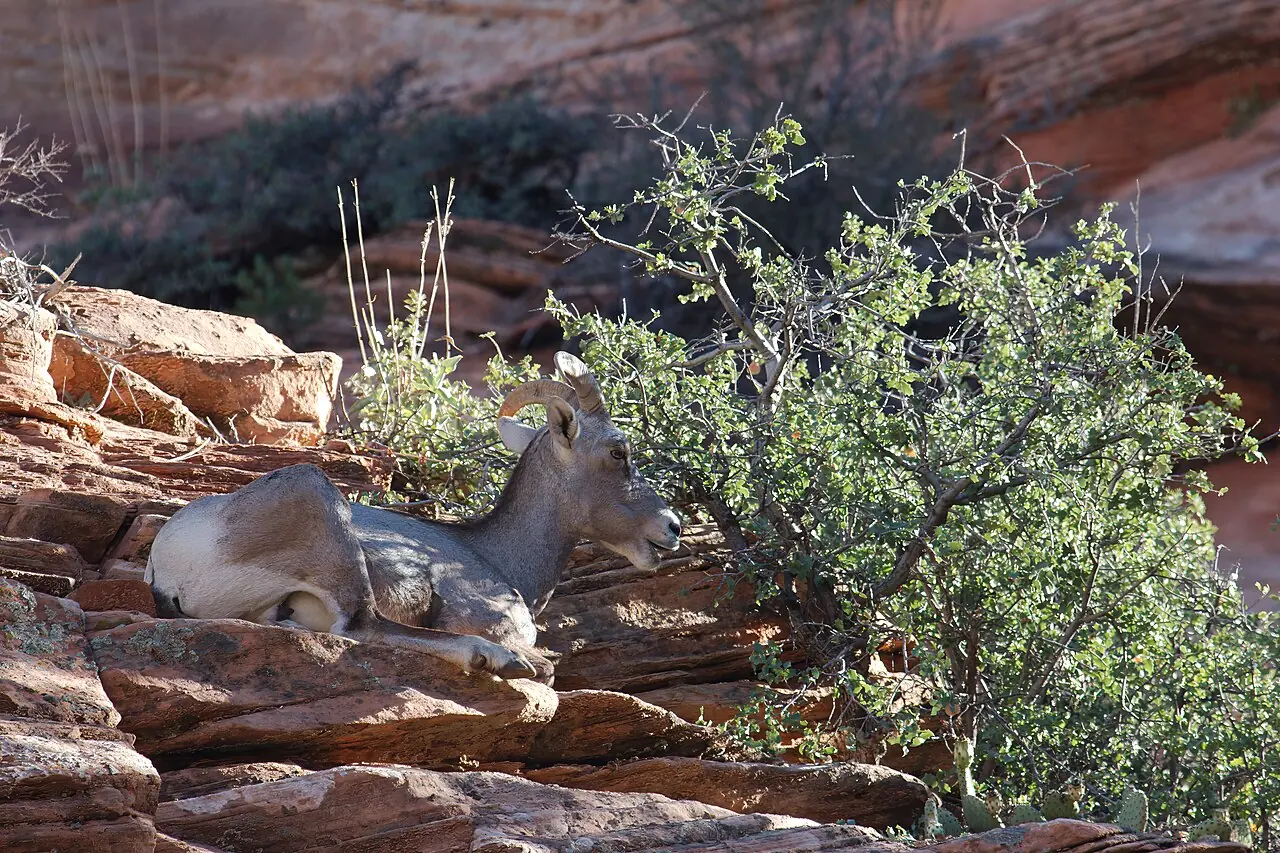
Desert bighorn sheep resting beside sandstone in Zion National Park
File photo: Desert bighorn sheep resting beside sandstone in Zion National Park (2014-09-22 10:34:38). Photo: ImagePerson · CC0 · Wikimedia Commons
Mammals

Desert bighorn sheep

Sure-footed sheep of the slickrock, restored to Zion after disappearing there.

Ovis canadensis nelsoni

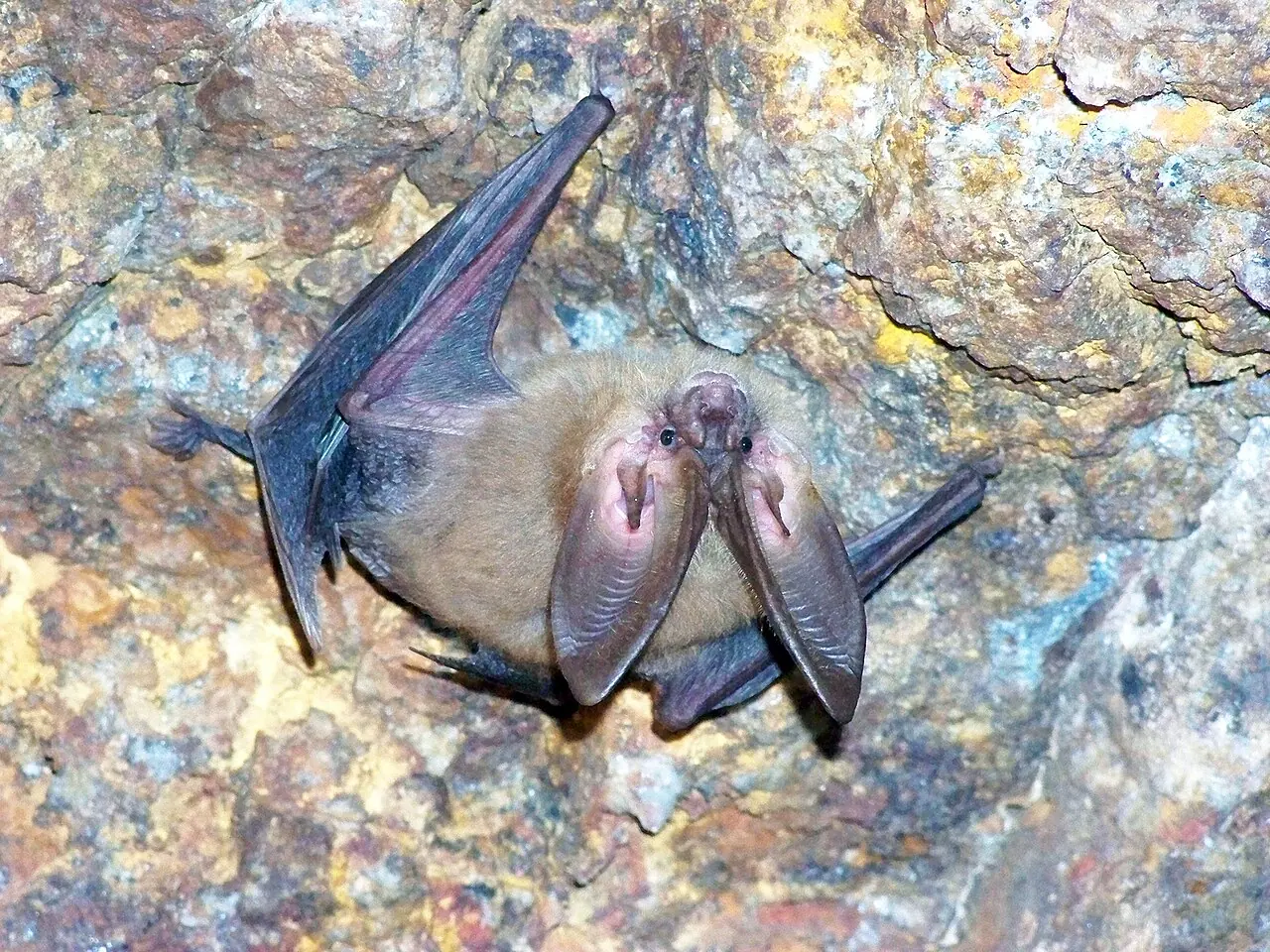
A Townsend’s big-eared bat hanging from rock
File photo: Townsend’s big-eared bat in Utah, BLM archive. One of the bat species found in the state. Photo: John Larson / BLM Utah · Public domain · Wikimedia Commons
Mammals

Bats

Insect-eating flying mammals whose lives depend on suitable roosts, water and a safe seasonal cycle.

Saved on this device. Statewide news and alerts remain available.