Published by Paul Ivinskas
Thursday, October 22, 2026
Our mission

Help Utahns understand their communities and hold government accountable. Through nonpartisan, AI-assisted research, we examine public records, follow decisions and votes, and connect readers with local news, events and places.

Everything Utah, every day.

Wildlife & plants · Grasses

Bluebunch wheatgrass

A widespread native bunchgrass with slender upright spikes and a root system adapted to dry western landscapes.

Bluebunch wheatgrass forms upright clumps of narrow leaves rather than a uniform carpet. Its flowering stems carry slender spikes, with groups of small flowers arranged along the central axis. Many plants have bristle-like awns that angle outward as the spike matures, but awnless forms also occur. That variation matters: absence of the familiar spreading bristles does not rule the species out. Use the overall bunching habit, leaves, and mature spike together, and treat this description as a starting point for observation.

A cool-season perennial, bluebunch wheatgrass begins growth while spring moisture is available. USU describes Utah growth beginning around April, sometimes followed by renewed growth after autumn rain. Local elevation and weather shift that schedule. It occurs on benches, slopes, basins, and other open sites, often with sagebrush and native wildflowers. Mature roots can reach deeper moisture than the shallower root systems of invasive annual grasses, helping established plants withstand dry periods.

The species provides forage for wildlife and livestock and is important in restoration work. Its persistence still depends on conditions: repeated heavy use, soil disturbance, and invasive plants can reduce a stand. Seeing a few surviving bunches should not be mistaken for proof that an entire site is healthy. Keep feet, bikes, and vehicles on designated routes, and compare intact patches with disturbed edges from the trail rather than pulling plants apart to inspect their roots.

How to recognize it

Upright perennial bunches, narrow leaves, slender spikes, often with outward-angled awns; awnless forms exist.
Seeing it

Leave roots and seedheads intact; avoid creating new tracks through bunchgrass.

Related profiles

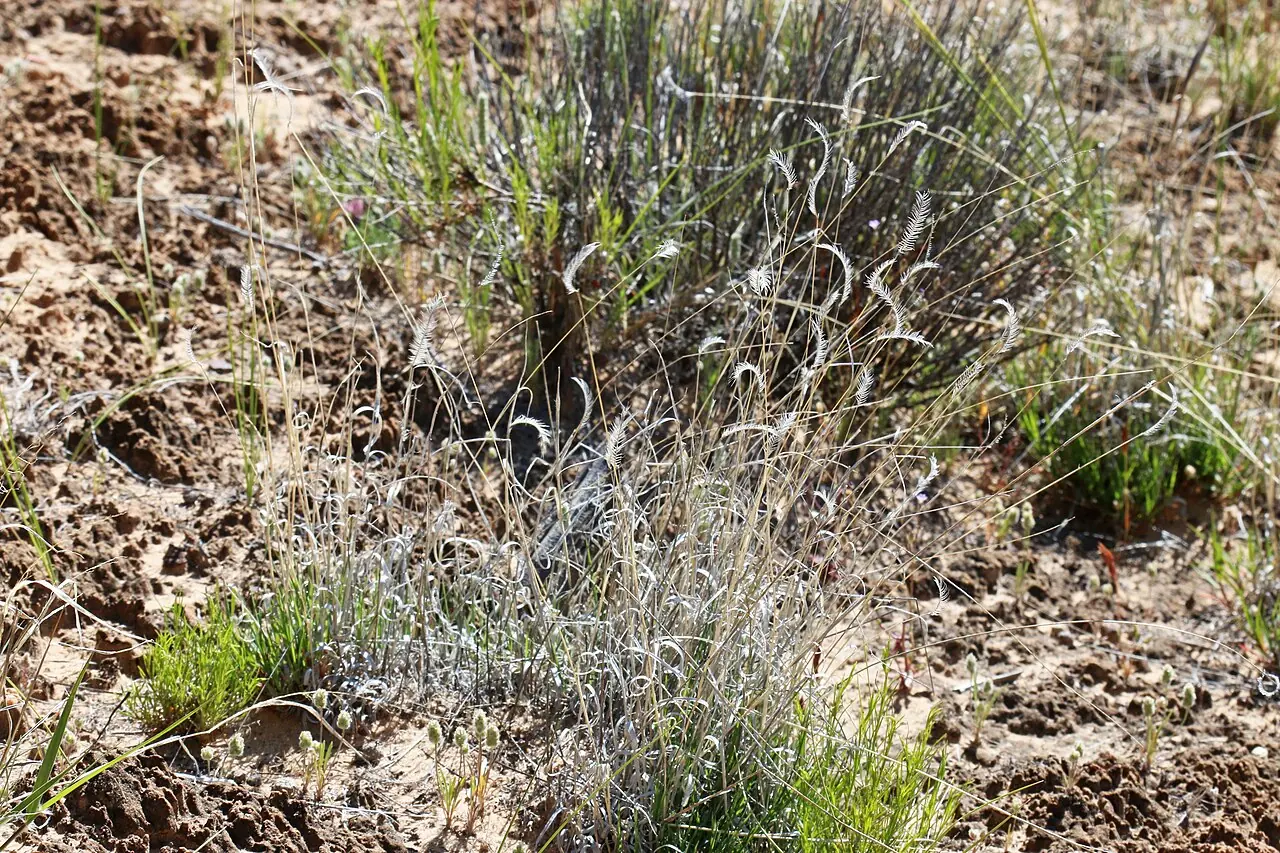
A clump of blue grama grass in Kane County, Utah
File photo: A clump of blue grama grass in Kane County, Utah (2016-05-27 10:06). Photo: Andrey Zharkikh from Salt Lake City, USA · CC BY 2.0 · Wikimedia Commons
Grasses

Blue grama

A low native grass with sideways, eyelash-like seedheads and a growing season tied to warmth and summer moisture.

Bouteloua gracilis

Shrubs

Big sagebrush

A foundational shrub of Utah's open country, with small gray-green leaves and an outsized role in wildlife habitat.

Artemisia tridentata

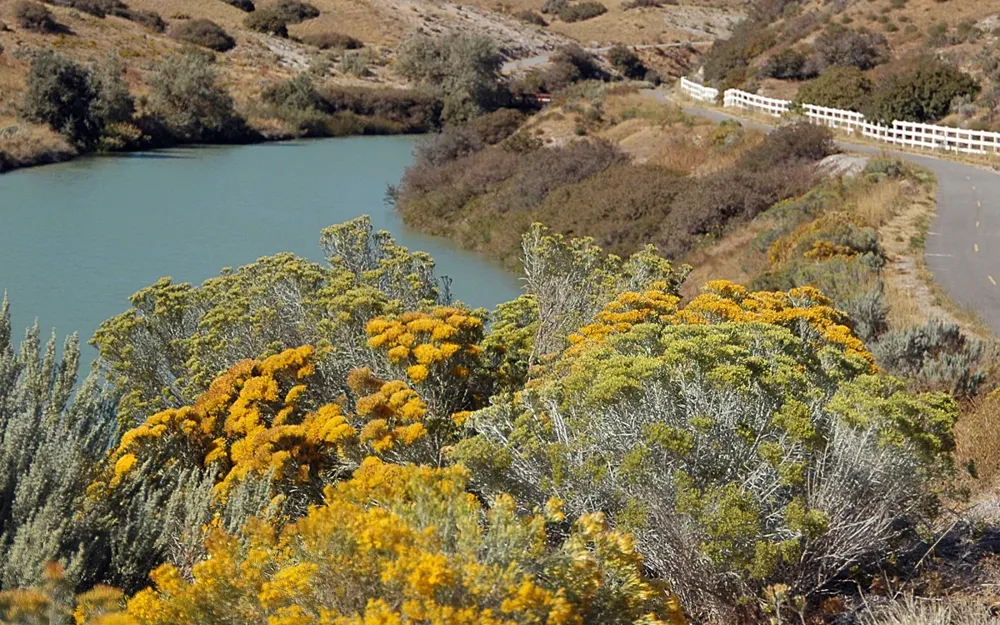
Yellow-flowering rubber rabbitbrush above the Jordan River
File photo: Yellow-flowering rubber rabbitbrush above the Jordan River — Jordan River Parkway near Salt Lake City, September 2004. Photo: Cory Maylett · CC BY-SA 4.0 · Wikimedia Commons
Shrubs

Rubber rabbitbrush

A flexible-stemmed native shrub whose late-season yellow flowers extend feeding opportunities for pollinators.

Ericameria nauseosa

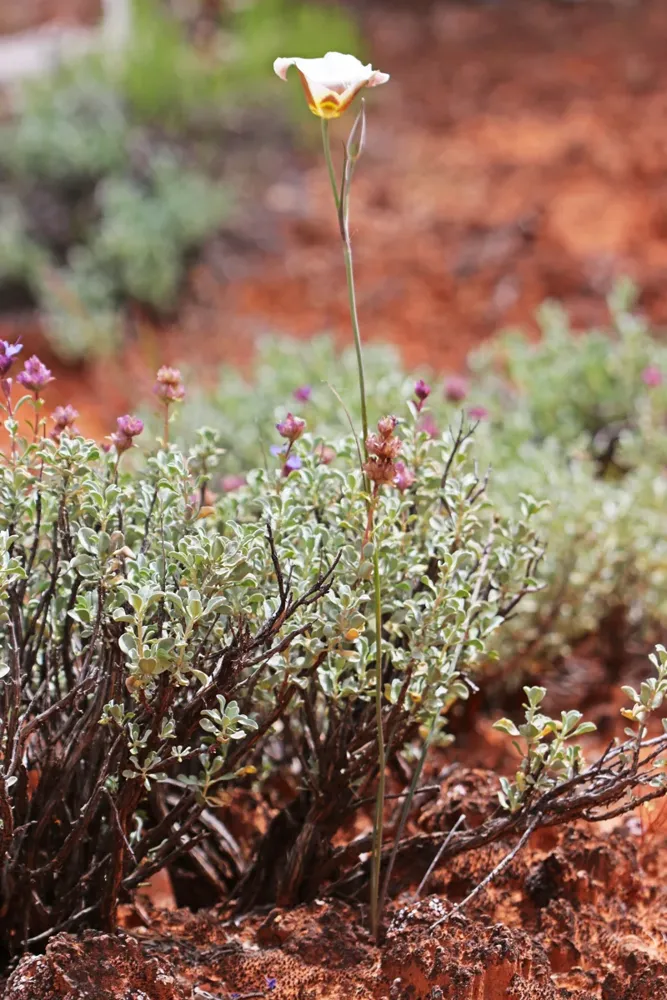
A sego lily flower on a slender stalk above low desert vegetation
File photo: A sego lily flower on a slender stalk above low desert vegetation — Johnson Lakes Canyon, Kane County, May 2016. Photo: Andrey Zharkikh from Salt Lake City, USA · CC BY 2.0 · Wikimedia Commons
Wildflowers

Sego lily

Utah's state flower briefly lifts a three-petaled cup above open, dry-country vegetation before its aboveground growth fades.

Calochortus nuttallii

Saved on this device. Statewide news and alerts remain available.