Bear River refuge birds
Read the refuge as a changing set of habitats, from shallow feeding flats to marsh cover and deeper water.
Help Utahns understand their communities and hold government accountable. Through nonpartisan, AI-assisted research, we examine public records, follow decisions and votes, and connect readers with local news, events and places.
Everything Utah, every day.
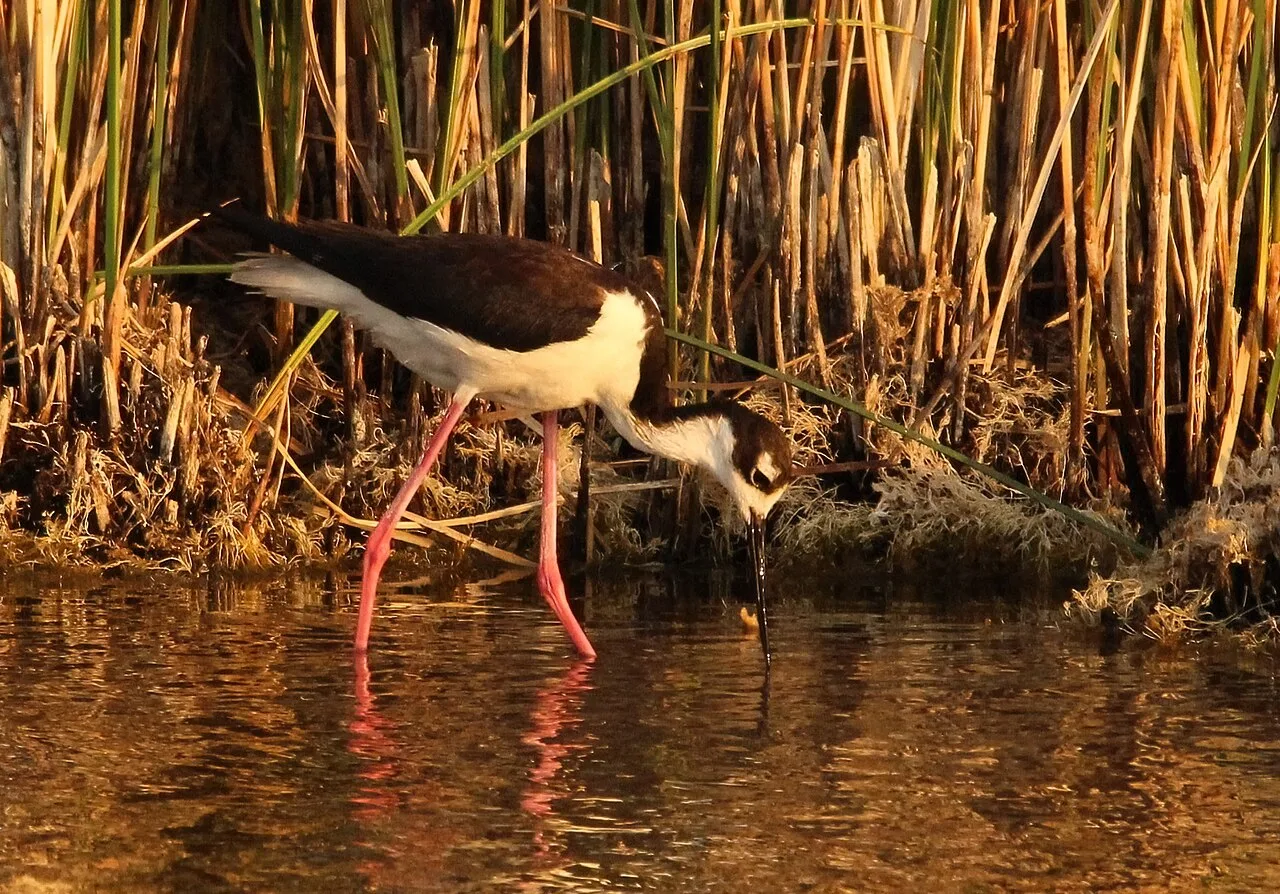
Pink legs and a straight, needlelike bill distinguish this black-and-white wader from its avocet neighbors.

A black-necked stilt seems to stand on legs made for a much larger bird. The remarkably long pink legs support a small black-and-white body, a slender neck and a fine, straight bill. The upperparts are dark and the belly is white; females and younger birds can look browner above. If an avocet is nearby, compare the legs and bill rather than just the shared black-and-white pattern: the stilt lacks the avocet's upward curve and blue-gray legs.
Stilts feed while wading in shallow wetlands, taking small aquatic animals with quick pecks and sometimes brief sweeps of the bill. Fresh water and saline water can both supply suitable feeding places. They also nest on the ground near water, using small islands, raised patches or vegetation. Both parents take part in incubation and caring for chicks. The young are mobile soon after hatching, so staying clear of an apparent nest does not necessarily mean a visitor is clear of a family.
Bear River's summer calendar includes young stilts in June and July. During nesting, adults may call loudly and perform conspicuous defensive displays around an intruder. Treat that behavior as a request for more distance, not an invitation to search for the chicks. The bird's daily needs make a useful lesson in wetland conservation: feeding water, safe ground for nesting and room to move between them have to function together. A productive wetland needs more than an open pool.
Very long pink legs, straight black bill, dark upperparts and white underside.
Shallow feeding water and undisturbed nesting ground are both important.
Stay on designated routes and retreat from agitated adults; do not approach nests or mobile chicks.

Read the refuge as a changing set of habitats, from shallow feeding flats to marsh cover and deeper water.
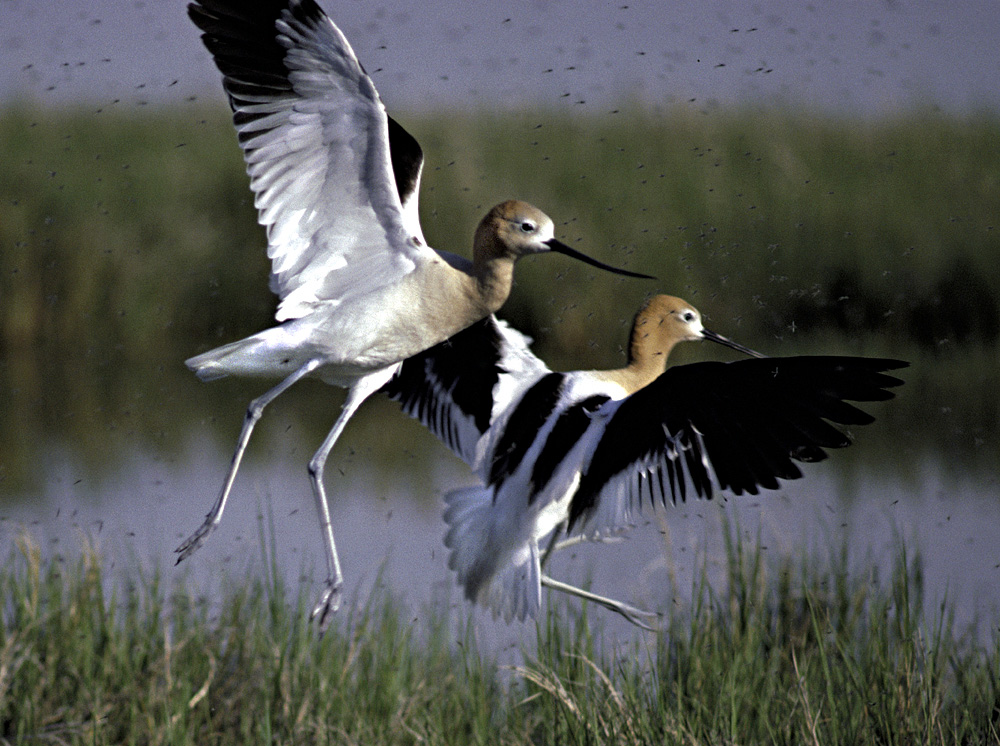
An upturned bill, blue-gray legs and a sweeping feeding motion make this wetland shorebird especially distinctive.
A large white migrant whose family groups link Utah's wetlands with Arctic nesting country.

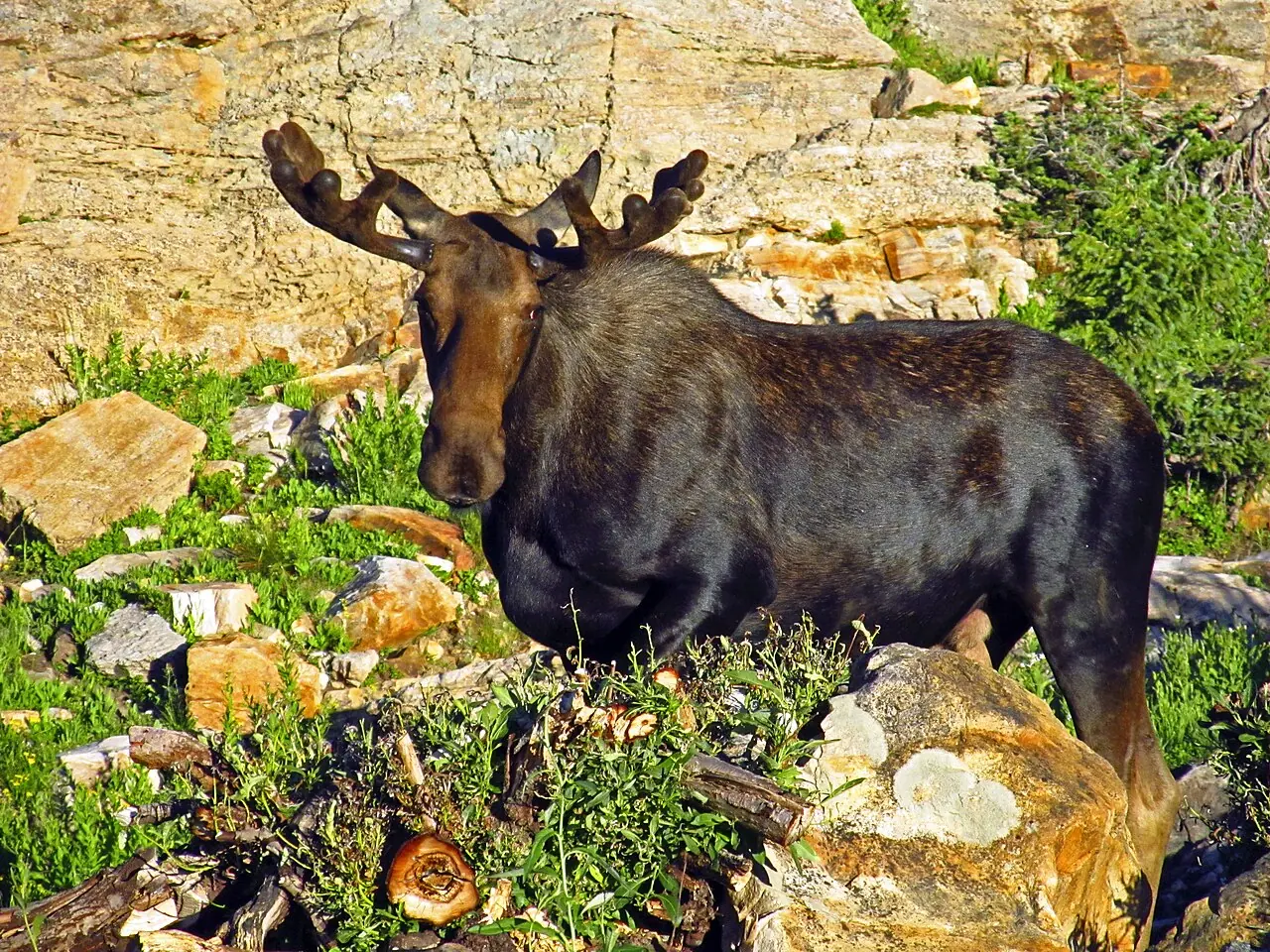
The largest member of the deer family in Utah, at home where northern mountain forest meets water.