Published by Paul Ivinskas
Thursday, October 22, 2026
Our mission

Help Utahns understand their communities and hold government accountable. Through nonpartisan, AI-assisted research, we examine public records, follow decisions and votes, and connect readers with local news, events and places.

Everything Utah, every day.

Wildlife & plants · Mammals

American pika

A small rabbit relative that gathers plants among mountain rocks and stays active beneath winter snow.

An American pika looks rather like a rounded, short-eared rabbit fitted for a rock pile. It has rounded ears, short legs and no conspicuous tail, with a coat that blends into gray and brown talus. A sharp, high call may reveal it before movement does. Despite its small size and mouse-like outline, it belongs with rabbits and hares rather than rodents. Watch from a trail near rocky habitat instead of climbing through the loose stones to find the caller.

Pikas use the spaces within talus for shelter and gather nearby plants for food. In summer they collect vegetation into caches often called haypiles, storing part of the growing season for winter. They do not hibernate: an insulating snow cover and food stored among the rocks help sustain them while the surface landscape is frozen. A bundle of stems being carried across a boulder is therefore part of an important seasonal routine, not material to collect or rearrange.

In Utah, pikas occur in high mountain country, with habitat separated by much warmer valleys. Their relationship with temperature is not as simple as preferring snow to sunshine. Heat can limit activity, while changes in snowpack and vegetation can affect shelter and food. Utah research and monitoring have examined these questions, but conditions differ among mountain ranges and rock fields. One quiet visit, or a single unoccupied-looking patch of talus, cannot establish whether a local population has disappeared.

How to recognize it

Rounded ears, compact body, inconspicuous tail and sharp call among talus; a rabbit relative.

Conservation

Pikas depend on cool rocky habitat and winter snow cover, and researchers monitor how a changing climate affects them.

Watching and staying safe

Stay on durable established routes, never disturb haypiles and keep dogs from pursuing animals into talus.

Related profiles

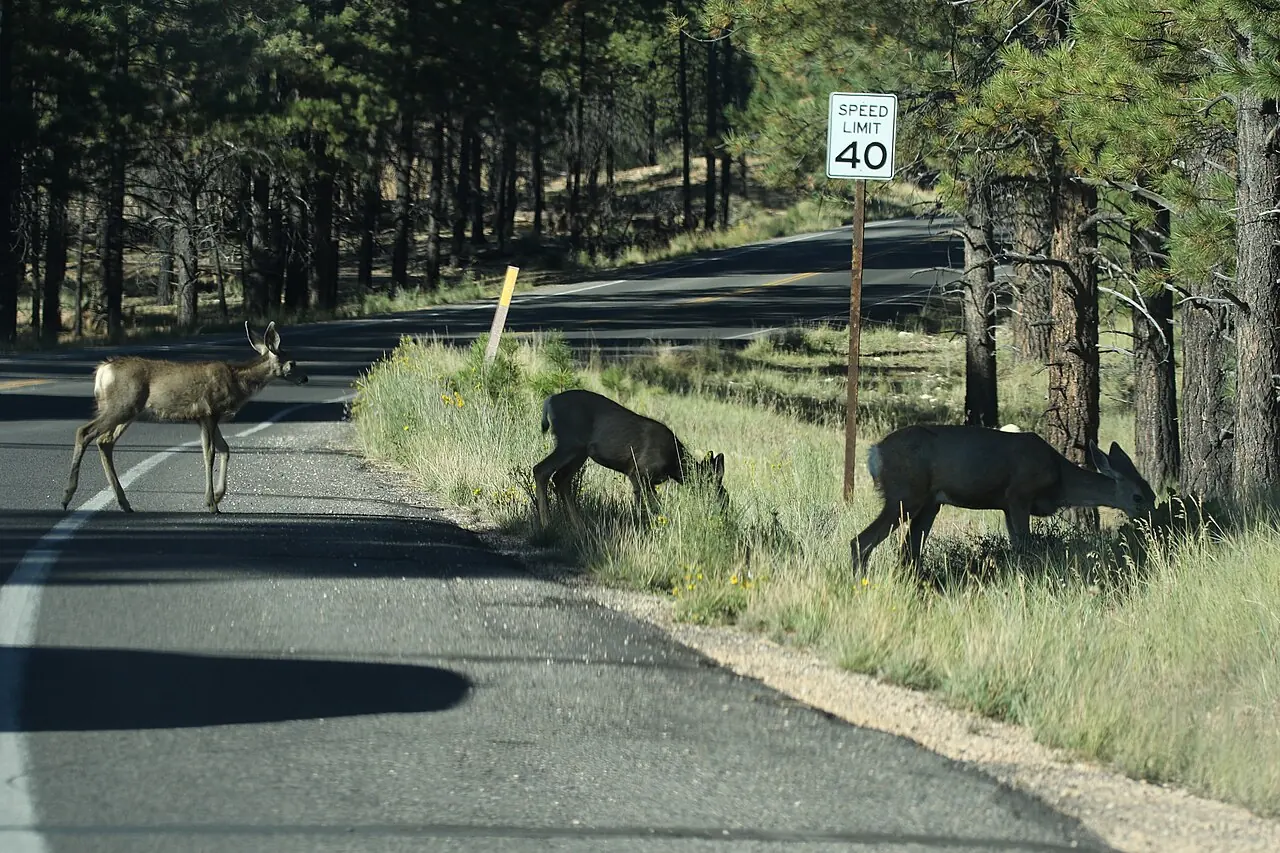
Mule deer beside and crossing a paved road at Bryce Canyon
File photo: Mule deer beside and crossing a paved road at Bryce Canyon (2016-09-19 01:15). Photo: Donald Hobern from Copenhagen, Denmark · CC BY 2.0 · Wikimedia Commons
Mammals

Mule deer

Found across Utah, from high mountains to city neighborhoods, and named for its large, mule-like ears.
Odocoileus hemionus

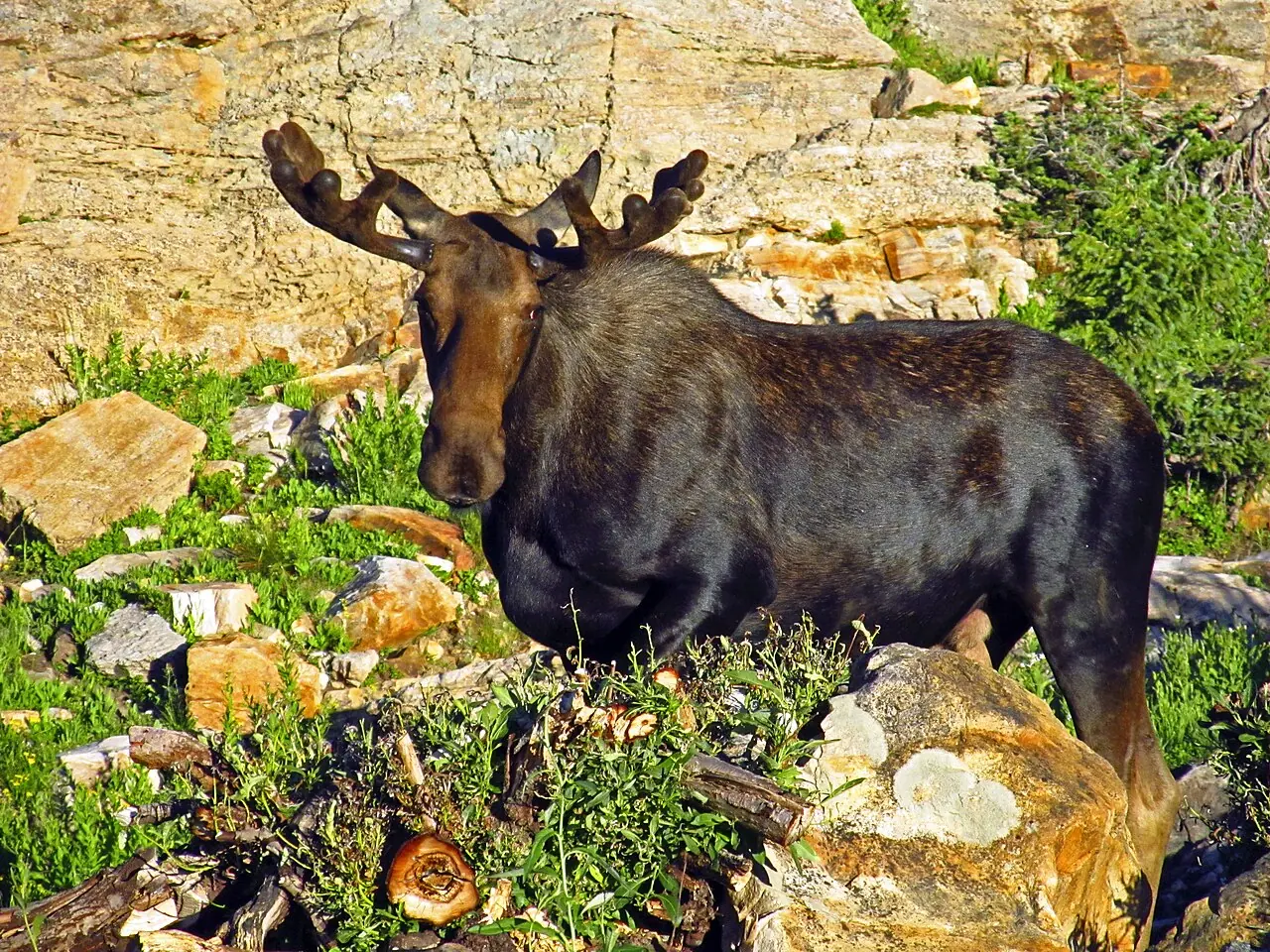
A bull moose among rocks and low vegetation at Cecret Lake
File photo: A bull moose among rocks and low vegetation at Cecret Lake (2012-07-25). Photo: BBernardicius · CC BY-SA 3.0 · Wikimedia Commons
Mammals

Moose

The largest member of the deer family in Utah, at home where northern mountain forest meets water.

Alces alces

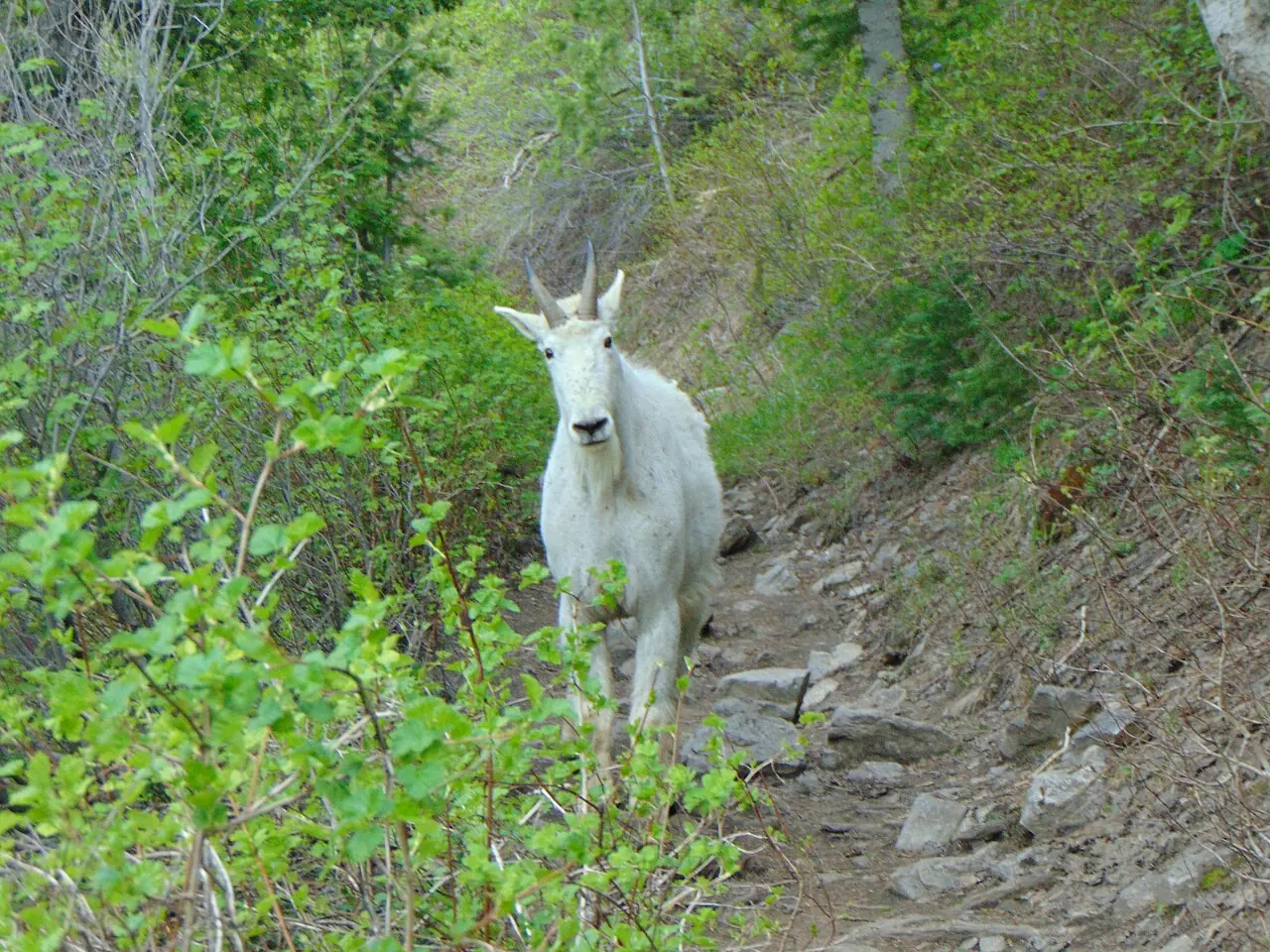
A mountain goat standing on a trail on Mount Timpanogos
File photo: A mountain goat standing on a trail on Mount Timpanogos (Taken on 2 June 2016, 20:03:35). Photo: An Errant Knight · CC BY-SA 4.0 · Wikimedia Commons
Mammals

Mountain goat

White climbers of the high rock, brought to Utah starting in 1967.

Oreamnos americanus

Saved on this device. Statewide news and alerts remain available.